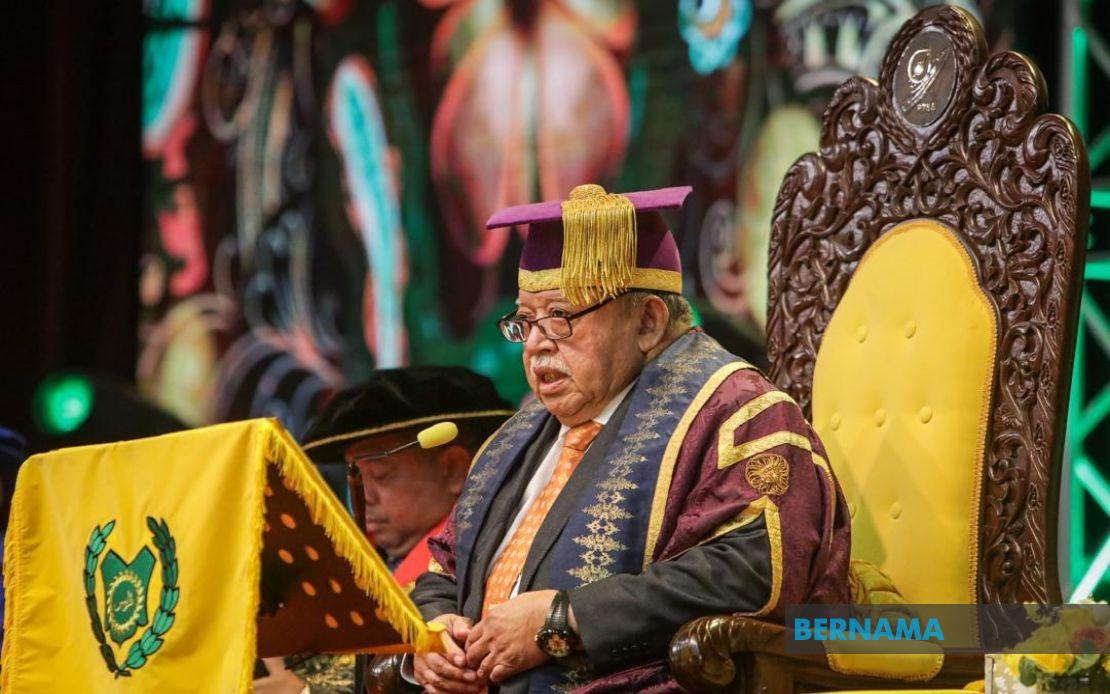
Technological disruption is reshaping Malaysia's labour market faster than ever before, and the nation's technical and vocational education system has become essential to bridging the skills gap between industrial demand and workforce capability. Speaking at the 2026 Northern Zone Polytechnic and Community College Convocation Ceremony at Politeknik Tuanku Syed Sirajuddin in Arau today, the Raja of Perlis, Tuanku Syed Sirajuddin Jamalullail, made clear that TVET institutions are no longer peripheral players in Malaysia's development agenda but rather central to producing the calibre of talent required to compete in an innovation-driven global economy.
The Ruler highlighted how artificial intelligence, automation, robotics and digitalisation are fundamentally altering the employment landscape across sectors. These transformative forces demand that education systems pivot away from traditional knowledge transmission toward cultivating adaptability, creative problem-solving, and technological fluency among students. TVET programmes, which blend theoretical foundation with hands-on practical experience, are uniquely positioned to equip graduates with exactly these competencies. By integrating emerging technologies into curricula while maintaining focus on fundamental technical mastery, polytechnics and community colleges address a critical need that universities alone cannot fulfil.
Tuanku Syed Sirajuddin stressed that innovation in this context extends beyond mere ideation. Rather, sustainable progress requires translating conceptual advances into tangible solutions that generate real value for communities and strengthen national development. This distinction matters significantly for Malaysia's aspirations as an upper-middle-income nation seeking higher-value manufacturing and knowledge-economy positioning. TVET graduates who understand both the theoretical principles behind emerging technologies and their practical applications become agents of institutional modernisation, capable of leading digital transformation initiatives across both public and private sectors.
The convocation ceremony, which continues through August 9, celebrates 6,104 graduates from polytechnic and community college programmes across the Northern Zone covering Perlis, Kedah and Penang. This cohort represents substantial human capital investment by the government and demonstrates the scale at which TVET institutions now operate. Each graduate entering the workforce carries implications for regional economic competitiveness and sectoral productivity. For Malaysian employers wrestling with talent shortages in technical fields—from advanced manufacturing to renewable energy installation—these graduates represent immediate solutions to pressing operational challenges.
Beyond technical competence, the Ruler conveyed an equally vital message regarding character and values. He cautioned graduates against divorcing expertise from ethical foundation, emphasising that excellence in professional domains must be anchored to integrity, trustworthiness and patriotic commitment. This framing addresses a sometimes-overlooked dimension of workforce development: technical skills divorced from moral grounding can become instruments of harm rather than progress. Malaysia's experience with industrial incidents, fraud in technical professions, and misappropriation of technological capabilities underscores why this balance matters. Graduates who combine advanced technical capability with strong ethical reasoning become leaders capable of steering their organisations toward sustainable, responsible practices.
Teerti Ganapathi Rao, a 22-year-old Diploma in Digital Technology graduate from Politeknik Tuanku Syed Sirajuddin's Department of Information and Communication Technology, received the Director-General of Polytechnic and Community College Education Award during the ceremony. Recognition programmes such as this serve multiple purposes: they incentivise excellence among current students, signal to employers which graduates possess standout capabilities, and provide narrative templates that other institutions can learn from. The prevalence of digital technology diplomas among award recipients reflects both employer demand for IT professionals and the sector's critical importance to Malaysia's digital economy ambitions.
The Northern Zone convocation carries particular regional significance. Perlis, Kedah and Penang collectively represent Malaysia's northwestern economic corridor, encompassing agriculture, light manufacturing, automotive components, electronics and increasingly, digital services and creative industries. TVET graduates remaining in or returning to these states become anchors for local economic diversification, reducing dependence on low-wage manufacturing and enabling regional competitiveness in higher-value domains. For smaller states like Perlis with limited higher education infrastructure, polytechnic output becomes disproportionately important to human capital accumulation and economic resilience.
Malaysia's TVET sector has undergone substantial reform over the past decade, including curriculum modernisation, faculty upskilling, and industry partnership strengthening. However, persistent challenges remain. Perception issues—whereby TVET pathways are sometimes viewed as secondary to university education—continue affecting enrolment patterns and student aspiration levels. Additionally, the speed at which technological change occurs often outpaces curriculum revision cycles, creating risk that graduates possess certifications in skills already becoming obsolete. Addressing these structural issues requires sustained investment, closer industry-education collaboration, and sustained messaging from leadership emphasising TVET's centrality to national prosperity.
The emphasis on innovation culture within polytechnic institutions reflects recognition that technical excellence alone no longer suffices in competitive environments. Graduates must additionally demonstrate capacity for continuous learning, cross-functional collaboration, and adaptive problem-solving. TVET institutions increasingly integrate entrepreneurship modules, project-based learning, and real-world problem-solving into curricula to cultivate these capacities alongside technical knowledge. This pedagogical shift aligns technical education more closely with the demands of contemporary workplaces where rigid specialisation yields to versatility and initiative.
For policymakers and employers across Southeast Asia observing Malaysia's TVET development trajectory, the Ruler's remarks offer strategic guidance. Nations throughout the region face comparable technological disruption pressures and skills shortages. Malaysia's investment in polytechnic expansion and curriculum modernisation provides a regional reference point for TVET system building. The emphasis on balancing technical skill with ethical foundation also speaks to broader governance challenges across developing economies, where rapid technological adoption can outpace institutional readiness for responsible deployment.
Moving forward, sustaining momentum in TVET development requires multi-stakeholder commitment extending beyond government investment. Industry participation in curriculum design and student mentoring deepens relevance while providing students early exposure to actual workplace environments. Alumni networks connecting graduates across cohorts and institutions facilitate knowledge sharing and career progression. Continuous evaluation of graduate employment outcomes and employer satisfaction enables responsive programme adjustment. The convocation ceremony represents a milestone in individual journeys; sustaining the broader ecosystem demands ongoing institutional attention and resource commitment across successive graduating cohorts.

