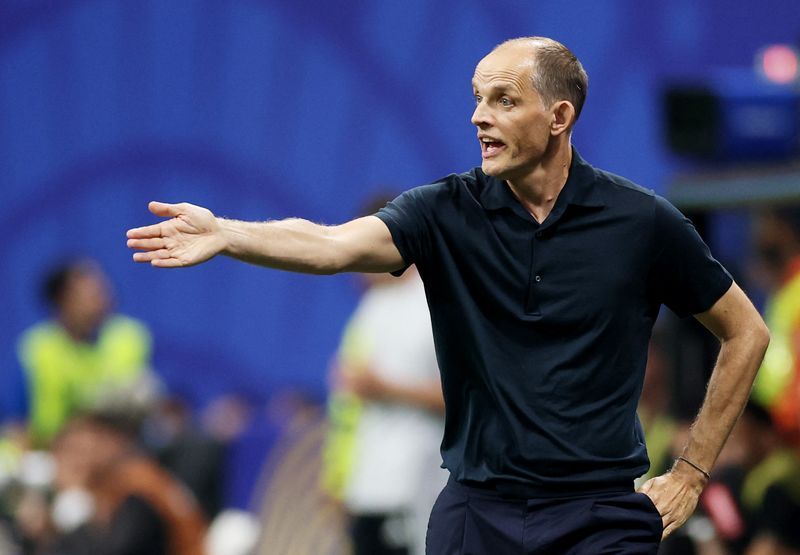
Thomas Tuchel arrived at the England helm as the solution to decades of near-misses, promised as the architect of a triumphant return to World Cup glory. The German tactician, celebrated as a serial winner in club football, inherited the role from Gareth Southgate with clear instructions: secure a second World Cup title for the nation that last claimed the prize in 1966. Yet within months of his January appointment, that grand ambition lay in ruins following a devastating semi-final defeat by Argentina, triggering a torrent of criticism that has unfairly narrowed focus onto his in-game management.
When England succumbed to Argentina in the dying minutes of their knockout encounter, the narrative quickly crystallised around Tuchel's defensive reshuffling after Anthony Gordon had opened the scoring. Critics pounced on what they perceived as a retreat into negative football, a betrayal of attacking potential that might have sealed the victory. Former West Ham and Crystal Palace boss Alan Pardew voiced one of the more restrained assessments on talkSPORT, lamenting that "in the fog of war, reality was lost" and suggesting the manager had inadvertently cultivated a fearful mentality within his squad. The implication was clear: poor tactical choices had sabotaged an otherwise capable team.
Tuchel himself, however, painted a starkly different picture in his post-match analysis. Rather than accepting culpability for tactical missteps, the manager pointed toward structural and cultural deficiencies that transcended any single substitution or formation change. His assertion that "no structure in the world could have helped us" may have sounded like deflection to detractors, yet it contained a kernel of uncomfortable truth about English football's enduring limitations. Specifically, Tuchel highlighted the English game's historical disconnect from the possession-based philosophy embedded in the tactical DNA of Spain, Argentina, and Brazil—nations that have mastered the art of controlling matches through the ball rather than chasing it.
This observation cuts to the heart of a problem far more systemic than any manager's half-time adjustments. England's inability to dominate possession and dictate tempo has plagued successive campaigns and reflects deeper issues within the domestic football culture and player development systems. The statistical evidence proved damning: between the 72nd and 92nd minute, England attempted only two passes in Argentina's half, while their opponents completed 111. Such a dramatic disparity suggests not merely reactive tactics but an absence of the ingrained positional discipline and technical security required to sustain meaningful possession under tournament pressure. These are qualities honed over years of training philosophy and competition structure, not improvised during crucial knockout stages.
Contextualising Tuchel's maiden World Cup experience alongside the careers of his most illustrious predecessors illuminates the unrealistic expectations placed upon him. Didier Deschamps, now celebrated as France's architect of sustained excellence, required six years at the helm before guiding Les Bleus to the 2018 World Cup title, subsequently delivering a runners-up finish four years later. Aimé Jacquet, Deschamps' predecessor and France's 1998 World Cup-winning coach, invested five full years in building and refining his title-winning team. By this measure, Tuchel's achievement in reaching the semi-finals at his first major tournament—matching Southgate's previous best—represents a respectable foundation rather than a failure meriting wholesale condemnation. The former Bayern Munich and Chelsea boss signed a two-year contract extension in February, signalling the Football Association's continued faith in a long-term project rather than a quick fix.
Yet the most significant obstacle England faced in that semi-final was not primarily a matter of tactics but the extraordinary individual brilliance of Lionel Messi and Argentina's collective refusal to yield. The defending champions had navigated a treacherous knockout path that revealed both their fragility and their resilience, emerging from encounters against Cape Verde, Egypt, and Switzerland with late comebacks and extra-time drama that would have broken lesser teams. These victories were not achieved through technical superiority alone but through sheer determination and the transformative presence of a 39-year-old player determined to cement his legacy with a second consecutive World Cup triumph. Argentina's quest to become the first nation since Brazil in 1962 to retain the title carried an almost mythical undertone that transcended ordinary sporting competition.
Messi's performance against England exemplified why individual genius, when channelled through proper tactical deployment, can neutralise even well-organised defensive structures. Rather than challenging the crowded English defensive formation, Messi simply drifted to the right flank, where he combined with teammates to generate the late assists that sealed Argentina's passage to the final. Thierry Henry, who spent three seasons observing Messi's brilliance up close at Barcelona, offered an incisive characterisation of the Argentine's psychological dominance in crucial moments. "Sometimes, don't wake up the beast," Henry reflected, describing how once Messi enters a certain mental zone—particularly when his team requires him most—he becomes virtually unstoppable, capable of robbing possession and orchestrating decisive sequences through sheer force of will. This transcends tactical matchups; it becomes a question of whether any organisational system can truly contain a player operating at such elevated levels.
The criticism directed at Tuchel, while understandable given England's exited World Cup dreams, fundamentally misrepresents the complex reality of tournament football at the highest level. Yes, his defensive adjustments merit analytical scrutiny, but isolating tactical decisions from the broader context of facing the defending champions—themselves inspired by the world's greatest living player—reduces a multifaceted competition into oversimplified causation. Argentina under Lionel Scaloni had demonstrated throughout the knockout stages an enviable capacity to overcome adversity and elevate performance when circumstances demanded. England, by contrast, lacked the fundamental technical security and ball-dominance capacity to dictate proceedings against an opponent determined to retain their crown.
For Malaysian and Southeast Asian observers, the England saga offers instructive lessons about the pitfalls of excessive managerial blame-shifting in international football. While coaching decisions undoubtedly matter, tournament performance is contingent upon years of developmental infrastructure, player quality, and cultural embedded within domestic leagues. Tuchel's arrival promised transformation but faced the immovable reality that even elite foreign coaches cannot instantaneously reconstruct the tactical philosophy of an entire national programme. The path toward sustained international success requires patience, strategic investment in youth development, and acceptance that occasional defeats—particularly against teams of Argentina's calibre—reflect systemic rather than merely circumstantial factors.
Looking forward, Tuchel's extended contract suggests the Football Association recognises this reality. His first tournament provided valuable exposure to the unique pressures and dynamics of knockout competition, exposure that will inevitably inform his team-building and tactical approach at the next World Cup. The question facing England is not whether to replace Tuchel but whether the domestic game can evolve to nurture the possession-based technical security that Messi's Argentina exemplified. Until that broader transformation occurs, individual managerial acumen, however considerable, remains merely one variable within a far more expansive competitive equation. Argentina's triumphant progress stands as testament not to English tactical failures but to the formidable challenge of restraining one of football's transcendent talents across successive tournaments.

