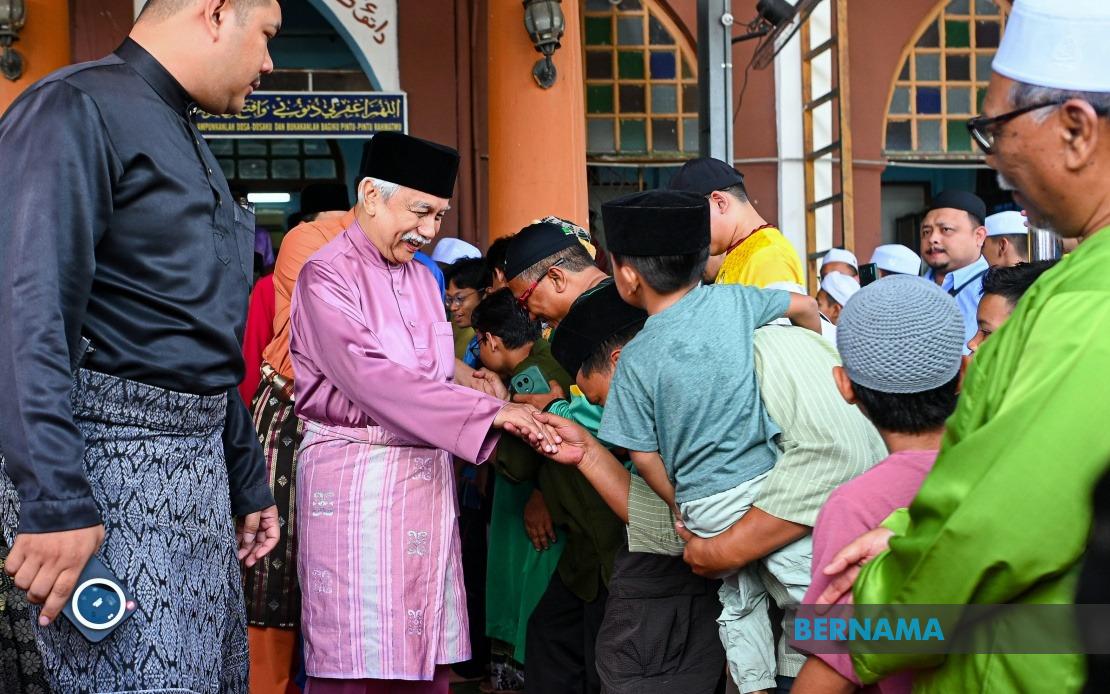
On July 17, Tuanku Muhriz Tuanku Munawir, the Yang Dipertuan Besar Negeri Sembilan, participated in Friday prayers at Masjid Kariah Pantai in Seremban, where he worshipped alongside a congregation exceeding 500 Muslims. The occasion underscored the continued religious engagement of the state's constitutional monarch with the broader Muslim community, demonstrating the customary integration of royal duties with spiritual observances that characterises Malaysia's Islamic institutional framework.
The attendance of senior state officials alongside the ruler reflected the hierarchical significance accorded to the event within Negeri Sembilan's administrative structures. Accompanying Tuanku Muhriz were his two sons, Tunku Besar Seri Menanti Tunku Ali Redhauddin and Tunku Zain Al-'Abidin, whose presence signalled the dynastic continuity expected in the state's constitutional arrangements. The gathering also included Undang of Luak Sungei Ujong Datuk Klana Petra Muhammad Faris Johari and Menteri Besar Datuk Seri Aminuddin Harun, positioning the event as an occasion bringing together multiple tiers of state leadership.
The sermon delivered by Imam Amru Zubair Abu Hanifah concentrated on contemporary challenges to religious faith, a thematic choice reflecting broader preoccupations within Malaysian Islamic discourse. Religious authorities across Southeast Asia have increasingly emphasised the preservation of orthodox Islamic values amid globalisation, secularism, and competing worldviews. Such sermons serve practical pedagogical functions, offering congregants theological frameworks for navigating modern ethical dilemmas whilst reinforcing communal bonds through shared spiritual reflection.
Following the conclusion of formal prayers, Tuanku Muhriz engaged directly with attendees, an interaction that extended beyond ceremonial protocols into genuine community participation. The distribution of contributions to children present at the prayers carried multiple significances, combining royal munificence with an investment in the religious formation of younger generations. Such gestures, whilst perhaps modest in material terms, carry considerable symbolic weight within Malaysian society, where royal accessibility and demonstrated concern for citizens remain valued elements of the constitutional monarchy system.
The event exemplifies how Malaysia's rulers continue to fulfil their constitutional roles as defenders of Islam whilst simultaneously functioning as bridges between state institutions and religious communities. In Negeri Sembilan particularly, where the Yang Dipertuan Besar holds significance as both temporal and spiritual authority within the sultanate's peculiar constitutional arrangement, such public religious observances carry institutional weight beyond mere personal devotion. The presence of the state's chief minister alongside the ruler demonstrated governmental recognition of Islam's centrality to Negeri Sembilan's identity and governance structures.
For Malaysian observers, such occasions reinforce the integration of Islamic practice with state ceremonial life, a characteristic distinguishing Malaysia's approach to the relationship between religion and governance. Unlike secular frameworks where state neutrality towards religion prevails, Malaysia's constitutional settlement places Islam in a constitutionally privileged position, with rulers assuming custodial roles regarding Islamic affairs. Public prayers involving senior officials thus acquire quasi-official status, signalling governmental commitment to Islamic observance and values.
The substantial congregation size, exceeding 500 worshippers, suggests robust community participation in regular religious activities within Seremban's urban environment. This attendance pattern may reflect broader trends across Malaysia's metropolitan areas, where Friday prayers continue attracting significant numbers despite competing demands on workers' schedules and the secular pressures of urban living. The gathering thus provides anecdotal evidence of sustained Islamic religious practice amongst urban Malaysians across different socioeconomic backgrounds.
The involvement of Tuanku Muhriz's sons in the proceedings carries implications for dynastic religious engagement and the transmission of Islamic values across generations of Negeri Sembilan's ruling family. Such visible participation familiarises younger members of the royal household with formal religious obligations and community engagement, potentially shaping their future approaches to the custodial responsibilities they may inherit. Within Malaysia's constitutional monarchy system, heirs apparent undergo gradual acculturation into roles encompassing Islamic authority alongside temporal rule.
Regional observers may note how Malaysia's rulers continue employing traditional mechanisms of legitimacy rooted in Islamic authority and community leadership, even as the nation navigates modern governance challenges. The Friday prayer gathering demonstrates the persistence of such religious engagement practices, suggesting that constitutional monarchies across Southeast Asia maintain distinctive relationships with faith communities that differ markedly from entirely secularised governance models. For Malaysia specifically, such events reaffirm the interwoven nature of Islam and state identity at the sultanate level.
Looking forward, such regular occasions of public religious participation by state leadership will likely continue forming part of Negeri Sembilan's governance calendar. They serve multiple functions simultaneously—fulfilling constitutional obligations, maintaining community connections, demonstrating religious authenticity, and reinforcing shared values. For Malaysian citizens, particularly those in Negeri Sembilan, such events provide opportunities to observe their constitutional rulers fulfilling duties that extend beyond administrative technocracy into the spiritual dimensions traditionally associated with sultanate leadership.

