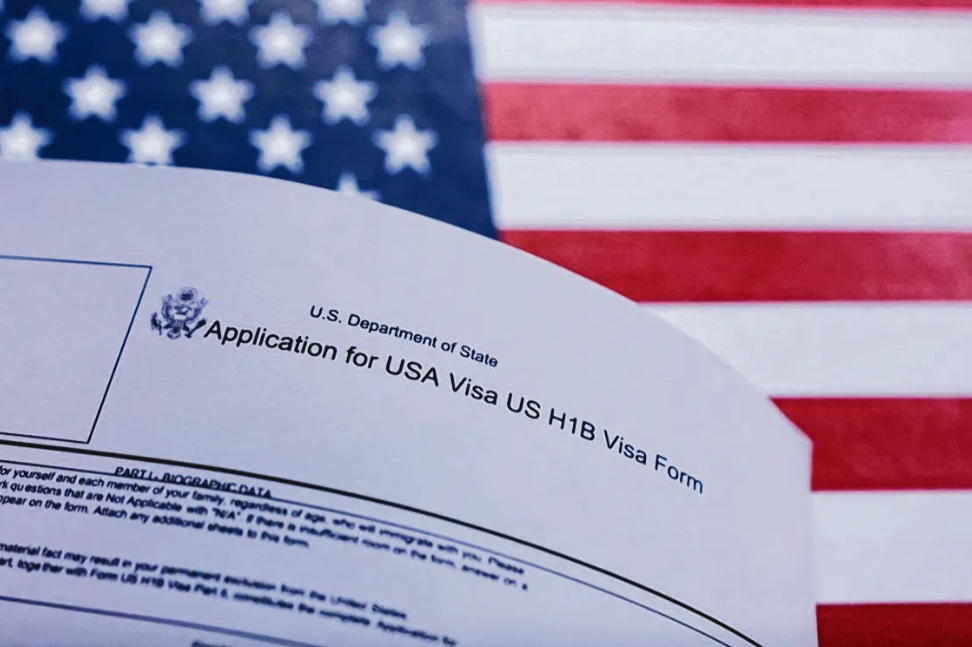
The Trump administration's aggressive approach to immigration policy is triggering an unprecedented exodus of skilled technology professionals from the United States, with thousands of Indian and Chinese workers dismantling lives built over decades to return home. This reversal of the traditional brain drain that has long favoured American tech hubs represents a significant shift in global talent dynamics and carries profound implications for Silicon Valley's future competitiveness and Southeast Asia's emerging tech sectors.
The catalyst for this migration wave stems from a series of escalating costs and regulatory hurdles imposed on the H-1B visa programme, which has historically served as the primary pathway for American companies to recruit advanced degree-holders from abroad. The Trump administration initially proposed a US$100,000 application fee for new H-1B visas—a twentyfold increase from existing rates—and although a federal judge struck down this particular measure in June as unlawful, the administration has persisted with alternative barriers. Most recently, it introduced a US$4,000 surcharge for visa extensions and renewals effective September, compounding employer uncertainty and making foreign recruitment substantially more expensive and administratively burdensome.
For visa holders like Deepak, a 44-year-old tech professional who returned to India in May with his family, the accumulating uncertainties transcended mere financial considerations. The shifting regulatory landscape created an environment where even employed professionals faced constant anxiety about their immigration status, particularly the stringent requirement to secure alternative employment within 60 days of termination. This precarity proved incompatible with the stability that Deepak and his family could secure in their home country. Rather than gambling on his H-1B tenure through successive fee increases and regulatory changes, Deepak opted for certainty, placing two American properties on the market, liquidating household goods, and enrolling his children in Indian schools. His decision reflects a rational calculation increasingly common among visa-dependent professionals caught between deteriorating American conditions and improving opportunities at home.
The scale of this reversal is quantifiable and accelerating. According to data from Xpheno, a Bengaluru-based talent consulting firm, Indian professionals returning to India jumped to approximately 15,100 in 2025 from 9,800 in 2024, with roughly 7,300 already having returned by 2026. While comparable statistics for Chinese nationals remain unavailable, China's Ministry of Education reported that 536,000 students returned home following graduation in 2025, representing an 8.3 per cent increase from the previous year—a telling indicator of the American Dream's diminishing allure among Beijing's young talent pool. These migration patterns align with measurable declines in H-1B petition approvals among major technology employers; visa approvals for the top 100 sponsoring companies including Amazon, TCS, Infosys, Apple and Microsoft are tracking towards a decline exceeding 10 per cent in fiscal year 2026 compared to 2025.
The timing of this exodus is particularly significant given concurrent structural changes within the American technology sector itself. Major employers including Meta, Visa and Amazon have executed substantial workforce reductions in recent years, creating a paradoxical situation where visa-dependent professionals face not merely stricter immigration rules but also a contracting job market. The emergence of artificial intelligence has prompted widespread corporate restructuring, resulting in fewer available positions even as the pool of international jobseekers grows. Foreign professionals, lacking the employment stability and legal flexibility of American citizens, find themselves systematically disadvantaged in this compressed labour market. Companies increasingly prioritise recruiting American workers to avoid the added expense and complexity of H-1B sponsorship, further marginalising international talent regardless of their qualifications.
The lived experience of visa holders navigating this transformed landscape reveals the psychological toll alongside the economic calculus. Carrie, a Chinese data analyst in her third year on an H-1B visa, initially submitted up to 30 job applications daily after her employer issued notice, gradually diminishing to five applications per day as rejection accumulated. Despite exhaustively applying to virtually every company maintaining H-1B sponsorship capacity, she faces imminent departure by end-August unless she secures employment. Her situation illustrates a broader phenomenon whereby even highly skilled foreign professionals encounter what amounts to systematic exclusion, regardless of their expertise or professional achievements. The combination of visa sponsorship reluctance and sector-wide hiring freezes has created conditions where foreign talent, once intensely recruited, now confronts near-categorical rejection.
Indian and Chinese nationals comprise approximately 70 and 12 per cent respectively of the total H-1B visa holder population, with the overwhelming majority concentrated in technology roles. These workers have historically represented among America's most educated and highest-earning immigrant populations. Yet according to reports from the AAPI Equity Alliance, this prominence has coincided with a marked intensification of social hostility and online racist attacks targeting these communities. The combination of regulatory exclusion and escalating social animosity creates an environment fundamentally distinct from the relatively welcoming conditions that characterised earlier waves of H-1B immigration. For many visa holders, the decision to return represents not merely a response to formal policy changes but also a reaction to a broader sense of diminished belonging in American society.
The return migration carries substantial implications for India's emerging technology sector and broader Southeast Asian dynamics. Rather than flowing into India's traditional IT services and outsourcing sectors—which themselves face hiring constraints—many returning professionals possess skill levels and experience that exceed the requirements of conventional outsourcing work. However, India's burgeoning Global Capability Centres present a meaningful absorption point. These approximately 2,000 GCCs have collectively hired around 100,000 employees annually since 2023, with the top 125 facilities absorbing roughly 7,000 mid and senior-level professionals with over a decade of experience in the past year, including 2,800 returnees from the United States. Nonetheless, returning professionals typically confront significantly reduced compensation packages and limited premium valuation unless they possess specialised expertise in artificial intelligence or contemporary data technologies.
Some returnees are approaching their repatriation as a transitional moment enabling fundamental life reassessment. Ram, a 38-year-old product manager who returned to Bengaluru in early 2025 after nine years in Connecticut, found himself confronting existential questions previously crowded out by the demands of H-1B tenure and American career progression. With accumulated savings supporting a sabbatical, Ram contemplates alternative directions including entrepreneurship and agricultural pursuits—possibilities his prior visa-dependent existence rendered impossible. For Ram and similarly positioned professionals, the enforced return migration paradoxically offers newfound autonomy and temporal space despite representing a setback relative to prior American trajectories.
The broader geopolitical dimensions of this talent migration deserve particular attention for Malaysian and Southeast Asian policymakers. The reversal of decades-long American talent advantage signals potential opportunities for regional technology hubs to capture displaced expertise and leadership capacity. India's improved technology ecosystem, combined with competitive salary structures and cultural familiarity, provides immediate advantage in capturing returnee professionals. However, Malaysia, Singapore and other Southeast Asian economies possess potential to position themselves as alternative destinations for skilled professionals seeking stability outside the American immigration apparatus. The current moment presents a strategic window during which restrictive American policies create availability of globally-experienced talent precisely when regional technology sectors are expanding.
Looking forward, the sustainability of America's technology leadership appears increasingly vulnerable to the compounding effects of restrictive immigration policy, sector-wide employment contraction and social alienation of immigrant communities. For decades, the H-1B programme functioned as a mechanism through which American companies maintained competitive advantage by recruiting the world's highest-calibre technical talent. The Trump administration's actions, while framed as protectionist measures benefiting American workers, paradoxically undermine American technological capacity by pricing out and ultimately expelling the very international talent that built Silicon Valley's dominance. This self-defeating dynamic creates strategic opportunity for India, China and Southeast Asian economies to reposition themselves as attractive destinations for experienced technology professionals, fundamentally altering global innovation geography.

