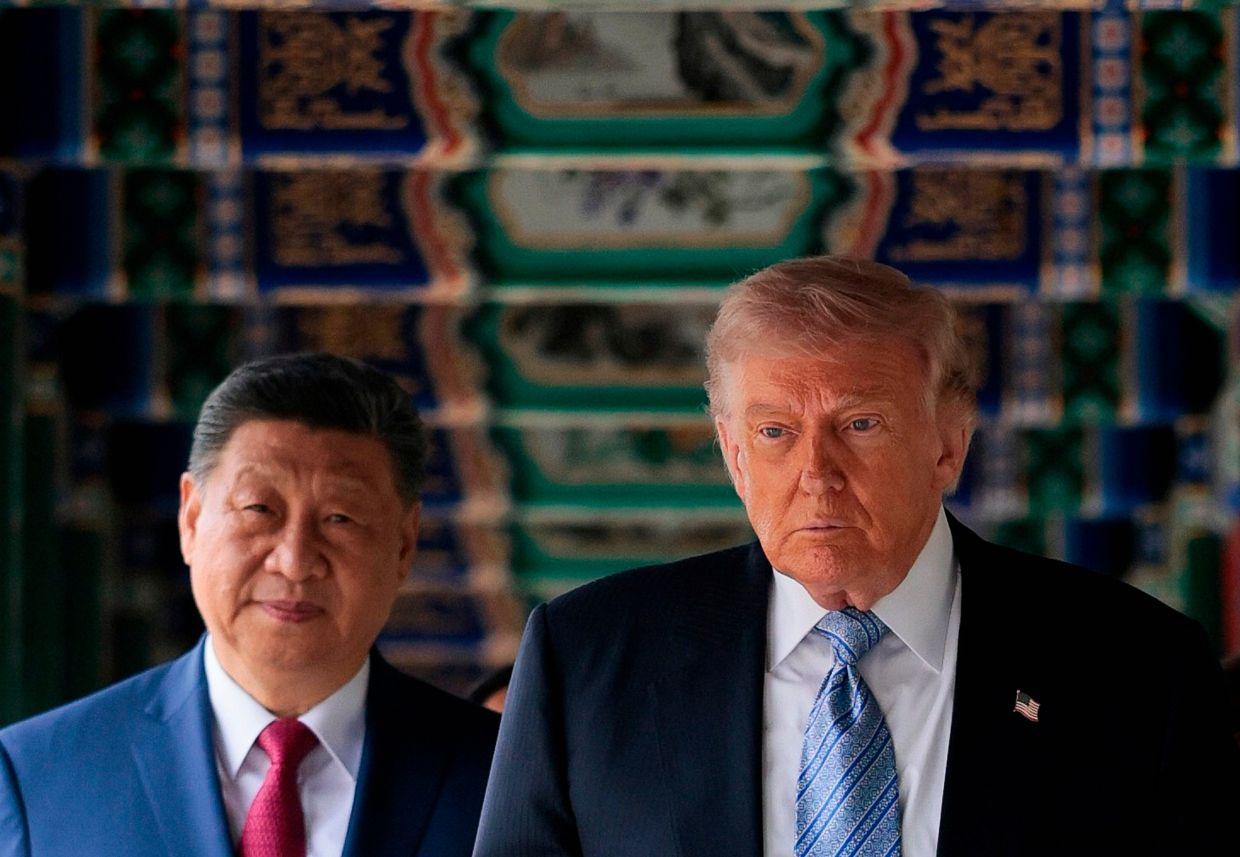
The Trump administration's approach to China remains characterised by sharp contradictions, with the US President expressing simultaneous criticism and reconciliation towards Beijing as Xi Jinping prepares for a high-profile visit on September 24. These mixed signals have become a defining feature of Trump's foreign policy, creating uncertainty about the administration's true intentions and underlying strategy towards the world's second-largest economy.
Trump's latest criticism centres on reports that China has been supplying weapons to Iran through Pakistan, with Reuters citing sources indicating a deal valued between US$60 million and US$70 million. When asked about these allegations, Trump adopted a notably cautious tone, saying he would find such conduct "surprising" and suggested he had received personal assurances from Xi that China would not participate in weapons transfers. Yet his follow-up comment—that he would be "quite disappointed" if these assurances proved false—was notably restrained for a president typically prone to fiery rhetoric.
Beijing's foreign ministry has flatly denied the weapons transfer allegations, characterising them as "untrue and not factual at all" while reiterating China's commitment to de-escalation in regional conflicts. This is not the first time Beijing has rejected such accusations; the Chinese government similarly dismissed prior reports of weapons supplies to Iran before Trump's May visit to the Chinese capital. The pattern of denial followed by continued diplomatic engagement suggests both sides are maintaining their official positions while attempting to preserve the diplomatic relationship.
The weapons controversy is compounded by Trump's renewed attacks on former US health official Anthony Fauci, whom Trump continues to blame for downplaying the laboratory-origin theory of COVID-19. In a lengthy social media post, Trump accused Fauci of "strongly" disagreeing with the Wuhan laboratory theory and of consistently attempting to "protect China". Trump has repeatedly championed the idea that the coronavirus leaked from a research facility in Wuhan, despite broader scientific consensus favouring the natural spillover explanation involving animal-to-human transmission.
Trump's COVID-19 narrative represents another layer of his contentious relationship with China. By blaming Beijing—either through the laboratory leak allegation or through Fauci's supposed protection of Chinese interests—Trump maintains pressure on the administration's China critics. However, this approach contrasts sharply with his willingness to accept Xi's verbal commitments on other matters, suggesting Trump's trust in Beijing depends heavily on the issue at hand.
The broader pattern of Trump's China policy reveals a striking duality: ferocious public attacks are quickly followed by diplomatic overtures and benefit-of-the-doubt gestures. Just two weeks before Trump's latest weapons allegation comments, he had delivered a prime-time address accusing China of perpetrating "the largest compromise of election data in history", alleging that Beijing had unlawfully obtained 220 million American voter records. Trump even declassified documents in support of these claims and described the situation as an "unprecedented election security nightmare" that demanded urgent attention.
Despite the gravity of these election security accusations, the Trump administration has notably refrained from imposing new sanctions, trade penalties, or diplomatic consequences against China in response. No formal retaliation has followed the declassified evidence or the dramatic public condemnation. Instead, preparations for Xi's September visit have proceeded without meaningful disruption, suggesting that Trump's harsh rhetoric may serve purposes beyond genuine policy enforcement.
This pattern of pronouncements without corresponding action has become the hallmark of Trump's approach to China. A week prior to his election interference speech, Trump stated that China and Russia were not "participating" in Iran's conflict, adding that Xi had promised during their May Beijing meeting that China would not assist Iran under any circumstances. Trump declared that given the relationship between the two leaders, he was taking Xi "at his word". Yet in the same breath, Trump issued a warning: if China violated this commitment, "it would be very bad for them", underscoring that the relationship remains conditional.
For Malaysian and Southeast Asian observers, this inconsistency carries significant implications. The region's economies and security arrangements depend substantially on understanding whether Washington intends to engage China in genuine dialogue or maintain adversarial pressure disguised by diplomatic courtesy. Trump's approach suggests he may be capable of compartmentalising different aspects of the US-China relationship, pursuing confrontation in specific areas while maintaining productive engagement in others.
The September visit by Xi represents a critical test of Trump's true China strategy. If the visit proceeds smoothly with formal agreements or trade discussions, it would suggest that Trump's public criticisms—whether regarding weapons transfers, election interference, or COVID-19 origins—are primarily rhetorical tools rather than triggers for substantive policy shifts. Conversely, any cooling of relations or introduction of consequences would validate the severity of Trump's accusations. For now, the administration appears intent on preserving diplomatic channels while registering public disapproval through statements and social media.
The disconnect between Trump's harsh condemnations and his passive response raises questions about the administration's strategic coherence. Whether this reflects deliberate tactical ambiguity designed to keep Beijing off-balance, or whether it reveals internal inconsistency within the administration, remains unclear. What is certain is that Asian capitals, including Kuala Lumpur, are watching closely to discern Trump's genuine intentions toward China, as this relationship will profoundly shape regional geopolitics, trade flows, and security dynamics for years to come.

