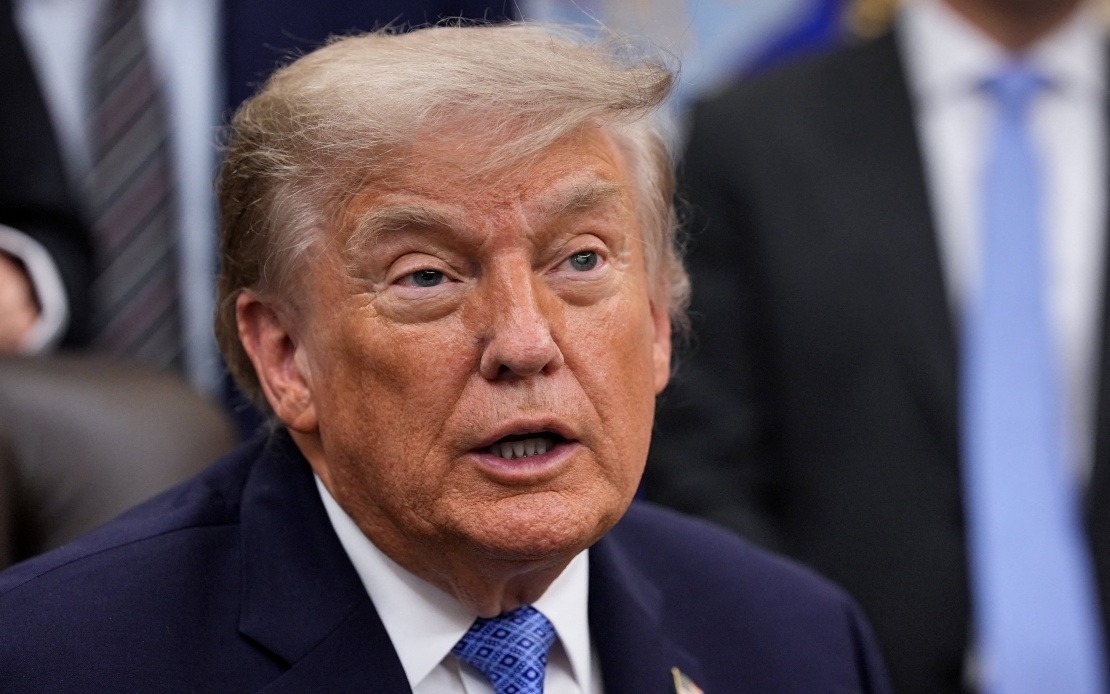
United States President Donald Trump will deliver a televised address to the nation on Thursday evening at 9 pm Eastern Standard Time (0100 GMT Friday), according to an announcement posted on his Truth Social account. The timing places the speech in one of American television's most coveted broadcasting slots, typically reserved for moments of significant national importance or critical presidential pronouncements.
The White House has not disclosed the specific topic Trump intends to address, creating considerable speculation across American political circles and international observers about the likely subject matter. This ambiguity has generated widespread anticipation, as presidents conventionally schedule prime-time addresses only when addressing matters of substantial consequence to the nation.
Several pressing issues currently dominate the American political landscape and could form the centerpiece of the president's remarks. Foremost among these is the escalating conflict with Iran, which has commanded headlines in the United States for an extended period and shows signs of intensifying further following recent developments in the Middle East. The geopolitical tensions have direct domestic repercussions, particularly through their impact on global energy markets.
Fuel prices have emerged as a significant economic concern for American households, a situation exacerbated by regional instability in the Middle East. Rising petrol costs affect consumer purchasing power across the economy and have become a focal point of political debate. The connection between international conflict and domestic pocketbook issues makes this a natural subject for presidential communication, as voters directly experience the economic consequences of foreign policy decisions.
For Malaysian and Southeast Asian observers, the outcome of any Trump address regarding Iran carries particular relevance. The region's economies remain dependent on stable energy supplies and predictable global oil markets. Any escalation in Middle Eastern tensions, or conversely, any diplomatic breakthrough, could reverberate through regional energy costs and shipping routes that many Southeast Asian nations rely upon for trade.
This marks Trump's second major televised address since commencing his second presidential term in January 2025. His previous prime-time speech came in December, when he mounted a defense of his economic record amid mounting criticism from Democratic opponents and concerns from independent voters regarding inflation and living costs. That address demonstrated his willingness to use the presidential platform to directly counter negative narratives during periods of political pressure.
The timing of this new address carries strategic political significance beyond its immediate content. The speech arrives approximately four months before crucial midterm elections, a contest in which Trump's Republican Party has been consistently polling behind Democratic counterparts. Midterm elections traditionally present challenges for the party occupying the White House, yet Republicans face particular headwinds this cycle according to current polling aggregates.
The strategic deployment of prime-time addresses has long been a tool of presidential power, allowing chief executives to command national attention and shape media narratives during critical moments. Trump's decision to schedule this address suggests the administration views the present moment as requiring direct presidential communication on matters affecting American public opinion and political momentum heading toward the midterms.
For regional policymakers in Southeast Asia, developments in American domestic politics and foreign policy warrant careful attention. The United States maintains significant security, economic, and diplomatic relationships throughout the region, and shifts in American political focus can influence bilateral and multilateral arrangements. The nature of Trump's address and any policy positions he articulates could carry implications for regional stability and economic cooperation frameworks.
The lack of advance notice regarding the address's specific subject matter reflects a broader pattern in Trump's political communication style, characterized by an element of surprise designed to capture maximum media attention. This approach ensures wall-to-wall coverage and forces news organizations to speculate extensively, thereby extending the story's lifespan and cultural penetration beyond what a pre-announced topic might achieve.
Domestic observers across the political spectrum in America will be monitoring closely for any policy announcements, shifts in tone regarding international conflicts, or economic proposals that might reshape the political landscape heading into the final stretch before midterm voting. The address will inevitably be dissected for subtle signals regarding the administration's priorities and strategy for the remainder of the electoral cycle.

