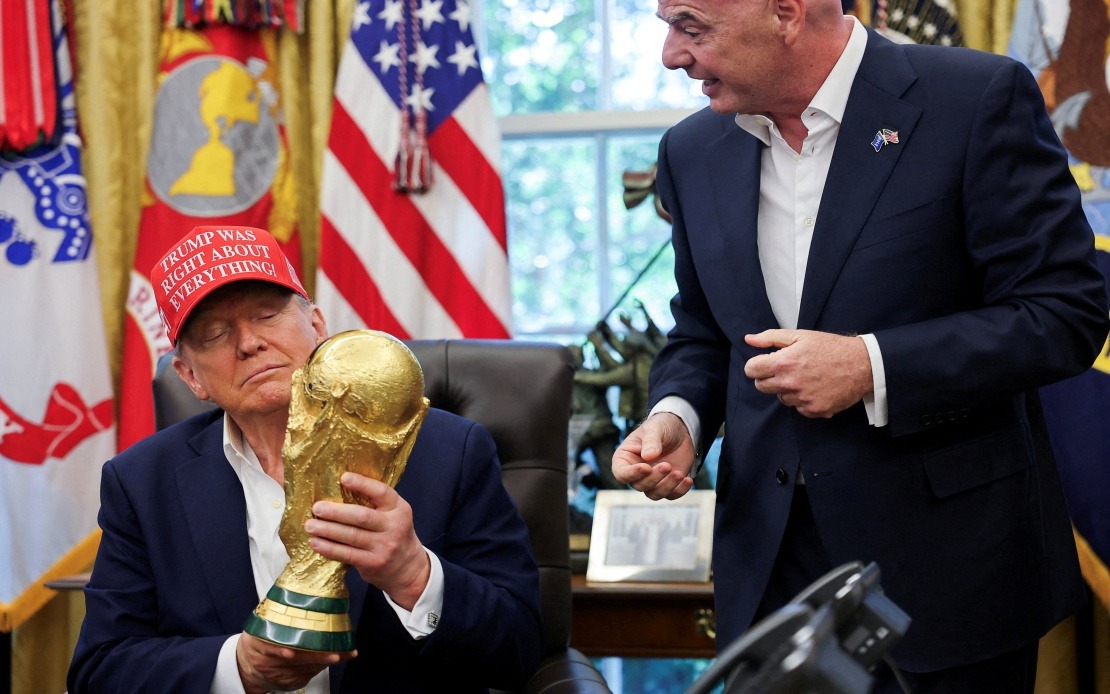
In a striking reversal of his combative rhetoric from just days earlier, US President Donald Trump extended congratulations to Spain on its 1-0 World Cup victory over Argentina, telling reporters in Istanbul that he harbours no animosity towards Spanish Prime Minister Pedro Sanchez or the Spanish government. The diplomatic pivot came at a moment when international media attention focused on the sporting achievement, providing Trump with an opportunity to recalibrate his public messaging on Madrid.
Trump's measured comments on Sunday stood in sharp contrast to his incendiary statements delivered at the NATO summit in Ankara, Türkiye, earlier in July, where he had dismissed Spain as a "wasted cause" and described Spanish officials as "hopeless, bad people." The president at that earlier forum had declared his intent to sever all commercial relations with the European nation, demanding that trade be cut off completely and that American officials cease communication with their Spanish counterparts. Such pronouncements would ordinarily signal a breakdown in bilateral relations of significant magnitude.
The underlying grievances that prompted Trump's initial outburst centred on NATO burden-sharing commitments and military access. Trump criticised Madrid's refusal to grant American armed forces unrestricted access to Spanish military bases during the conflict with Iran, viewing this denial as inadequate support for Washington's strategic interests. Additionally, he expressed frustration that Spain had not committed to meeting the NATO target of allocating five per cent of national GDP to defence spending, a threshold far exceeding most alliance members' current expenditure levels.
When discussing the World Cup final itself, Trump characterised the match as both "exciting" and "great," acknowledging Spain's superior performance throughout the tournament. He conceded that whilst the contest had been closely contested, the Spanish team ultimately demonstrated greater skill and tactical coherence. Notably, he refrained from expressing disappointment over Argentina's defeat, suggesting that his frame of reference had shifted from geopolitical calculations to sporting assessment.
For Southeast Asian observers and Malaysian policymakers, Trump's capacity for rapid rhetorical shifts carries important implications regarding the predictability of American foreign policy. The sharp oscillation between threatening comprehensive trade embargoes and extending public praise within a matter of days reflects an approach to international relations that prioritises immediate tactical advantage and media narrative over sustained diplomatic consistency. This pattern suggests that countries negotiating with Washington must remain vigilant regarding the durability of any agreements or understandings reached.
Spain's position within NATO and its strategic importance to American defence architecture in the Mediterranean and North Africa remain unchanged regardless of Trump's public pronouncements. The underlying structural issues—defence spending targets, military base access, and alliance burden-sharing—persisted through the World Cup final and will likely resurface when sporting events cease occupying the international headlines. Trump's congratulatory remarks therefore appear less indicative of substantive policy resolution and more reflective of situational diplomacy driven by media cycles.
The timing of this public reconciliation also warrants examination through the lens of Trump's broader communication strategy. By pivoting to praise Spain during a moment of national sporting achievement, he positioned himself as capable of gracious acknowledgment whilst simultaneously demonstrating that his favour or disfavour could shift based on circumstances beyond Spain's control. This approach may serve to keep Madrid off-balance regarding American intentions and priorities.
From a regional perspective applicable to Asian nations with comparable experiences, the incident illustrates how personalised leadership in major powers can create volatility in foreign relations that complicates long-term strategic planning. Malaysia and other Southeast Asian countries that maintain partnerships with the United States must account for the possibility that administration priorities, public messaging, and stated policies may diverge significantly depending on the immediate context and audience.
The absence of structural change accompanying Trump's rhetorical softening suggests that his earlier criticisms of Spain may resurface when circumstances again make them politically useful. Defence spending targets, military base access, and alliance commitment assessments remain live issues that typically reappear during budgetary discussions, NATO meetings, or strategic reviews. Spain's government and other European allies must therefore treat such apparent concessions with appropriate scepticism, recognising them as temporary adjustments rather than fundamental policy reorientations.
For regional powers observing American diplomatic conduct, Trump's handling of the Spain situation demonstrates the premium placed on maintaining positive public relations with major allies, even when substantive disagreements persist. The willingness to extend congratulations and declare the absence of tension signals an intent to preserve the relationship's optics whilst preserving the underlying leverage that unresolved disputes provide. This nuance distinguishes between public posturing and substantive diplomatic resolution, a distinction particularly relevant for countries attempting to navigate the complexities of great power competition in Asia.
The broader question emerging from this exchange concerns whether transactional diplomacy—where relationships are instrumentalised for immediate advantage—can coexist with the stability and predictability that multilateral institutions require. Spain's experience suggests that alignment with American interests on defence matters may mitigate criticism, yet provides no guaranteed protection against future public rebukes when political calculations shift. As Asian nations contemplate their own relationships with Washington, the Spanish case offers cautionary lessons regarding the limits of diplomatic accommodation as a safeguard against unpredictable shifts in policy emphasis.

