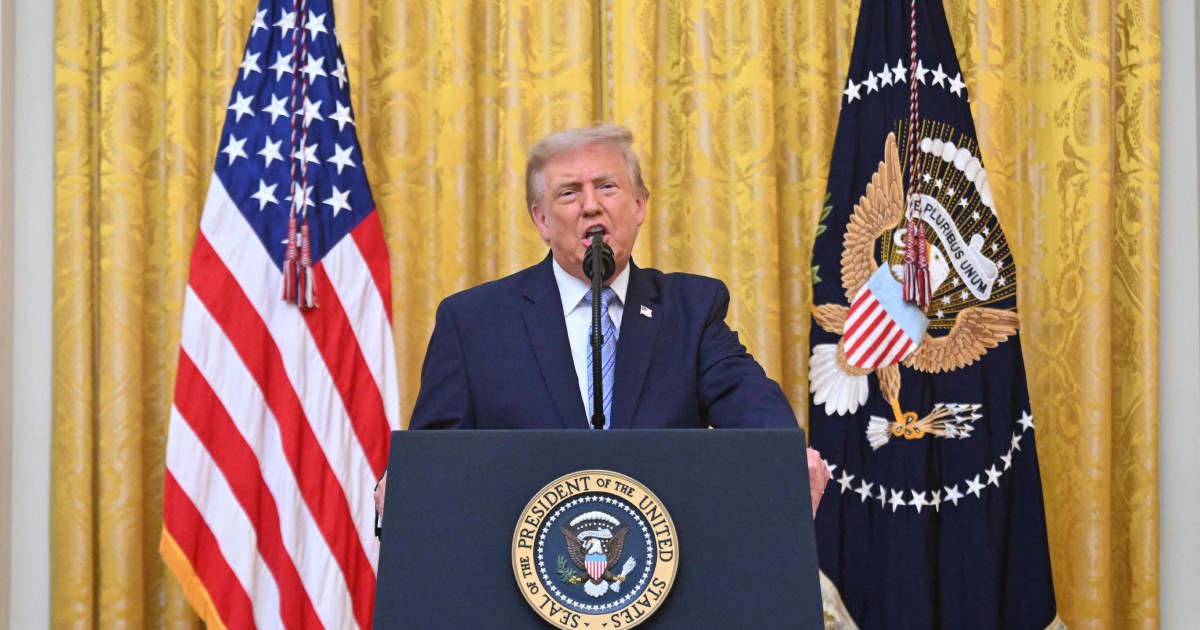
US President Donald Trump has returned to familiar rhetoric surrounding the 2020 presidential election, resurrecting allegations that have been extensively investigated, examined by courts, and rejected by independent fact-checkers and election officials across the country. During remarks made on Thursday, the president reiterated assertions that China orchestrated the theft of millions of American voter records and insinuated that Venezuela possessed the capability to alter voting machine outcomes. These claims represent a continuation of Trump's persistent narrative about the legitimacy of the 2020 election results, despite overwhelming evidence from government agencies, judicial rulings, and bipartisan election commissions dismissing such allegations.
The allegation regarding Chinese cyber theft lacks substantiation in documented evidence or official findings. Electoral security experts and cybersecurity officials have repeatedly clarified that while voter registration databases have experienced isolated breaches over the years, no credible evidence demonstrates that such breaches influenced election outcomes or that China orchestrated a coordinated campaign to steal American voter information on the scale Trump suggests. The Cybersecurity and Infrastructure Security Agency, a federal body tasked with protecting election systems, has consistently maintained that the 2020 election represented the most secure in American history from a technical standpoint.
Trump's assertion regarding Venezuelan capabilities to manipulate voting machines similarly contradicts documented reality. Venezuela does not possess the technological infrastructure or sophistication necessary to conduct remote alterations of American voting systems, particularly given the decentralised nature of election administration across thousands of jurisdictions using diverse equipment. Election security researchers have emphasised that voting machines operated during the 2020 election featured extensive safeguards, including paper ballot backups and post-election audits designed specifically to detect unauthorised tampering.
The persistence of these claims carries particular significance for Southeast Asian observers, given the region's own concerns about election integrity and foreign interference in domestic political processes. The willingness of a major democratic leader to repeatedly advance allegations contradicted by his own administration's security agencies and courts demonstrates how misinformation about elections can entrench itself in political discourse, potentially influencing how populations elsewhere regard claims about electoral manipulation and foreign intervention. Malaysia and other regional democracies face comparable challenges in maintaining public confidence in electoral processes while confronting disinformation campaigns.
Numerous court proceedings, including cases brought before judges appointed by Trump's own party, examined detailed evidence regarding alleged election irregularities and consistently determined that the claims lacked factual foundation. Lawyers representing the Trump campaign struggled to present substantive evidence during these proceedings, leading judges to dismiss case after case. Election officials from both parties, including Trump appointees managing elections in crucial states, attested to the integrity of the voting process and the accuracy of results.
Multiple audits and recounts conducted in disputed jurisdictions reinforced the accuracy of official tallies, yet Trump continues to revive the rejected allegations with minimal modification. This pattern reflects a broader challenge facing democracies attempting to maintain institutional credibility when political leaders systematically undermine trust in election administration without evidence. For regional democracies striving to strengthen electoral systems and public confidence, the American experience illustrates how persistent false claims can damage institutional legitimacy regardless of factual refutation.
Election security officials, including those originally appointed by Trump's administration, have established the comprehensive protections embedded in American election systems. Multiple layers of verification exist, including voter registration cross-checks across states, ballot paper trails, equipment testing protocols, and post-election audits. These mechanisms were specifically designed to identify and prevent the types of large-scale fraud Trump alleges, yet he persists in claiming the system failed despite all available evidence indicating otherwise.
The revival of these allegations occurs within a context where Trump continues seeking political rehabilitation and maintains substantial support among his electoral base. Polling data indicates that a significant proportion of Americans who support Trump believe the 2020 election involved substantial fraud, despite factual analysis proving otherwise. This disconnect between demonstrated reality and public perception highlights how repeated assertion of false claims can create persistent political divisions and undermine democratic processes.
For international observers, including those in Malaysia monitoring American political developments, the situation underscores fundamental challenges facing established democracies. When prominent political figures advance allegations contradicted by comprehensive investigation, court proceedings, election officials, and security agencies, public trust in institutions becomes fractured. The durability of false narratives despite authoritative refutation remains a significant concern for electoral systems globally, particularly in regions where institutional credibility already faces pressure from other sources.
The continuation of these allegations also raises questions about accountability mechanisms for public figures who advance demonstrably false claims about election integrity. Unlike institutions in some democracies that have established specific protocols for addressing disinformation from political leaders, American systems offer limited mechanisms to constrain such rhetoric. This absence of institutional guardrails against sustained falsehoods about elections represents a distinctive challenge for American democracy that resonates differently across diverse political systems globally.

