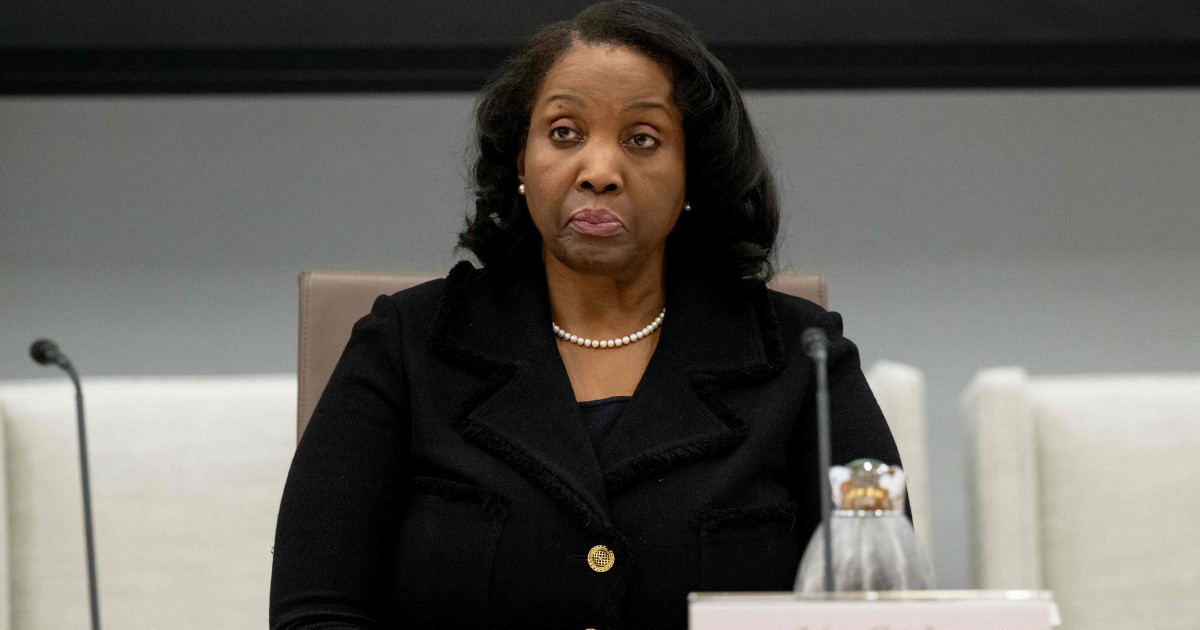
US President Donald Trump is pressing ahead with his campaign to unseat Federal Reserve Governor Lisa Cook, citing mortgage fraud allegations as justification for her removal from office. A White House letter reviewed by AFP on Friday confirmed the administration's renewed determination to pursue this course of action, marking a significant escalation in tensions between the executive branch and the independent central bank at a critical moment for American economic policy.
This latest move represents Trump's second substantial attempt to dislodge Cook from her position on the Federal Reserve's Board of Governors. The President's first effort encountered a major obstacle in June when the Supreme Court declined to support the administration's position, effectively blocking what would have been an unprecedented removal of a sitting Fed governor during an ongoing term. That setback did not deter Trump, who has now marshalled new legal arguments and procedural avenues to mount a fresh challenge to Cook's tenure.
The mortgage fraud allegations underpinning Trump's campaign have been central to his criticism of Cook since before he took office. The White House has framed these accusations as disqualifying for someone holding such an influential position within the nation's financial system, arguing that public confidence in the Federal Reserve requires leadership of unquestioned integrity. The allegations themselves remain contested, and Cook has denied any wrongdoing, maintaining her position that she has acted appropriately throughout her tenure.
Cook's position as a Federal Reserve Governor places her among the most powerful economic policymakers in the United States. As a member of the Board of Governors, she participates in decisions affecting interest rates, inflation targets, and the broader trajectory of American monetary policy. Her removal would represent a seismic shift in the Fed's governance structure and raise profound questions about presidential power over the supposedly independent central bank. The Fed's independence from political pressure is widely regarded by economists as essential to maintaining long-term credibility and preventing short-term political considerations from distorting monetary policy.
The Trump administration's determination to revisit this issue reflects the President's broader scepticism towards institutional independence and his preference for appointing officials loyal to his vision. Throughout his first term and into his second, Trump has demonstrated a willingness to challenge established norms around executive restraint, particularly regarding appointments and the removal of officials he views as obstacles to his agenda. The Federal Reserve, which has long maintained a careful distance from partisan politics, now finds itself directly in the crosshairs of this confrontational approach.
For regional observers in Southeast Asia and Malaysia, the implications of this institutional struggle carry weight beyond American borders. The Federal Reserve's decisions on monetary policy, interest rates, and dollar strength reverberate through global financial markets and directly influence exchange rates, capital flows, and investment decisions across developing economies. Political pressure on the Fed that might constrain its independence or alter its decision-making calculus could contribute to greater volatility in international markets, creating headwinds for countries heavily reliant on stable currency valuations and predictable monetary conditions.
The broader question of how American institutions will respond to sustained political pressure from the executive branch remains unresolved. The Supreme Court's June decision provided one answer, but the Court's reasoning and the durability of its position remain subjects of intense legal debate. If Trump succeeds in removing Cook through alternative means, it could establish a troubling precedent that dramatically weakens the Fed's insulation from partisan influence. Conversely, if the courts again block his efforts, it would suggest that some institutional boundaries remain enforceable despite presidential determination to breach them.
Cook herself has remained largely out of the public spotlight during this confrontation, focusing on her duties as a Fed governor rather than engaging in public disputes with the administration. Her background includes significant academic credentials in economics and expertise in central banking matters, credentials that typically command respect among professional economists regardless of political affiliation. Her relative silence stands in contrast to Trump's public criticism, reflecting different approaches to institutional conflict.
The timing of this renewed effort comes at a moment when the Federal Reserve faces consequential decisions about the trajectory of American monetary policy. Economic growth, inflation, employment, and international trade considerations all intersect at the Fed's policy table. Having a stable, predictable governance structure during such critical deliberations matters enormously to markets and policymakers worldwide. Institutional uncertainty created by ongoing battles over Cook's tenure could complicate the Fed's ability to chart a steady course.
Legal experts remain divided on whether the President possesses constitutional authority to remove a Federal Reserve Governor, with previous judicial rulings suggesting significant limitations on such power. However, the arrival of a new legal team and the administration's evident willingness to pursue the matter through multiple channels suggests this will not be quickly resolved. The coming months may clarify the constitutional boundaries of presidential power and the durability of American institutional safeguards against executive overreach.

