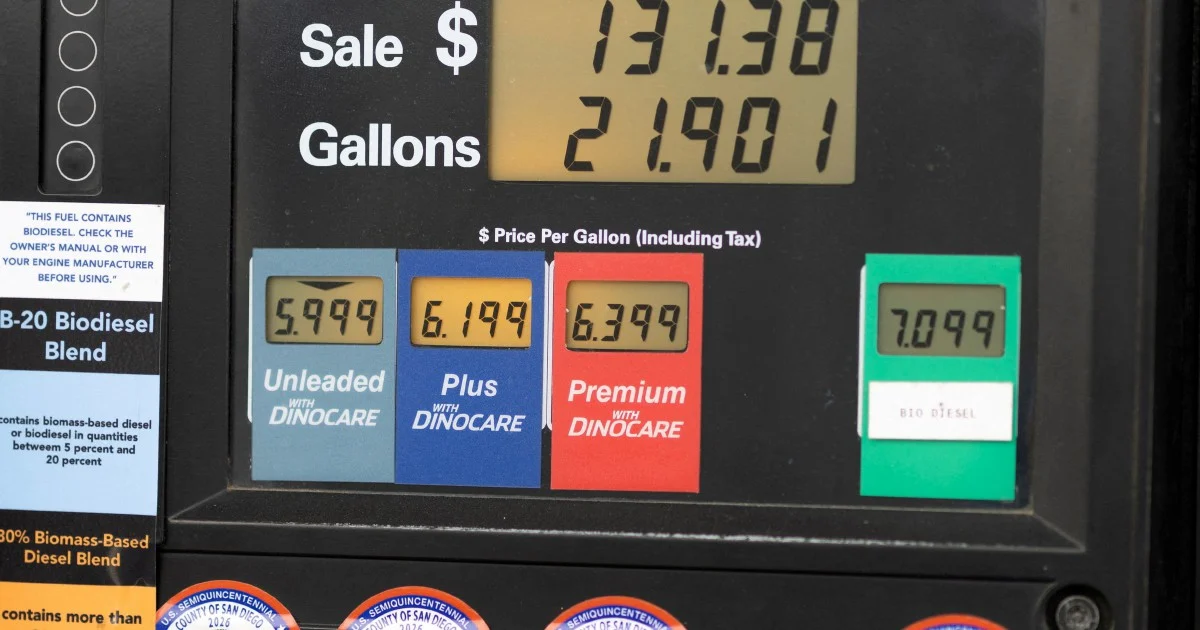
United States President Donald Trump announced on Wednesday that he has directed authorities to investigate leading oil corporations, attributing persistent high gasoline prices to potential market manipulation. The move reflects frustration within the Trump administration that fuel costs have not fallen as rapidly as expected, adding pressure on the White House as tensions in the Middle East continue to ripple through global energy markets.
Trump's directive comes amid mounting criticism from both political opponents and everyday Americans struggling with elevated petrol costs at the pump. The investigation signals the administration's willingness to confront the oil industry, traditionally an ally of Republican policymakers, over what it perceives as insufficient price reductions that consumers deserve given current market conditions. The timing of the announcement underscores the political sensitivity surrounding energy costs, which significantly influence household budgets and public sentiment toward any sitting government.
The Middle East conflict has loomed large over energy markets for months, creating genuine supply concerns and price volatility. However, global oil production has remained surprisingly resilient, with supplies from multiple regions offsetting disruptions. This disconnect between geopolitical risk and actual market outcomes has puzzled energy analysts and frustrated policymakers who expected more dramatic petrol price falls once initial uncertainty faded. The Trump administration's investigation appears to probe whether oil corporations are profiting excessively from crisis fears rather than genuine scarcity.
Investigations into oil company practices are not unprecedented in American politics, though they rarely yield major prosecutions or penalties. Past Congressional inquiries into the energy sector have revealed industry practices around pricing, inventory management, and strategic reserve decisions, yet structural market forces typically dominate fuel costs far more than corporate conspiracy. What makes Trump's current intervention notable is the explicit link to geopolitical events and the suggestion that companies are not passing savings to consumers quickly enough.
From a Southeast Asian perspective, American energy policy decisions carry significant implications. Several countries in the region import substantial quantities of petroleum products or have interests in oil refining operations, making them sensitive to price trends shaped by US policy. Additionally, regional governments monitor how the world's largest economy addresses energy security and corporate oversight, potentially influencing their own regulatory approaches. An effective investigation could establish precedent for addressing oil company behaviour during crisis periods.
The investigation also reflects broader tensions within market-oriented economies regarding when government intervention is justified. Trump's approach represents a pragmatic challenge to pure free-market ideology, suggesting that even conservative administrations may intervene when public grievance reaches critical levels. Oil companies argue that prices reflect genuine supply-demand dynamics and geopolitical risks beyond their control, whilst critics contend that oligopolistic market structures allow excessive pricing power during crisis periods.
Energy economists note that petrol prices typically decline more slowly than crude oil prices increase, due to refining capacity constraints and downstream distribution margins. When crude oil rallies sharply due to geopolitical shocks, refinery processing bottlenecks can limit the speed at which lower crude costs translate into pump savings. However, once those constraints ease—as they appear to have done—consumers reasonably expect more substantial relief. The administration's investigation may scrutinise whether oil firms intentionally maintained elevated margins during this transition period.
The inquiry also highlights the Trump administration's focus on energy independence and domestic production, themes central to its broader economic agenda. By investigating major oil corporations, the administration can simultaneously appear consumer-friendly whilst potentially paving the way for policies favouring domestic energy producers. This dual messaging appeals to both petrol-conscious consumers and the energy industry constituencies that support Republican candidates, though the competing interests create inherent tensions.
Market observers expect the investigation to generate significant political theatre whilst delivering modest concrete results. Subpoenaing executives and demanding documents can create headlines and pressure firms to moderate pricing behaviour, yet proving intentional market manipulation remains extraordinarily difficult legally. Nevertheless, the threat of investigation alone may encourage companies to accelerate price reductions, delivering the administration's desired outcome through regulatory intimidation rather than formal enforcement action.
The petrol price issue also intersects with broader inflation concerns that have defined economic discussions throughout 2024 and into 2025. Fuel costs influence transportation expenses, supply chain pricing, and consumer confidence—making energy prices far more consequential than their simple contribution to inflation statistics suggests. A visible effort to address high petrol costs through investigation appeals to voters frustrated with persistent price pressures affecting daily living expenses.
Looking forward, the investigation's findings and any resulting recommendations could shape future American energy regulation regardless of which political party holds power next. Establishing precedent for investigating oil company pricing during geopolitical emergencies may become standard practice, particularly as global tensions remain elevated and energy markets remain vulnerable to supply disruptions. For Malaysian businesses engaged in petroleum refining, trading, or distribution, such regulatory shifts in major markets warrant careful monitoring.