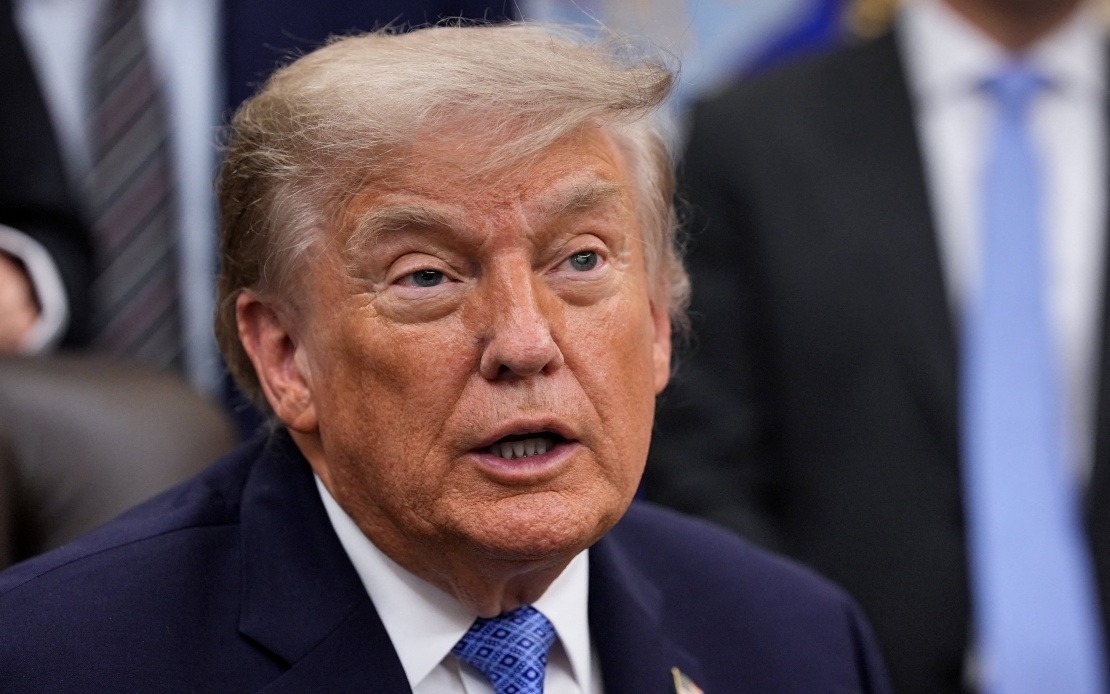
US President Donald Trump has escalated tensions with Canada over cross-border air pollution, directly attributing the widespread wildfire smoke affecting major northeastern cities to what he characterises as poor forest stewardship by the Canadian government. In a Friday posting on his Truth Social platform, Trump announced his intention to impose financial consequences on Canada through elevated tariffs, suggesting that the economic cost of managing the pollution should be incorporated into the trade penalties the country already faces. This move represents another instance of the Trump administration weaponising trade policy to address what it views as policy failures or unfair practices by neighbouring nations.
The smoke blanketing parts of North America originates primarily from dozens of active wildfires concentrated in Ontario and across the border in the northern Minnesota region. The resulting air quality crisis has extended southward and eastward, creating hazardous conditions across a vast swath of the continent that encompasses major metropolitan areas including Toronto, Chicago, Detroit and Washington. New York City experienced particularly severe impacts, with residents and visitors encountering dramatically reduced visibility and the acrid smell of smoke persisting throughout the day. The scale of the cross-border environmental event underscores how natural disasters respect neither political boundaries nor trade relationships.
Trump's explanation for the fires centres on alleged inadequate forest maintenance practices by Canadian authorities. He argued that Canada has failed to implement proper forest management strategies, specifically pointing to insufficient removal of brush, debris and other combustible materials that accumulate on forest floors. According to his assessment, these forestry management failures directly precipitated the development and severity of the current wildfire crisis. The president characterised the resulting air pollution as an unacceptable imposition on American citizens, describing it in inflammatory terms as a dirty invasion of unhealthy and dangerous air quality that Americans should not tolerate.
However, the scientific consensus regarding the underlying causes of North American wildfires diverges significantly from Trump's narrative. Extensive research conducted by climate and environmental scientists attributes the increasing frequency, intensity and geographic spread of wildfires across the continent primarily to climate change and shifting atmospheric conditions. Rising temperatures, extended drought periods, and altered precipitation patterns create ideal conditions for wildfires to ignite and spread across vast territories. This scientific understanding suggests that blaming forest management alone oversimplifies the complex factors driving the current wildfire season and potentially misdirects policy responses toward addressing only surface-level symptoms rather than fundamental climatic drivers.
Trump indicated that he planned to contact Canadian Prime Minister Mark Carney directly to discuss what measures Canada intended to implement in response to the crisis. This proposed bilateral conversation suggests an intention to pressure the Canadian government into accepting responsibility for addressing what Trump views as a Canadian-created problem affecting American territory. The framing of the issue as Canada's responsibility requiring rectification reflects a particular diplomatic approach that emphasises national accountability for transnational environmental impacts, though it sidesteps the question of how effectively either nation can control natural phenomena.
Ontario Premier Doug Ford responded to the criticism with a notably different tone, advocating for practical cooperation rather than confrontation. Ford suggested that rather than assigning blame, political leaders should focus on mobilising assistance to address the immediate crisis. He pointed out that Canada had previously extended similar aid to American communities facing natural disasters, implicitly arguing that bilateral environmental cooperation should transcend disputes over causation or responsibility. This perspective emphasises the mutual vulnerability that both nations face to natural disasters and the pragmatic benefits of collaborative rather than adversarial responses.
The dispute carries significance for Malaysia and the broader Southeast Asian region in several respects. First, it illustrates how climate-related environmental challenges increasingly cross borders and create diplomatic friction between nations, a pattern that Southeast Asian countries also experience with issues such as transboundary haze and water resources. Second, the threat to employ trade mechanisms as leverage for environmental grievances establishes a precedent that other nations might adopt, potentially complicating regional trade relationships. Third, the disagreement between Trump and Canadian officials regarding wildfire causation reflects broader debates about whether climate change or forest management drives environmental crises—debates that directly affect Southeast Asian countries dependent on forest resources and vulnerable to climate impacts.
The tariff threat represents an escalation in Trump's use of trade policy as a tool for addressing issues that fall partially outside traditional commercial disputes. By linking environmental consequences to tariff levels, Trump expands the scope of considerations that might justify trade penalties. This approach could establish expectations that nations should face economic consequences for activities that harm neighbouring countries, even when those activities result from complex natural phenomena rather than deliberate policy choices. For Malaysia, already navigating complex trade relationships with multiple partners, such precedents carry implications for how disputes over environmental impacts, resource extraction or transboundary pollution might be resolved in commercial terms.
The underlying factual disagreement between Trump's assessment and scientific consensus raises questions about how disputes over environmental causation should be resolved in international relations. When political leaders attribute environmental phenomena to policy failures rather than acknowledging scientific explanations centred on climate change, they risk diverting resources toward responses that fail to address root causes. For Southeast Asian nations already grappling with environmental degradation, haze pollution and climate impacts, the Canadian-American dispute offers cautionary lessons about the importance of grounding environmental policy in scientific understanding rather than political blame assignment.
The incident also reflects broader patterns in how the Trump administration has approached relationships with neighbouring nations. The willingness to threaten tariff increases over environmental grievances indicates a broader strategy of using economic tools to advance policy objectives across multiple domains. For Malaysia and other Southeast Asian nations engaged in trade with the United States, such unpredictability in the application of tariffs and trade measures creates planning challenges and reinforces the importance of diversifying trade relationships.
As wildfire season continues across North America, the political dispute between Washington and Ottawa is likely to persist unless the immediate environmental crisis abates. The question of whether Canadian forest management practices require reform remains separate from the question of whether such practices contributed significantly to current conditions. Meanwhile, both nations face the practical challenge of managing air quality impacts on their populations while navigating the underlying climate trends that appear to be intensifying fire seasons across the continent.

