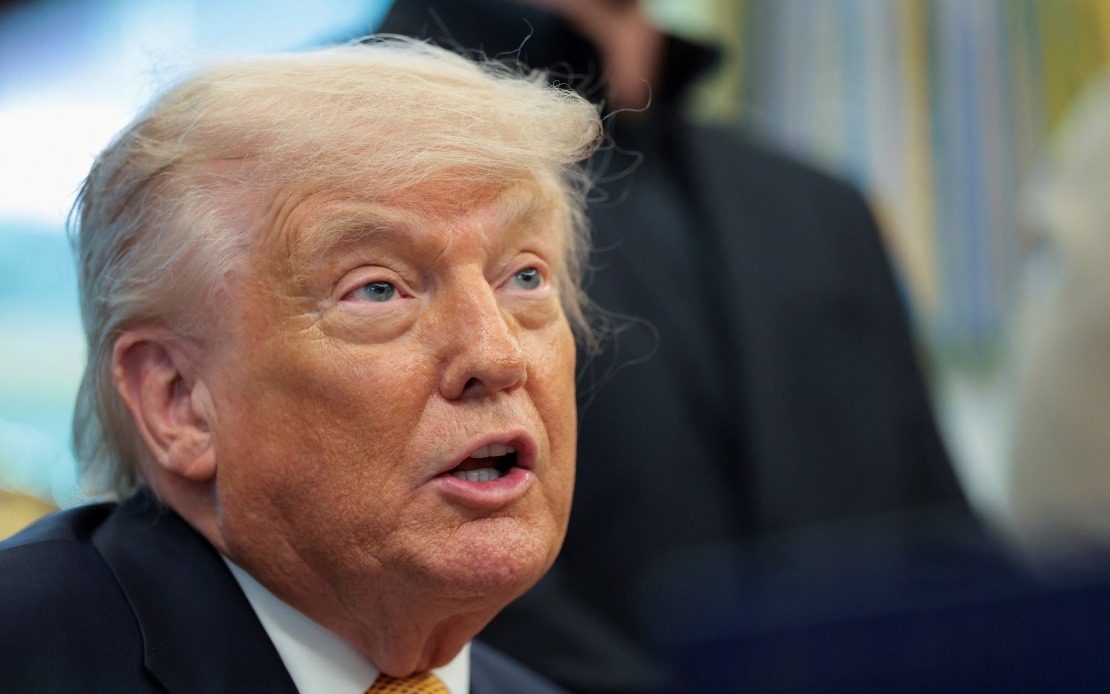
President Donald Trump declared on Wednesday that negotiations over Iran's nuclear programme are progressing favourably, marking a significant diplomatic shift following weeks of military escalation between the United States and Tehran. Speaking to reporters before departing for North Dakota, Trump characterised the ongoing talks in Doha as productive, noting that his special envoys Steve Witkoff and Jared Kushner have achieved "very good meetings" with Iranian representatives in Qatar.
The American president's optimistic assessment comes at a critical juncture in US-Iranian relations. Trump's decision to prioritise diplomatic engagement represents a recalibration of strategy following earlier discussions with senior defence officials, including Defence Secretary Pete Hegseth, about potential military escalation. Despite internal deliberations about resuming large-scale conflict, the White House has chosen to pursue negotiated settlement, a choice that signals both calculation and pragmatism in managing one of the world's most volatile geopolitical relationships.
Trump's characterisation of Iran as having "come a long way" reflects a more conciliatory tone than recent weeks would suggest. His acknowledgment that American military operations "hit them very hard last week" underscores the intensity of recent hostilities while simultaneously implying that maximum pressure has created conditions favourable to negotiation. This framing allows the administration to present diplomacy not as weakness but as a logical continuation of coercive strategy by other means.
Technical discussions between Washington and Tehran have reportedly advanced significantly, according to financial and diplomatic sources monitoring developments in Doha. These talks address multiple interconnected issues extending well beyond nuclear matters. A comprehensive memorandum of understanding, electronically signed by Iranian President Masoud Pezeshkian and Trump, provides the structural framework for these negotiations. The agreement encompasses cessation of hostilities across all fronts, including Lebanon where proxy forces have engaged in sustained confrontation, sanctions relief mechanisms, resolution of outstanding nuclear questions, unrestricted access through the Strait of Hormuz, and broader regional security architecture.
For Malaysian readers and Southeast Asian observers, these developments carry significant implications. The Strait of Hormuz, through which approximately one-third of global seaborne petroleum trade passes, directly affects regional energy security and supply chain stability. Any agreement reopening unrestricted passage through these strategic waters would benefit regional economies dependent on stable energy imports and uninterrupted maritime commerce. Malaysia's petrochemical industries and shipping sectors have considerable interest in normalised Gulf conditions.
The involvement of Pakistan as a broker in this diplomatic process merits particular attention. Pakistan's role mediating between Washington and Tehran reflects its historical position as a bridge between Middle Eastern and Indo-Pacific geopolitics. The memorandum's framework suggests that regional actors, including neighbouring countries, recognise mutual benefits from de-escalation. This architecture for negotiation differs markedly from previous diplomatic attempts, incorporating multiple layers of engagement rather than direct bilateral confrontation.
Tehran has officially maintained that all consultations with American representatives occur exclusively through intermediaries, explicitly denying that scheduled direct meetings are occurring. This position preserves Iranian dignity and allows both parties to negotiate without appearing to capitulate to the other. Such diplomatic choreography, while seeming performative to external observers, serves important domestic political functions for both governments and reflects longstanding patterns in Middle Eastern statecraft.
The substantive content of these discussions addresses fundamental sources of US-Iranian friction accumulated over decades. Nuclear proliferation concerns, which have driven international sanctions since Iran's nuclear programme accelerated, remain central to American security calculations. For Iran, sanctions relief constitutes an existential economic priority, given the devastating impact of financial isolation on its population and development prospects. The intersection of these competing imperatives creates both obstacles and potential breakthrough opportunities for negotiators.
The broader regional security arrangements referenced in the memorandum suggest conversations extending beyond US-Iranian dyadic relations to encompass systemic questions about Gulf stability. Regional allies including Saudi Arabia, United Arab Emirates, and other Gulf Cooperation Council members have significant stakes in the outcome. Their concerns about Iranian regional ambitions, particularly support for non-state actors and proxy forces, must somehow be reconciled with any sustainable agreement.
For Southeast Asian governments monitoring these developments, the trajectory of US-Iran relations influences broader American strategic posture in the Indo-Pacific. Washington's bandwidth for engagement across multiple regions depends partly on Middle Eastern stability. Malaysian policymakers, navigating relations with both Western powers and Islamic nations across the Muslim world, must calibrate positions based on emerging consensus among major powers regarding appropriate engagement with Iran.
The shift toward diplomatic prioritisation, if sustained, could reshape Middle Eastern geopolitics profoundly. However, the fragility of these emerging arrangements remains evident. Both sides maintain considerable domestic constituencies sceptical of compromise, and implementation mechanisms for complex agreements across multiple dimensions of interstate relations present formidable technical and political challenges. The next weeks will clarify whether current optimism reflects genuine breakthrough potential or temporary diplomatic positioning.

