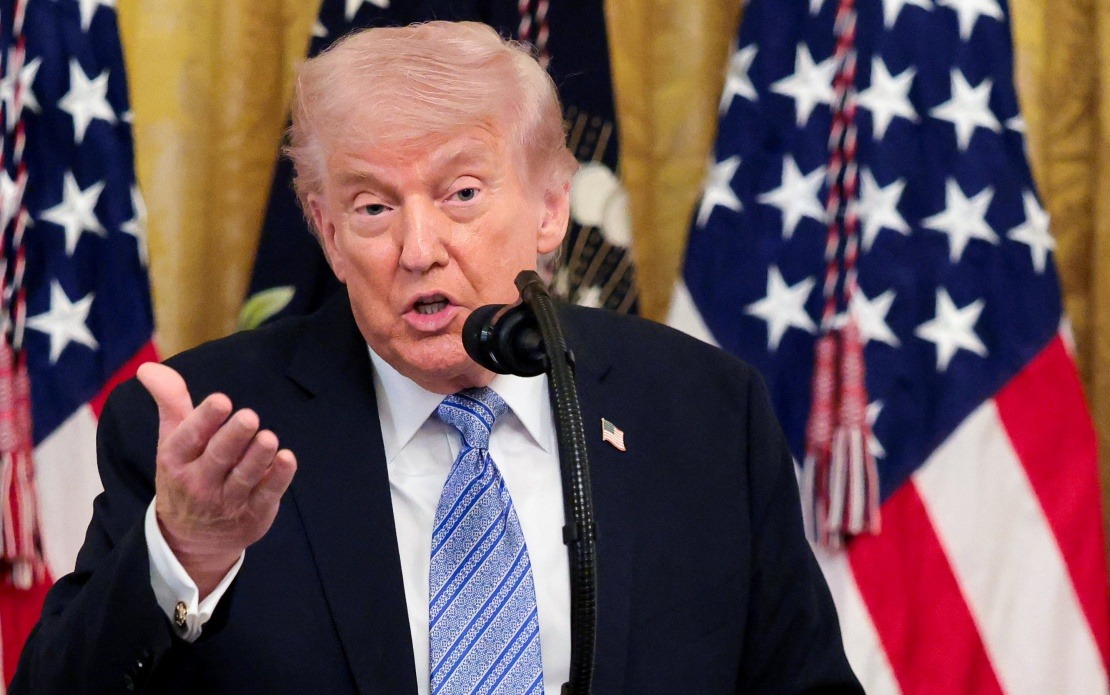
Donald Trump has reportedly thrown his weight behind an unconventional candidate for the position of United Nations secretary-general: Gianni Infantino, the current president of FIFA. According to the New York Post, the US president believes Infantino possesses a unique ability to unite disparate international actors, a quality Trump considers essential for leading the global organisation. The nomination represents an audacious shift in how Washington views the role, suggesting the administration views diplomatic experience within traditional UN circles as less valuable than proven skills in building consensus across diverse stakeholder groups.
Infantino, 56, has cultivated a noteworthy relationship with Trump over recent months, particularly during this year's World Cup proceedings. The Swiss-born football administrator made deliberate overtures towards the American president, culminating in December when FIFA presented Trump with its inaugural Peace Prize. These gestures appear to have resonated with Trump, who has a documented appreciation for symbolic honours and public recognition of his perceived diplomatic contributions. The timing and nature of these interactions suggest a carefully calibrated effort to position Infantino as a figure of international stature capable of earning Trump's endorsement.
The pathway to the UN's top job remains complex and politically fraught. The successor to incumbent Secretary-General António Guterres will assume office on 1 January 2027 for a five-year mandate. However, obtaining the position requires navigating the UN's institutional architecture, particularly Article 97 of the UN Charter, which vests appointment power with the General Assembly acting upon recommendation from the Security Council. This dual-gatekeeping arrangement means that Infantino would first require support from the 15-member Security Council, where the five permanent members—the United States, Russia, China, France, and the United Kingdom—each possess veto power. Any single permanent member can block the nomination, making it essential to build consensus among rival powers.
Trump's interest in reshaping the UN leadership reflects his longstanding frustration with the institution's performance in global conflict resolution. The president has been vocal in criticising what he characterises as the organisation's inadequacy in addressing major international crises, from regional wars to humanitarian emergencies. This dissatisfaction extends beyond rhetorical complaints; since returning to office, the Trump administration has implemented substantial reductions in American financial contributions to UN operations and has withdrawn from several UN-affiliated bodies. Most notably, the administration pulled out of the World Health Organization, signalling a broader retreat from multilateral health governance structures that the previous administration had championed.
Last year, Trump established a US-led Board of Peace as part of his administration's broader strategic shift. The creation of this parallel body prompted considerable international speculation that Washington was constructing an alternative framework to the UN, particularly as the administration pursued bilateral peace negotiations, including controversial discussions between Israel and Hamas. Trump subsequently denied these interpretations, claiming the Board was merely supplementary rather than competitive. Nevertheless, the initiative underscores a pattern in which the administration questions the relevance of traditional multilateral institutions and seeks to pursue American interests through more direct, bilateral channels.
The Infantino nomination, if formally advanced, would represent an extraordinary departure from conventional practice. Unlike previous UN secretaries-general, who typically emerged from diplomatic corps or government service, Infantino's background lies primarily in sports administration. His leadership of FIFA has been marked by controversial decisions, including the expansion of the World Cup and the implementation of tournament hosting arrangements that have drawn criticism from human rights organisations. This unconventional profile could either be viewed as refreshingly independent from traditional UN establishment politics or as insufficiently grounded in the diplomatic experience the role historically demands.
For Malaysia and Southeast Asia, the implications of this potential nomination warrant careful consideration. A UN secretary-general perceived as close to the Trump administration might reshape how the organisation addresses regional issues, from maritime disputes to humanitarian concerns. The Association of Southeast Asian Nations, which has cultivated a position of strategic equidistance between major powers, might find its ability to leverage UN mechanisms in pursuit of regional stability complicated if the secretary-general is seen as tilted towards Washington's geopolitical priorities. Additionally, if Infantino were to assume the role, questions about the politicisation of the UN leadership would intensify, potentially weakening the organisation's perceived impartiality in mediating regional conflicts.
The nomination would also test whether the permanent members of the Security Council remain willing to exercise their veto powers when the United States proposes a candidate. Russia and China, which have frequently blocked Western-backed initiatives in the Security Council, might view an Infantino candidacy as unpalatable, particularly given the perception that he would function as an American proxy. Conversely, the European permanent members might struggle to oppose a candidate backed by a fellow Western power, even if they harbour reservations about his qualifications. The eventual outcome will reveal much about the current state of great-power cooperation at the UN.
Trump's endorsement of Infantino also raises questions about the credibility and legitimacy of the UN secretariat itself. The secretary-general traditionally operates as an impartial mediator and administrator of the organisation's policies, acting independently from the political preferences of major powers. A secretary-general widely understood to have ascended to the position through the personal patronage of a major power president would inevitably be shadowed by questions about his independence and objectivity. This perception could undermine the institution's moral authority precisely when the organisation faces criticism for ineffectiveness in addressing global crises.

