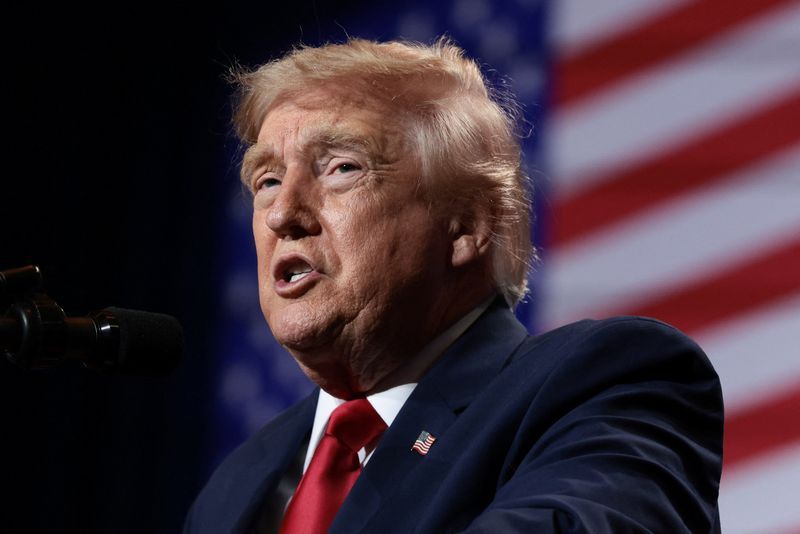
United States President Donald Trump has signed a national security presidential memorandum authorising enhanced cyber capabilities against transnational criminal organisations that operate across borders to harm American citizens and interests. The initiative, unveiled on Wednesday, represents a significant expansion of how federal law enforcement can leverage technological resources in combating sophisticated criminal networks, particularly those engaged in ransomware attacks, financial fraud, and other cross-border crimes.
The memorandum's central innovation lies in its framework for enlisting private sector expertise and infrastructure in offensive cyber operations. Rather than relying solely on government agencies, the directive encourages federal, state, and local authorities to partner with private technology companies and corporations to identify threats, gather intelligence on criminal organisations, and execute targeted cyber operations. This public-private collaboration model reflects growing recognition that sophisticated criminal enterprises operating internationally often require technological sophistication that matches or exceeds traditional government capabilities.
According to the White House, the memo establishes clear governance structures to ensure these operations remain under government control and direction. The Department of Homeland Security, working through its National Coordination Center within the Homeland Security Task Force, will oversee the creation of a dedicated program responsible for conducting specific cyber operations designed to disrupt foreign-based transnational criminal organisations. The Department of Justice will share supervisory authority, ensuring legal and policy compliance throughout all operations.
Participating private companies will operate under strict operational parameters. Once vetted and approved by federal authorities, these firms are authorised to conduct two categories of cyber activities: surveillance operations to gather intelligence on criminal targets, and what the memo terms "cyber effects operations." The latter encompasses direct offensive actions including potential manipulation, disruption, denial, degradation, or destruction of information systems, networks, and physical infrastructure controlled by those systems. This language suggests considerable scope for aggressive action against criminal digital assets and infrastructure.
Financial safeguards are built into the framework to mitigate risks associated with delegating offensive cyber capabilities to private entities. Companies participating in the program must maintain bonds or escrow accounts of at least one million dollars, a measure designed to ensure accountability and provide recourse should operations result in unintended consequences or damages. This requirement reflects acknowledgment that cyber operations, even when carefully planned, carry inherent risks of spillover effects or collateral impact.
The memorandum fundamentally restructures how the United States approaches cybercrime originating from foreign jurisdictions. Traditionally, federal law enforcement has pursued investigations and arrests through legal channels, often hampered by jurisdictional limitations when criminals operate from countries unwilling to cooperate with extradition or investigation requests. By authorising direct cyber disruption, the government gains capabilities to disable criminal infrastructure without requiring cooperation from foreign governments, potentially accelerating disruption of operations that harm Americans.
However, this approach carries substantial policy implications that extend beyond law enforcement considerations. Employing private companies in offensive cyber operations raises complex questions about escalation and unintended consequences. Cyber operations can be difficult to contain geographically or functionally—actions intended to disrupt a specific criminal network might inadvertently affect legitimate infrastructure sharing similar digital architecture. The involvement of multiple private actors, each conducting operations under government oversight, introduces coordination challenges and potential for miscommunication or operational conflicts.
The framework also reflects broader shifts in how major powers conceptualise cyber security and operations. Rather than treating cyber capabilities as purely defensive or intelligence-gathering tools, the memorandum positions them as legitimate instruments for direct action against foreign threats. This represents a more assertive stance that aligns with competitive approaches adopted by other nations, though it also creates precedent that other countries might cite when justifying their own offensive cyber programs.
For Southeast Asian nations and the broader Indo-Pacific region, this development carries particular significance. Transnational criminal organisations operating from and through Southeast Asian jurisdictions frequently target victims across borders, including Americans. Enhanced US capacity to disrupt these networks could have spillover benefits for regional security, potentially degrading capabilities of criminal groups that also victimise regional populations. Conversely, the expanded use of private sector cyber capabilities creates models that regional governments might seek to emulate, potentially accelerating cyber operations by other actors in the region.
The White House has not yet provided comprehensive details about which companies might participate, what specific selection criteria will apply, or how the government intends to identify targets meeting the threshold for cyber disruption. These operational specifics will likely emerge as DHS and the Department of Justice implement the program's requirements. The vagueness surrounding implementation details reflects the sensitivity surrounding cyber operations and the genuine technical and legal complexities involved in coordinating such activities.
Private sector participation in cyber operations remains contentious within security and policy circles. Previous instances of private companies conducting cyber activities have generated concerns about accountability, escalation risks, and the adequacy of oversight mechanisms. Critics argue that profit incentives may encourage aggressive operations that exceed strategic necessity, while proponents contend that private sector resources are essential for matching the sophistication of criminal and hostile state actors.
The memorandum's emphasis on specificity—requiring that operations target identified transnational criminal organisations rather than permitting broad cyber actions—suggests an attempt to address previous concerns about oversight and constraint. Nevertheless, determining whether the framework adequately protects against unintended consequences will depend entirely on how the supervising federal agencies interpret and implement the program's authorities. The coming months will reveal whether this approach becomes a effective tool for combating sophisticated transnational crime or whether implementation challenges force substantial modifications to the original vision.

