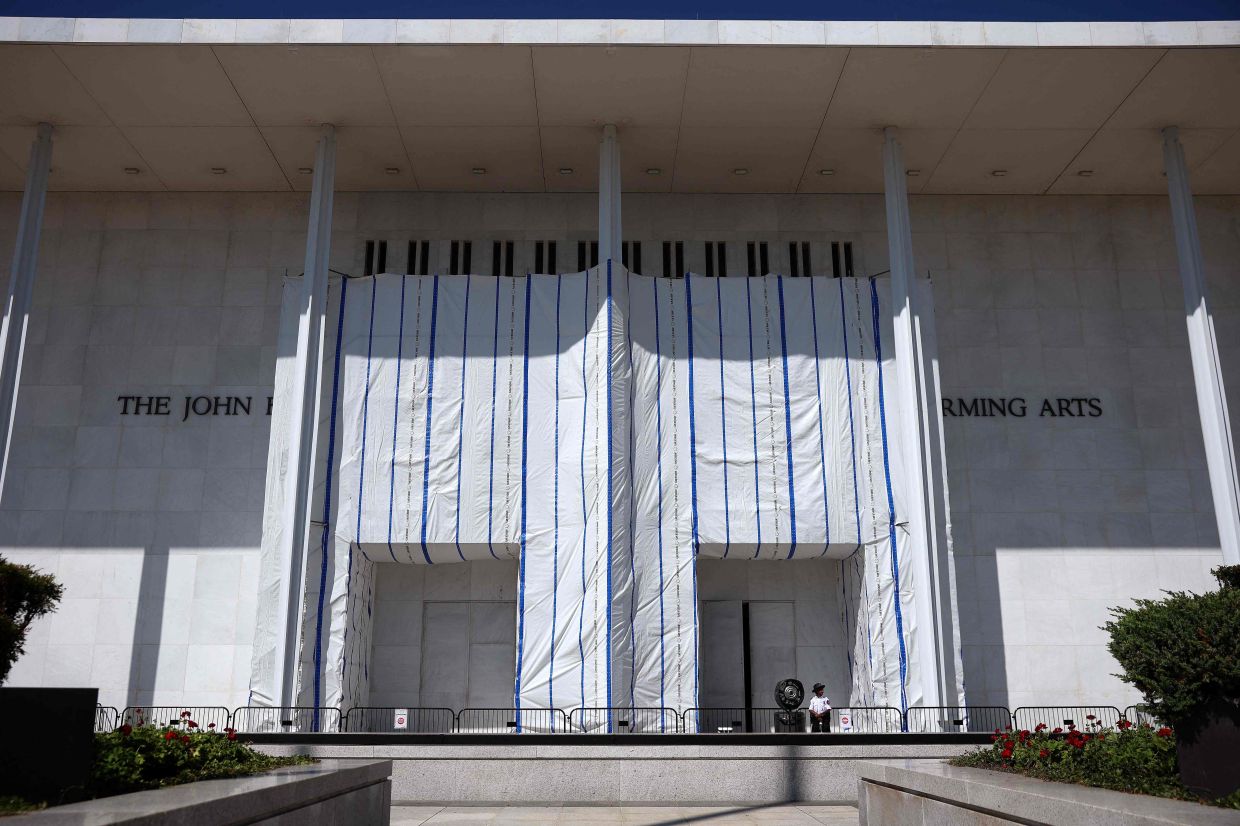
The Trump administration has escalated tensions over the Kennedy Center by suggesting that the iconic Washington performing arts venue could be demolished if federal courts obstruct its restoration and branding initiatives. In court filings submitted this week, Justice Department lawyers argued that without the administration's planned renovation and fundraising push, the cultural landmark would deteriorate into a structurally unsafe building requiring teardown. This dramatic threat underscores deepening conflict between the White House and Democrats who oppose adding Trump's name to an institution originally established as a memorial to assassinated president John F. Kennedy.
The Justice Department's assertion represents an unusually stark negotiating position in what has become a protracted struggle over the future identity and management of one of America's most recognisable cultural institutions. Attorney Brantley Mayers wrote that failure to proceed with Trump's restoration efforts would inevitably result in the center becoming "an unsafe, decrepit structure that will be required to be taken down." Rather than treating demolition as merely theoretical, Mayers went further by sketching an alternative vision: a large open-air amphitheater overlooking the Potomac River could replace the original building. Though acknowledging such an outcome would "fail to adequately honor" Kennedy's legacy, the Justice Department framing positioned this scenario as both inevitable and preferable to continued deterioration.
The administration's latest move reflects intensifying friction over naming rights and donor recognition. Trump's handpicked board at the Kennedy Center recently voted to inscribe "Restored and Renovated by President Donald J. Trump" beneath the institution's official name and to redesignate the surrounding plaza as "President Donald J. Trump Plaza." These decisions have provoked strong opposition from Democratic board members, including Congresswoman Joyce Beatty, who has pursued legal action to block what she characterizes as an unauthorized attempt to transform a presidential memorial into a tribute to the current occupant of the White House.
The underlying dispute touches on fundamental questions about institutional stewardship and appropriate use of public cultural assets. Beatty and her allies argue that Congress alone possesses constitutional authority to name the Kennedy Center, given its original designation as a "living memorial" to the slain president. A federal judge previously sided with this interpretation, ruling that the board could not unilaterally rename the institution and ordering the removal of earlier Trump signage placed on the building. The administration is currently appealing that decision, setting up a direct confrontation between judicial oversight and executive assertiveness over public property.
Meanwhile, the Justice Department has reframed the Kennedy Center's physical condition in apocalyptic terms to justify its agenda. The filing describes the building as "structurally unsound, fundamentally unsafe, and embarrassing to the nation's capital," a characterization that starkly contrasts with previous official descriptions from Kennedy Center management. Those earlier assessments portrayed the planned work as involving "extensive electrical, stage and leak-prevention repairs" without materially altering the exterior or reducing the building to its structural frame. The divergence between these two accounts suggests the Justice Department may be exaggerating the center's deterioration to strengthen its legal position.
Financial leverage forms another component of the administration's argument. Justice Department lawyers contend that Trump's administration has secured $258 million from Congress for restoration work and attracted a new donor base, implying that public recognition of the president is essential to maintaining philanthropic support. This reasoning essentially suggests that donors would withdraw contributions if Trump's name were not prominently displayed, effectively holding the institution's financial viability hostage to naming concessions. Such framing raises uncomfortable questions about whether private donors should effectively control how public cultural institutions are branded and commemorated.
For Malaysian and Southeast Asian observers, this dispute offers instructive parallels with ongoing debates across the region about how national institutions should acknowledge contemporary leaders versus historical figures. The tension between honouring those who contribute to restoration and maintaining institutional independence from political manipulation reflects universal governance challenges. Many Asian democracies have grappled with similar questions about naming rights, donor recognition, and the appropriate commemoration of founding figures versus current officials, making the Kennedy Center case instructively relevant.
The broader context involves the Trump administration's consistent effort to associate itself with high-profile projects and landmarks. Beyond the Kennedy Center, the White House has pursued naming opportunities and recognition across numerous federal properties and cultural institutions. These efforts reflect a particular approach to executive power that prioritizes visible acknowledgment and branding of the president's role in public works, a practice that critics argue blurs appropriate distinctions between the occupant and the office.
A federal hearing scheduled for Thursday will address both the proposed renovation closure and the latest attempt to recognize Trump on the building. This proceeding will likely determine whether courts will permit the administration's branding agenda or whether judicial intervention will enforce Beatty's vision of maintaining the Kennedy Center as an exclusive memorial to President Kennedy. The outcome carries implications extending beyond Washington, potentially establishing precedent for how federal institutions balance private philanthropy against public commemoration principles.

