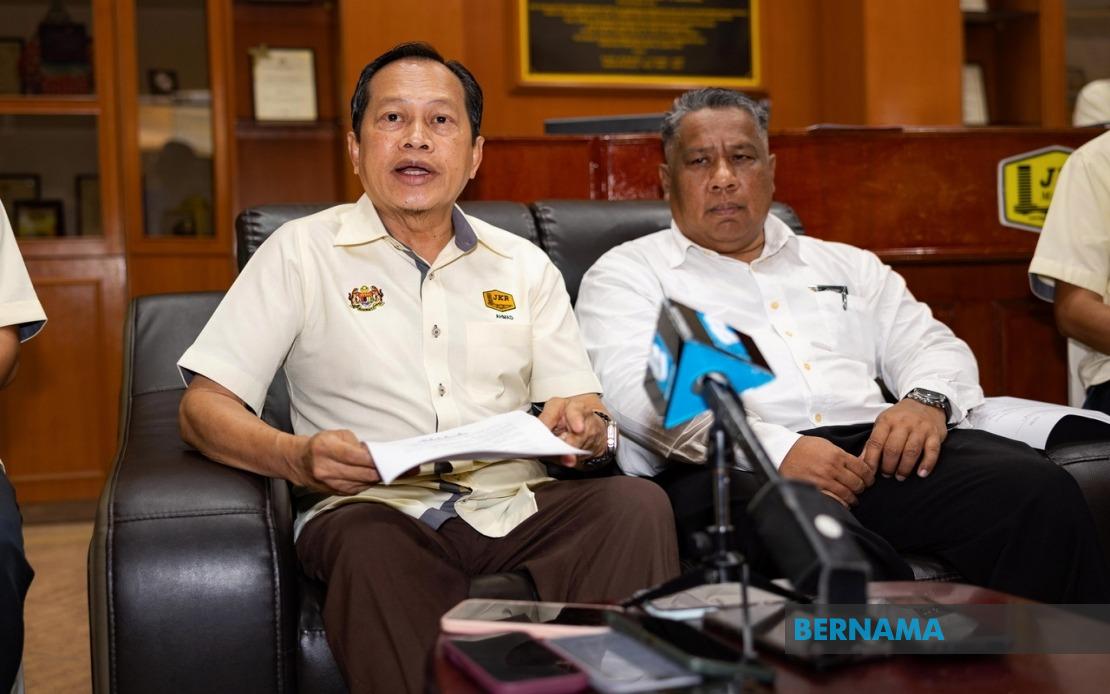
Following the death of four family members in a tree-fall incident on the Bentong-Kuala Lumpur Old Road last Sunday, the question of who bears responsibility for tree safety on Malaysian federal roads has come into sharper focus. During a working visit to the Manjung District Engineer's Office in Lumut on August 4, Deputy Works Minister Datuk Seri Dr Ahmad Maslan sought to clarify the jurisdictional boundaries that govern tree management along federal thoroughfares, emphasizing that the responsibility ultimately rests with local authorities rather than the Public Works Department (JKR) or private concessionaires.
The legal framework underpinning this division of labour is established under Section 101(b) of the Local Government Act 1976 (Act 171), which grants local authorities (PBT) the power to plant, prune, and remove trees within their administrative boundaries. Critically, this authority extends to trees situated on federal road reserves that fall within a local authority's jurisdiction, creating a system where road ownership and tree management responsibilities may rest with different entities. Ahmad Maslan's clarification was necessary because this arrangement has sometimes created confusion among the public and even policymakers about which agency should respond when trees pose risks to road users.
During his remarks, Ahmad Maslan took pains to distinguish between JKR's actual remit and what it does not do. The department, he explained, is responsible for road furniture and signage along roadsides—the hard infrastructure that makes roads functional and safe—but tree planting and management fall outside its purview. This delineation is important for understanding resource allocation and accountability within Malaysia's infrastructure maintenance ecosystem, where multiple agencies must coordinate to keep roads functional.
The deputy minister also addressed the constraints imposed by concession agreements that govern how private maintenance companies operate. According to these agreements, removing trees is not a routine maintenance activity. Trees may only be cleared once they have already fallen; proactive felling or pruning is not permitted under the contractual terms. This limitation underscores a broader tension in Malaysia's road maintenance system: private concessionaires operate within narrow parameters defined by their contracts, which may not always align with emerging public safety concerns or evolving understanding of vegetation management.
Ahmad Maslan's comments came in response to concerns raised by Bentong MP Young Syefura Othman, who called for stronger cooperation between JKR, maintenance concessionaires, and certified forestry experts to conduct regular technical assessments of mature trees and unstable slopes adjacent to federal roads. The Bentong incident, which claimed four lives, has intensified scrutiny of how Malaysia manages vegetation hazards on its road network. Experts argue that periodic assessments by qualified professionals could identify trees showing signs of disease, structural weakness, or root degradation before they fail catastrophically.
The tragedy raises a difficult question: does the current system adequately balance bureaucratic clarity with public safety? While the Local Government Act establishes clear responsibility, enforcement and proactive management may depend on the capacity and priorities of individual local authorities, which often face budgetary constraints and competing demands. Some authorities may lack the expertise to assess tree health, or the resources to act swiftly when hazards are identified. Meanwhile, JKR and concessionaires, though positioned closer to the roads themselves, are legally and contractually constrained from taking independent action.
For Malaysian motorists and residents, the practical implication is that safety depends on coordination between multiple agencies with different mandates and incentive structures. This fragmentation is not unusual in Malaysia's governance framework, but it can create gaps where public safety concerns fall through the cracks. The Bentong incident suggests that some of these gaps may have life-or-death consequences. Young Syefura Othman's appeal for better inter-agency cooperation and expert involvement acknowledges this structural reality and seeks to strengthen the connections between entities that currently operate with limited overlap.
Ahmad Maslan's visit to Manjung also provided a platform to emphasize KKR's commitment to infrastructure oversight more broadly. He stressed the importance of continuous monitoring and coordination between the Ministry of Works, state-level JKR offices, and district JKR units to ensure that projects and maintenance work meet specifications, schedules, and budget allocations. This vertical coordination is meant to cascade improved performance down through the system, though the effectiveness of such approaches often depends on local capacity and political will.
The deputy minister framed the discussion within KKR's broader agenda of strengthening technical service delivery and infrastructure development at the district level. By visiting Manjung and reviewing organizational structure and ongoing projects, Ahmad Maslan signaled that the ministry intends to maintain close oversight of how JKR and its partners execute their duties. He stated that KKR would continue to strengthen monitoring and coordination to ensure public infrastructure remains "safe and comfortable for public use." Yet the Bentong tragedy suggests that monitoring frameworks alone may be insufficient; they must be coupled with clear authority to act and resources to do so.
For Southeast Asia more broadly, Malaysia's challenge with tree safety on federal roads reflects a common problem: as countries invest heavily in road networks, they sometimes underinvest in the ongoing management of roadside vegetation. Many regional nations operate road systems where maintenance responsibility is split between government agencies and private concessionaires, creating similar coordination problems. How Malaysia addresses this issue—whether through legal clarification, enhanced inter-agency protocols, or resource reallocation—may offer lessons for neighbors facing similar dilemmas.
The question of whether current arrangements are adequate will likely be tested again. If another incident occurs, pressure will mount for more substantive changes, whether through amended concession agreements, enhanced authority for JKR, or stricter requirements imposed on local authorities. For now, Ahmad Maslan has placed the ball firmly in the court of local authorities, while signaling that JKR stands ready to assist. Whether that assistance proves sufficient will depend on how local authorities respond and whether they possess the capacity to fulfill their legal responsibilities effectively.

