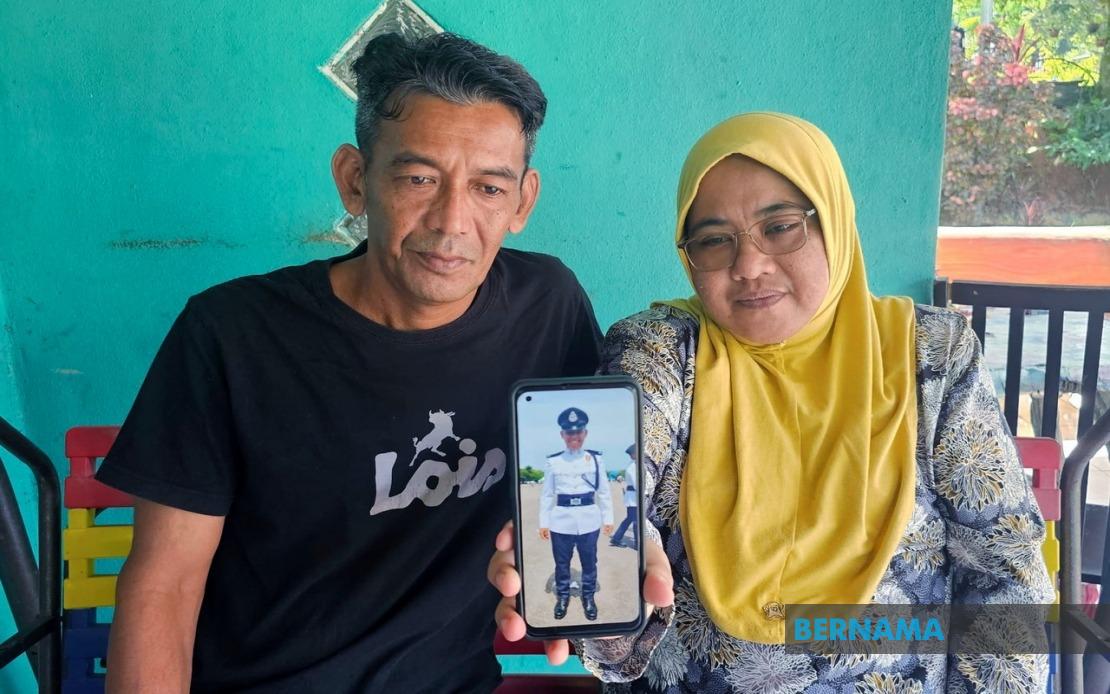
The sudden death of Constable Muhammad Raimi Ismarubee has shattered the hopes of a Terengganu family who were counting the days until their son returned home for leave. The 26-year-old policeman, stationed at Weston Police Station in Beaufort, Sabah, died on August 6 in what authorities believe was an electrocution incident while performing duties. His passing has left his parents grappling with a loss that came without warning, transforming an anticipated family reunion into a tragedy that claimed three lives in a single moment.
Muhammad Raimi's father, Ismarubee Ismail, 51, and mother, Nor Azila Zakaria, 46, had been looking forward to welcoming their son home later this month after weeks of planning. The young constable had expressed his desire to take leave in June but had delayed setting a firm date while searching for affordable flight fares from Sabah to Peninsular Malaysia. The family's anticipation made the news of his death even more crushing—a call from a friend at 6 pm on August 6 delivered the devastating information that would forever alter their lives.
What heightens the tragedy is the mundane, ordinary nature of the moment that claimed Muhammad Raimi's life. He had been helping to move a metal pole used for harvesting coconuts outside the police station premises near Sekolah Kebangsaan Weston when the fatal electrocution occurred. Just hours earlier, at 2 pm, he had shared encouraging news with his family via WhatsApp about a successful drug arrest operation, giving no indication that his day would end in such calamity. His father, still processing the shock, recalls the stark contrast between that afternoon message and the evening call that transformed everything.
The incident claimed the lives of two other police personnel as well. Corporal Chiu Teck Siong, 40, and Lance Corporal Mohamad Nur Hafiz Ibrahim, 29, both from the same Weston Police Station, also died in the electrocution. The tragedy underscores the occupational hazards faced by law enforcement personnel in Malaysia, sometimes in circumstances far removed from the conventional understanding of police work—routine maintenance and operational activities that can turn lethal in an instant without proper precautions or oversight.
Muhammad Raimi had been relatively new to his posting, having joined Weston Police Station in September 2024. Despite the short tenure, he had already established himself as a dedicated officer and a dutiful son who took his family responsibilities seriously. His last return home for holiday had been in January, making the planned August visit particularly significant as it would have been his first extended time with his family in several months. The spacing between his visits reflected the challenges faced by Malaysian police personnel stationed in East Malaysia, where geographical distance and the cost of travel create substantial barriers to family connectivity.
His mother recalls the conversations they had about his future aspirations, which extended well beyond his career in uniform. Muhammad Raimi had been planning to propose to a woman from Sabah and had set his wedding for next year, though he insisted on delaying the marriage until after his youngest sibling completed their Sijil Pelajaran Malaysia examinations. This decision reflected a thoughtful, family-oriented young man who prioritised his siblings' education and well-being despite his own life milestones beckoning. His financial contributions to the household were substantial—he sent money to his parents and siblings almost monthly and had purchased necessary items such as laptops for their studies.
Nor Azila painted a portrait of a caring son who understood his role in supporting the family's modest circumstances. As the second of three children, Muhammad Raimi had stepped into a quasi-parental role, ensuring his younger siblings had the resources they needed for their education. His father, Ismarubee, works as a labourer in Felda Kerteh 2 in Terengganu, and Muhammad Raimi's regular remittances had provided meaningful assistance to the family's financial situation. His loss represents not only an emotional devastation but also a practical hardship for the family he had been supporting.
The police have brought Muhammad Raimi's remains home to his family in Felda Kerteh 2, where he was buried on August 7 at the local Muslim Cemetery. The swift return of his body and the community's support represent some solace in an otherwise incomprehensible loss. However, the suddenness of his death leaves many questions unanswered about safety protocols at the police station and how a routine task involving a metal pole came to have such fatal consequences.
This incident raises critical questions about workplace safety in Malaysian police stations, particularly concerning activities that fall outside traditional law enforcement operations. The movement of agricultural equipment, coconut harvesting poles, or similar items should not pose electrocution risks in properly maintained facilities with appropriate grounding and electrical safety systems. The deaths of three experienced police personnel in a single incident suggests systemic issues that extend beyond individual negligence and point toward potential infrastructure or procedural deficiencies.
For Malaysian families with loved ones serving in uniform across the country, particularly those stationed far from home in Sabah and Sarawak, the tragedy serves as a sobering reminder of the occupational hazards that extend beyond the expected risks of police work. The emotional toll of separation, combined with unexpected dangers in routine activities, weighs heavily on the families left behind. Muhammad Raimi's parents, who had been counting down to his homecoming, must now find meaning and closure in the life their son lived and the positive impact he made despite his brief time with the police force.

