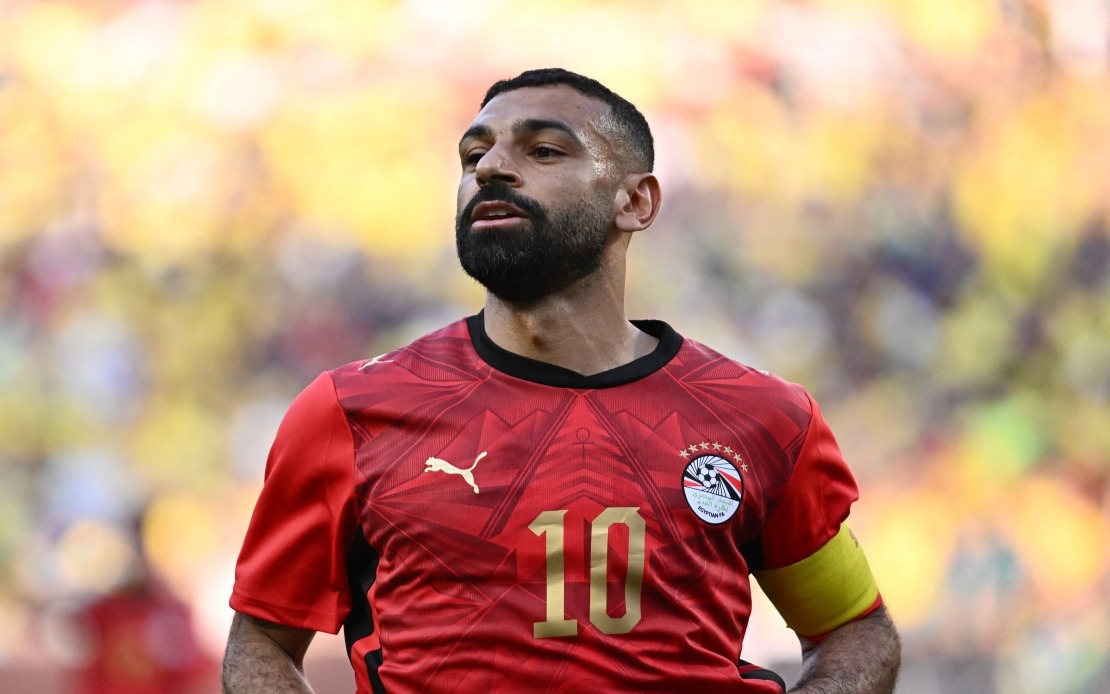
Turkish football club Trabzonspor has officially initiated transfer negotiations with Mohamed Salah, marking a significant development in the Egyptian footballer's career after his high-profile exit from Liverpool. The announcement came through a statement filed to the Istanbul Stock Exchange late Tuesday, signalling the club's serious intent to secure the signature of one of football's most decorated African talents. Salah's arrival in Turkey represents a substantial shift in the European football landscape, as elite players increasingly explore opportunities beyond the traditional top-five leagues.
The 34-year-old winger is scheduled to touch down at Istanbul Atatürk Airport on Wednesday at noon local time, with plans to travel onward to Trabzon that same evening. This swift logistical arrangement underscores both parties' commitment to accelerating discussions and potentially finalising contractual terms. The timing suggests that Trabzonspor views this opportunity as a rare chance to attract a player of Salah's calibre and marketability to Turkish football, a league that has increasingly sought to elevate its global profile through high-profile acquisitions.
Salah's journey to this juncture began in March when he publicly announced his intention to depart Liverpool FC upon the conclusion of the 2025-2026 season. This declaration provided months of uncertainty about his future, during which multiple clubs across different continents expressed interest in acquiring his services. His decision to become a free agent significantly enhanced his negotiating position and freedom to choose his next destination, allowing him to consider factors beyond purely financial compensation, including project ambition and competitive structure.
During his tenure at Anfield, Salah established himself as one of the Premier League's most transformative players, delivering consistent excellence across nearly a decade of competition. His contributions extended far beyond goal-scoring; he proved instrumental in Liverpool's resurgence under Jürgen Klopp, helping the club capture the UEFA Champions League title, secure two Premier League championships, clinch the FIFA Club World Cup, and add the UEFA Super Cup, FA Cup, and two League Cup trophies to the club's cabinet. These achievements positioned Liverpool as a continental powerhouse once again, reversing years of relative underperformance.
Beyond domestic and European honours, Salah's individual accolades paint a picture of sustained excellence rarely seen in modern football. He holds the distinction of being Liverpool's all-time leading goalscorer in Premier League competition and the highest-scoring foreign player ever in England's top flight. In continental competition, he remains the all-time leading African scorer in UEFA Champions League history, a testament to his ability to perform at the highest levels consistently. His trophy cabinet includes two CAF African Footballer of the Year awards and two BBC African Footballer of the Year honours, alongside multiple Premier League Golden Boot awards and repeated inclusions in FIFA Team of the Year and continental selections.
For Malaysian and Southeast Asian football enthusiasts, Salah's potential move to Turkish football carries broader significance. The migration of elite players to secondary European leagues has profound implications for competitive balance and viewership patterns across the region. Turkish Super Lig clubs have increasingly invested in marquee signings, transforming the domestic competition into a more attractive proposition for international audiences and sponsors. This trend reflects changing economics in global football, where traditional European power bases are being challenged by emerging markets seeking to invest aggressively in domestic talent development and high-profile acquisitions.
Unconfirmed reports circulating through various media outlets suggest that negotiations centre on a two-year contract arrangement, with Salah potentially earning approximately €17 million annually, equivalent to roughly US$19.6 million per season. This salary structure would position him among the Turkish league's highest earners, reflecting his status and marketability. The financial terms, while substantial, represent a decrease from his final Liverpool compensation, indicating that factors beyond pure economics are influencing his decision-making process regarding his next career move.
Trabzonspor's pursuit of Salah reflects the club's ambitions to strengthen its competitive standing domestically and establish itself as a force in European competitions. The Black Sea club has a storied history within Turkish football and European campaigns, and acquiring a player of Salah's pedigree would significantly elevate its prestige. From a commercial perspective, Salah's global brand value and substantial social media following would generate substantial revenue opportunities through sponsorships, merchandise, and broadcasting rights across multiple territories, including Southeast Asia where interest in football remains exceptionally high.
The broader implications of this transfer extend to discussions about the evolution of player migration patterns in professional football. Increasingly, elite athletes in their early thirties are considering moves outside traditional top-five European leagues, whether motivated by contract structure, competitive challenge, or personal circumstances. This shift challenges conventional wisdom about career trajectories and demonstrates how financial and sporting competitiveness across different leagues has become more nuanced, particularly as technology and digital platforms enable greater accessibility to content from previously peripheral football markets.
For Southeast Asian clubs and leagues, Salah's potential relocation to Turkey serves as both inspiration and cautionary tale. While it demonstrates the attractiveness of investing in world-class talent, it also highlights the resource disparities that prevent most regional clubs from competing for players of this magnitude. The financial capacity of wealthier Asian markets to attract similar calibre players remains limited, though growing investment in domestic leagues across the region suggests this landscape may evolve in coming years.

