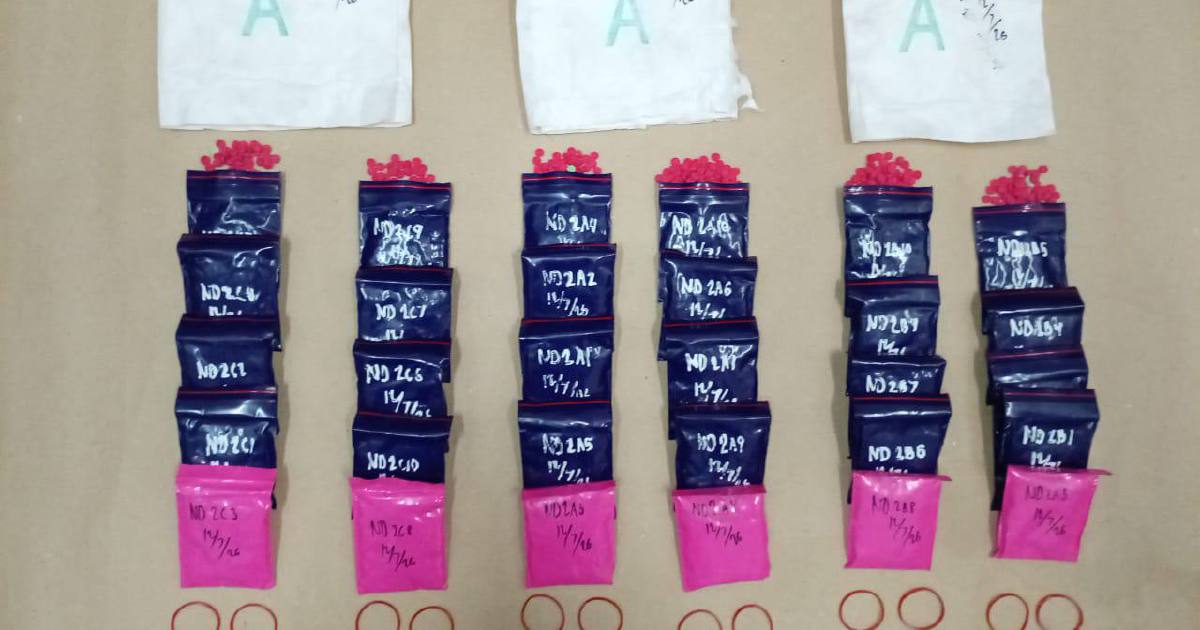
Authorities in Kelantan have apprehended a 35-year-old tow truck operator on drug trafficking charges after uncovering a substantial cache of amphetamine pills concealed within a vehicle. The arrest took place in Tumpat, with police recovering approximately 6,000 yaba pills during the operation at a location along Jalan Kubang Batang near Wakaf Bharu. The estimated street value of the seized narcotics reached RM60,000, underscoring the scale of the drug distribution network operating in the region.
The arrest represents another significant blow against drug trafficking operations in Kelantan, a state that has consistently served as a transit point for contraband substances moving through Malaysia's northern corridor. Yaba, also known as methamphetamine pills or "crazy medicine," remains one of the most commonly trafficked synthetic drugs in Southeast Asia due to its relatively low production cost and high profit margins. The pills typically contain between 40 to 50 milligrams of methamphetamine mixed with caffeine, making them highly addictive and particularly damaging to young users across the region.
The vehicle interception demonstrates the ongoing effectiveness of police intelligence operations targeting organised distribution networks that exploit commercial transportation routes. Tow truck services, which operate with considerable mobility and less scrutiny than other transportation sectors, have occasionally been compromised by criminal elements seeking to move contraband across state lines. This vulnerability has prompted law enforcement agencies to maintain heightened surveillance on the sector, particularly along corridors between Thailand's Yala province and Peninsular Malaysia, where cross-border smuggling remains endemic.
The recovery of such a substantial quantity of yaba pills suggests the suspect may have been operating as a mid-level distributor rather than a street-level dealer, potentially supplying multiple retailers across the East Coast region. The distinction carries significant implications for sentencing, as trafficking charges in Malaysia distinguish between possession for personal consumption and large-scale distribution. Under Malaysia's Dangerous Drugs Act 1952, trafficking in controlled substances carries mandatory minimum sentences and potential capital punishment depending on the quantity involved, though yaba pills fall below thresholds triggering automatic death sentences.
The Kelantan operation aligns with broader regional efforts to disrupt the yaba supply chain that originates primarily from clandestine laboratories in Thailand's borderland provinces. Drug enforcement agencies across ASEAN have identified yaba as a strategic priority precisely because it bridges the gap between traditional opioid trafficking and emerging synthetic drug markets. Unlike heroin, which requires sophisticated refining infrastructure, yaba can be produced in relatively simple facilities with readily available precursor chemicals, enabling rapid scaling of production to meet market demand.
Policement have not publicly disclosed how the suspect came under investigation or whether the operation forms part of a larger enforcement sweep targeting distributors throughout Kelantan and neighbouring Terengganu. The timing and location of the interception suggest authorities had prior intelligence regarding vehicle movements or the suspect's regular patterns, indicating that surveillance techniques rather than random roadside checks yielded the discovery. Such intelligence-driven operations prove significantly more effective than conventional enforcement approaches, particularly when coordinated across state boundaries through the Royal Malaysian Police's interstate drug task forces.
The arrest occurs amid rising concerns about yaba proliferation within Malaysian educational institutions, particularly secondary schools and universities where methamphetamine pills appeal to students seeking stimulant effects to enhance academic performance or sustain late-night social activities. Survey data from rehabilitation facilities indicate yaba consumption has increased markedly among users aged 15 to 25, a demographic shift troubling to health and law enforcement authorities. The pills' relatively low unit cost, typically ranging from RM5 to RM20 per tablet depending on purity and location, places them within reach of younger buyers compared to other synthetic drugs requiring larger cash outlays.
Beyond individual health consequences, yaba trafficking generates substantial revenues for transnational organised crime syndicates operating across Thailand, Malaysia, and neighbouring countries. These networks employ sophisticated money laundering techniques to obscure proceeds through legitimate businesses including transportation services, hospitality enterprises, and retail establishments. The financial flows support broader criminal ecosystems encompassing human trafficking, firearms smuggling, and protection rackets affecting vulnerable communities throughout Malaysia's northern states.
The Kelantan authorities have not yet released comprehensive details regarding the suspect's background, prior criminal involvement, or whether additional arrests may follow the initial interception. Investigators will likely examine the vehicle's maintenance records, ownership documentation, and communication records to identify upstream suppliers and downstream distributors operating within the suspect's network. Such forensic financial and telecommunications analysis frequently unravels entire distribution chains, potentially yielding additional arrests across multiple jurisdictions.
Government agencies have signalled ongoing commitment to disrupting drug trafficking through enhanced border security, intelligence sharing mechanisms between police and customs authorities, and community reporting programmes encouraging residents to provide information regarding suspicious activities in their neighbourhoods. Public education campaigns warning about yaba's neurological and cardiovascular effects complement enforcement initiatives, though addiction specialists acknowledge that demand reduction strategies require sustained investment in youth counselling, addiction treatment capacity, and economic alternatives in communities where drug trafficking provides employment opportunities.
The case underscores the persistent challenge confronting Southeast Asian nations attempting to address synthetic drug proliferation originating from source regions demonstrating minimal capacity or political will to restrict precursor chemical exports or dismantle clandestine production facilities. Regional cooperation mechanisms including the ASEAN Regional Forum and bilateral arrangements between Malaysian and Thai authorities provide frameworks for addressing transnational aspects of the drug trade, yet implementation gaps and resource constraints frequently limit their practical effectiveness in disrupting major trafficking operations.

