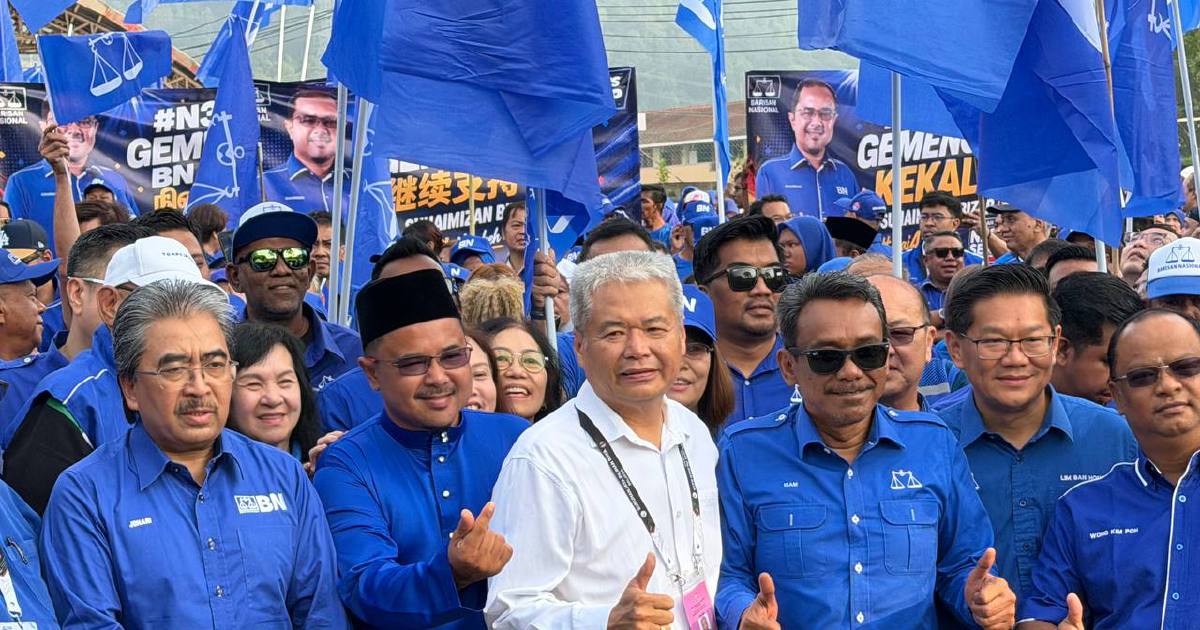
Umno's vice-president and treasurer joined Barisan Nasional candidates at the Dewan Perdana Tampin this morning, underscoring the ruling coalition's concentrated effort to secure victories across Negeri Sembilan. The appearance by Datuk Seri Johari Abdul Ghani and Datuk Seri Tengku Adnan Tengku Mansor at the nomination centre highlighted the party's commitment to mobilising senior leadership in the state at a critical juncture in the electoral campaign.
The presence of two of Umno's most senior figures during the candidate registration phase reflects a deliberate strategy to energise grassroots supporters and project confidence in the coalition's electoral prospects. Johari, who holds the second-ranking position in Umno's party hierarchy, and Tengku Adnan, who manages the party's finances as treasurer, represent the institutional backbone of Malaysia's longest-serving political organisation. Their joint appearance carries symbolic weight within party circles, signalling alignment at the leadership level during an election cycle that carries implications for Umno's position within the broader Barisan coalition.
Negeri Sembilan has emerged as a significant battleground in recent electoral contests, with the state's mixed demographic composition and diverse economic interests creating volatile political dynamics. The state government's composition influences not only local policymaking but also affects the regional balance of power within the peninsula. For Barisan Nasional, securing solid performance here strengthens its overall parliamentary and state legislative footprint, whereas losses would amplify concerns about voter erosion in traditionally aligned constituencies.
The timing of this high-level show of support during the nomination phase is strategically calculated. This early stage of the election cycle allows party leaders to set the tone, energise campaign machinery, and demonstrate organisational readiness to both supporters and observers. By positioning themselves alongside candidates at the nomination centre, Johari and Tengku Adnan communicate that the party's top echelon remains engaged and confident, potentially influencing voter sentiment and volunteer recruitment efforts in the weeks ahead.
Barisan Nasional's reliance on visible leadership support reflects broader challenges facing the coalition across Malaysia. Electoral trends over the past decade have shown that voter loyalty cannot be taken for granted, and sustained engagement by senior figures helps counteract disengagement or drift toward opposition parties. In Negeri Sembilan specifically, Barisan needs to maintain its traditional strongholds while defending against incursions by Pakatan Harapan and other opposition groups that have made significant advances in past contests.
Umno's internal dynamics also feature prominently in understanding this leadership display. The party has navigated considerable internal tensions and leadership transitions in recent years, including legal proceedings against senior figures and competing factions. When the party's top leaders appear together in public settings, it projects stability and cohesion, messaging that matters both for party morale and for external perception of Umno's viability as a governing institution.
The Negeri Sembilan election represents an opportunity for Barisan Nasional to demonstrate electoral resilience and prove that it remains competitive under current leadership. Success here would provide momentum for the coalition's national political standing, whilst underperformance might amplify questions about Barisan's capacity to deliver results and retain voter support in key states. The high-profile participation by Johari and Tengku Adnan suggests the party believes it possesses the machinery and messaging to secure a credible outcome.
For Malaysian voters in Negeri Sembilan, the concentration of senior party figures in the state signals the election's importance to national-level politics. State elections are often overlooked compared to federal contests, yet they determine local governance quality, resource allocation, and the implementation of policies affecting daily life. The presence of Umno's leadership underscores that Negeri Sembilan's election has ramifications extending well beyond the state's boundaries, influencing the composition and orientation of the overall government at the national level.
The nomination centre event also provides a platform for Barisan Nasional candidates to gain association with established party figures, potentially boosting their credibility and fundraising prospects. Candidates appearing alongside senior leaders receive implicit endorsement and media coverage, advantages that can translate into campaign resources and volunteer engagement. This cascading effect of leadership support extends the influence of party-level decisions into individual electoral races.
Observers will closely monitor the campaign period following this nomination phase to assess whether the high-profile leadership engagement translates into tangible electoral advantages for Barisan Nasional. The party's performance across Negeri Sembilan's various constituencies will offer insights into its broader capacity to compete in diverse electoral environments and maintain relevance among different voter demographics. The combined presence of Johari and Tengku Adnan represents an investment of political capital that the party clearly views as essential to securing its objectives in this state.

