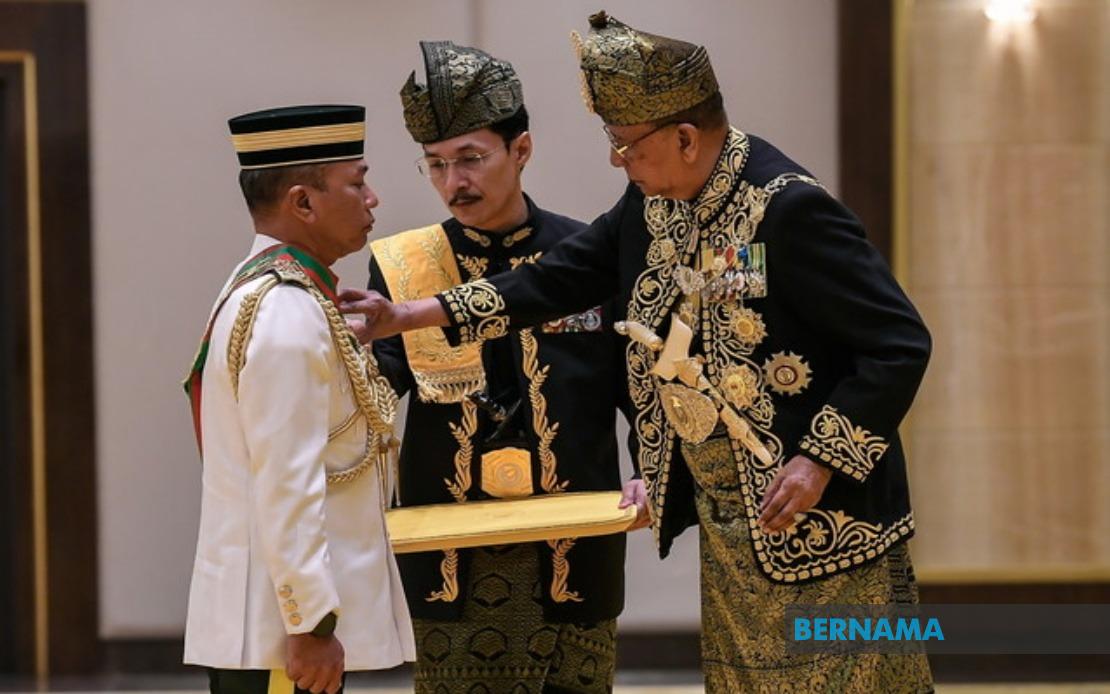
The Sultan of Kedah, Al Aminul Karim Sultan Sallehuddin Sultan Badlishah, conferred an extensive array of honours and medals on distinguished individuals during his 84th birthday celebration held at Istana Anak Bukit in Alor Setar. The ceremonial occasion recognised the outstanding contributions of military and civil leaders, with General Tan Sri Malek Razak Sulaiman, who serves as Chief of Defence Forces, and Tan Sri Mohd Khalid Ismail, the nation's Inspector-General of Police, receiving the highest recognition among this year's recipients.
The highest honour bestowed during the ceremony was the Darjah Dato' Seri Setia Pahlawan Yang Amat Dihormati (S.S.P.K), which carries the prestigious title of Dato' Seri Setia Pahlawan. This distinction represents the Sultan's recognition of exceptional service and leadership at the national level. The conferment of such elevated ranks underscores the strategic importance placed by the Kedah monarchy on honouring those who shape the country's defence and security architecture during a period of ongoing regional complexity and domestic stability requirements.
Following the senior appointments, the ceremony recognised two prominent state-level administrators through the Orang Besar Enam Belas rank, with Datuk Syed Khairol Anuar Syed Abidin receiving this honour. The Orang Besar Tiga Puluh Dua distinction went to Datuk Mohamad Che Nai, reflecting the traditional Kedah honours structure that maintains hierarchical recognition for senior civil servants and state officials who have demonstrated sustained commitment to public administration and governance.
Kedah's own police leadership received significant recognition when Datuk Adzli Abu Shah, the state's police chief, was elevated to the Darjah Dato' Setia Pahlawan (D.D.S.P) rank. This honour acknowledges the critical role played by state-level law enforcement in maintaining public order and security within Kedah's communities. The elevation of the Kedah police chief reflects broader trends in Malaysian honours systems, which increasingly recognise the essential contributions of regional security forces in preventing crime and managing complex public safety challenges across states.
Among the four recipients of the Darjah Dato' Setia Diraja Kedah (D.S.D.K), the honours extended into political circles as well as public administration. The recognition of political figures alongside civil servants illustrates how royal honours ceremonies serve as occasions for state monarchies to acknowledge diverse forms of public contribution, balancing recognition across the political spectrum while maintaining the institution's position above partisan divides.
Two recipients earned the Darjah Setia Sultan Sallehuddin Kedah (S.S.S), including Major (Rtd) Mansor Zakaria, a member of Kedah's state executive council, and Afnan Hamimi Taib Azamudden, who leads PAS Youth. The inclusion of both a retired military officer serving in the executive council and the youth leader of a major political party demonstrates the Sultan's intention to recognise service across institutional boundaries, acknowledging the interconnected nature of state governance.
Nine individuals received the Darjah Setia Diraja Kedah (S.D.K), representing a cross-section of public sector expertise. Among them were senior officials such as Syeikh Mohamad Subhi Abdullah, director of the Kedah State Islamic Religious Affairs Department, and Zulkifli Romli, general manager of the Muda Agricultural Development Authority. The inclusion of religious affairs and agricultural sector leaders reflects Kedah's economic priorities and its commitment to Islamic institutional excellence, both central to the state's identity and development trajectory.
Medical professionals received prominent recognition through the honours system, with three distinguished figures from Sultanah Bahiyah Hospital receiving the S.D.K distinction. Dr Adam Mohd Zakaria, head of the Neurosurgery Department, Dr Manisekar K. Subramaniam, senior consultant general surgeon, and Dr Jamaliah Omar, deputy director of the Health Ministry's Dental Health Programme, were all honoured. This recognition underscores the Malaysian government's appreciation for healthcare workers and specialists, particularly relevant given ongoing demands on the medical sector and the critical nature of sophisticated services such as neurosurgery.
The private sector also featured in the awards through representatives such as Yeoh Su Guan, chairman of the Real Estate and Housing Developers Association for Kedah and Perlis, and Jaffri Ahmad, president of Bismi Empire. These appointments signal royal acknowledgment of business sector contributions to economic development and employment generation, reflecting the Sultan's understanding that state prosperity depends on productive partnerships between government and commerce.
Beyond the higher ranks, the Sultan extended honours to 239 individuals across multiple categories. The Ahli Mahkota Kedah (A.M.K) was conferred on 31 recipients, while the Bintang Perkhidmatan Cemerlang Kedah (B.C.K) went to another 31 individuals. These middle-tier honours represent the bulk of annual state recognition and typically acknowledge mid-level civil servants, educators, healthcare workers, and community leaders who maintain the daily functioning of state institutions and community development programmes.
The broader awards distribution included 43 recipients of the Bintang Kebaktian Masyarakat (B.K.M), honouring community service and social contribution. Additionally, 55 individuals received the Pingat Perkhidmatan Cemerlang Kedah (P.C.K), 40 were awarded the Pingat Jasa Kebaktian (P.J.K), and 15 recipients accepted the Pingat Perkhidmatan Lama (P.P.L) for long service. Five recipients each received the Ahli Setia Pahlawan (A.S.P) and Ahli Cemerlang Semangat Jerai Kedah (A.S.K) distinctions, completing a comprehensive recognition structure.
For Malaysian observers and regional commentators, the composition of Kedah's 2024 honours list illustrates how state-level honours systems function as instruments of governance beyond mere ceremonial value. The deliberate inclusion of security forces leadership, medical professionals, agricultural sector managers, religious affairs officials, and business representatives reflects a state monarchy's strategic vision for balanced recognition across sectors essential to sustainable development. The Sultan's decisions signal policy priorities while maintaining institutional unity, a particularly significant function in contemporary Malaysian politics where state-level honours can reinforce consensus and cross-cutting institutional loyalty at times of broader political transition or uncertainty.

