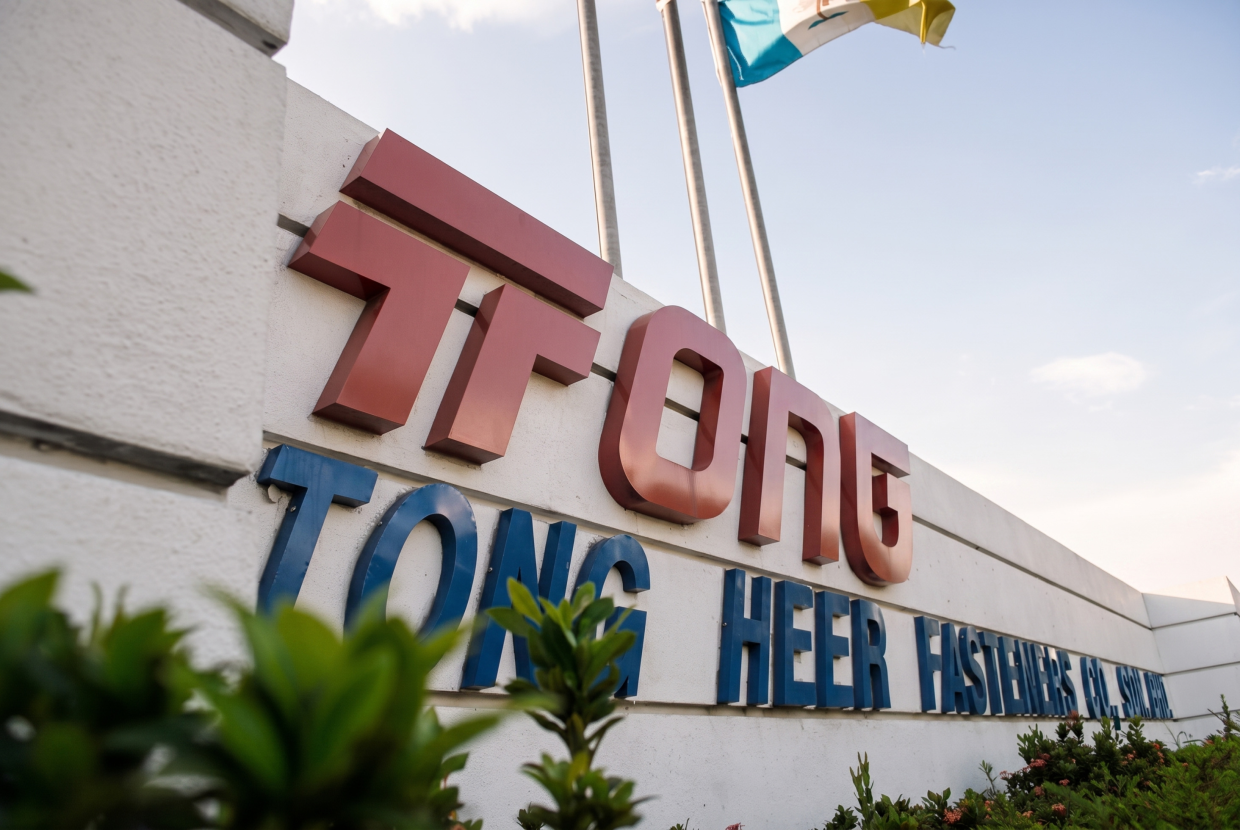
Two major shareholders have jointly proposed privatising Tong Herr, the publicly listed fastener and extrusions manufacturer, at RM2.55 per share, substantially above its current market valuation. Allrich Corp and Richard Holdings Ltd, who respectively control 39.68% and 31.95% of the company's equity, have submitted the proposal to Bursa Malaysia as part of a strategic initiative to restructure the company's ownership and operational framework.
The proposed offer price delivers a 34.2% premium over Tong Herr's final closing price of RM1.90, and when measured against the volume-weighted average price and closing price observed through August 5, 2026, the offer climbs to a 41.7% premium at RM1.80. These valuations suggest the offerors are willing to pay a substantial premium to secure the remaining minority interests and remove the company from public markets. Combined with their associated parties and related structures, the two principal shareholders and their associates collectively hold 114.38 million shares, representing 74.5% of Tong Herr's total issued share capital.
The mechanism for the privatisation would rely on a selective capital reduction and repayment exercise, a structure that offers specific advantages under Malaysian securities regulations. Through this framework, entitled shareholders would have an immediate pathway to realise their investments and exit their positions, a particularly relevant consideration given the company's chronically illiquid trading environment. The strategic use of selective capital reduction rather than a conventional takeover offer indicates the offerors have carefully structured their approach to align with the company's particular circumstances and shareholder base composition.
Tong Herr's trading performance on public markets has deteriorated significantly over recent years, a factor explicitly cited by the joint offerors as central to their privatisation rationale. The company has recorded an average daily trading volume of merely 21,075 shares across the past three years, equating to only 0.05% of its free float. This severely constrained liquidity means minority shareholders face considerable practical difficulties in executing significant trades without material price impact, and the illiquidity undermines the fundamental purpose of public listing in facilitating capital movement.
The offerors argue that privatisation would unlock operational flexibility currently constrained by the demands of maintaining public company status. By removing disclosure obligations, regulatory compliance costs, and the administrative burden of managing shareholder relations and maintaining market listing standards, Tong Herr could redirect management attention and corporate resources toward organic growth initiatives and long-term value creation. The company manufactures stainless steel fasteners, aluminium extrusions, and associated metal products, sectors where competitive dynamics require sustained investment and strategic focus.
The regulatory pathway for completion involves multiple procedural gates. Non-interested shareholders must approve the proposed selective capital reduction through a special resolution at an extraordinary general meeting, requiring both a majority in number and 75% in voting value from the non-interested shareholder body. Additionally, the scheme demands High Court confirmation to proceed to completion, a significant judicial oversight mechanism embedded within Malaysian takeover regulations. The offerors have also stipulated that the proposal cannot be voted against by more than 10% in voting value of all non-interested shareholders, providing an additional procedural safeguard.
For Malaysian minority investors and the broader market, this proposal raises important considerations regarding minority protection and exit opportunities. The premium offer price represents recognition that the illiquid public listing has destroyed shareholder value compared to private ownership, and the privatisation provides minority shareholders with an exit mechanism at what the offerors characterise as a fair valuation. However, the approval thresholds and High Court requirements ensure that minority interests cannot be overwhelmed through purely numerical superiority, and independent directors must evaluate the proposal's fairness.
The Southeast Asian market context matters here as well. Malaysian small-cap companies with chronically low liquidity represent a persistent challenge for the local capital markets ecosystem. Privatisation of thinly traded companies occasionally offers a pragmatic solution when public listing no longer serves shareholder or company interests, though each case requires careful evaluation of whether the proposed price represents fair value. Tong Herr's situation reflects broader patterns affecting industrial manufacturers in the region that struggle with investor engagement and sustained capital market liquidity.
Tong Herr's independent, non-interested directors now shoulder responsibility for evaluating the proposal's merits and determining the appropriate corporate response. These directors must assess whether the RM2.55 price adequately reflects the company's underlying asset values, future earnings potential, and comparable transactions in the fastener and extrusions sectors. Their deliberation will be crucial in protecting minority shareholder interests and ensuring any approval granted genuinely reflects fair valuation rather than acceptance of default circumstances.
The company indicated that further announcements would follow once the non-interested directors complete their evaluation and determine the next procedural steps. Should the board decide the proposal merits progression, Tong Herr would need to convene an extraordinary general meeting and seek shareholder approval, followed by necessary High Court proceedings. The timeline and ultimate outcome remain uncertain, dependent on director assessment, shareholder sentiment, and judicial review of the scheme.

