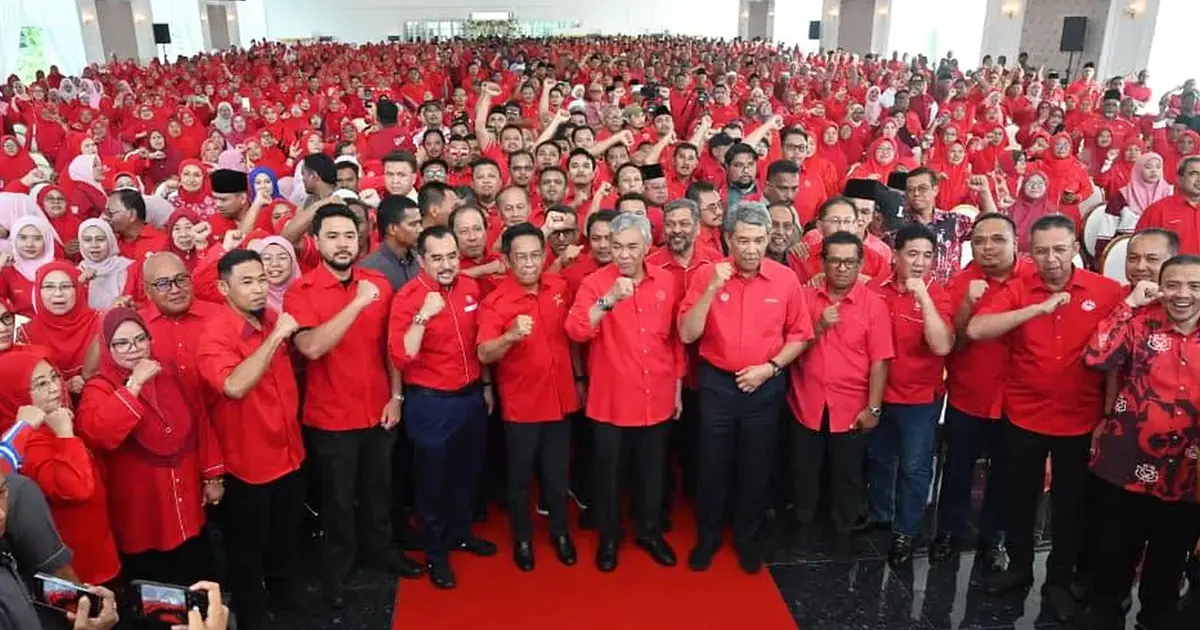
Barisan Nasional's candidate selection process and seat negotiations for the upcoming Negeri Sembilan state election will be steered by the state coalition's leadership, with Barisan Nasional chairman Ahmad Zahid Hamidi confirming he has passed the matter to Negeri Sembilan BN chief Tok Mat. The decision reflects a common approach within the coalition of allowing state-level leaders greater autonomy in determining their own electoral strategies and internal party arrangements ahead of crucial state polls.
This delegation of authority signals that Tok Mat will shoulder the primary responsibility for brokering agreements among the various Barisan Nasional component parties operating in Negeri Sembilan, a process that typically involves sensitive negotiations over seat allocations and candidate nominations. Such arrangements are crucial in multi-party coalitions where different organisations must reach consensus on who represents their alliance in each constituency.
The Negeri Sembilan state election represents a significant test for Barisan Nasional's consolidated efforts in the region. The coalition's performance in the state will be closely watched as an indicator of its broader electoral strength and the effectiveness of its internal coordination mechanisms. State-level autonomy in candidate selection often allows for quicker decision-making and better alignment with local political dynamics and voter preferences.
Tok Mat's appointment to oversee the process acknowledges his position as the primary political figure tasked with maintaining BN's cohesion and electoral prospects in Negeri Sembilan. As state chief, he carries the responsibility of ensuring that candidate selections are perceived as fair and representative across the coalition's member parties. The successful completion of these negotiations will significantly influence the coalition's ability to project a unified front to voters.
Candidate selection in Malaysian coalition politics is rarely straightforward, as multiple parties must yield ground and compromise on their respective aspirations. The process involves balancing experience, local influence, electoral viability, and ethnic and religious representation. Component parties must find satisfaction in the final allocation to prevent internal discord that could hamper campaign efforts.
The involvement of regional leadership in candidate selection reflects Malaysian political practice, where state-level conditions, local rivalries, and ground-level political networks often differ substantially from national trends. Tok Mat's intimate knowledge of Negeri Sembilan's political landscape positions him well to navigate these complexities and craft a slate that maximises the coalition's chances of retaining or improving its current parliamentary and state assembly representation.
For Barisan Nasional, maintaining electoral viability in Negeri Sembilan remains strategically important. The state has been a traditional stronghold for the coalition, though competition from other political groupings has intensified in recent years. A cohesive and strategically sound candidate selection can reinforce BN's position and demonstrate the continued relevance of the coalition model in Malaysian politics.
Ahmad Zahid's decision to empower state-level leadership also reflects broader trust in Tok Mat's capability and political judgment. Such deference from the national chairman suggests confidence that the state chief will navigate the candidate selection and seat allocation process in a manner that serves both Negeri Sembilan BN's interests and the wider coalition's objectives. The approach minimises direct intervention from national headquarters, which can sometimes provoke resentment among state-level party structures.
The timeline for completing these negotiations will be crucial, as delayed candidate announcements can create uncertainty among party members and potential voters. Political analysts will watch how efficiently Tok Mat moves through the seat allocation discussions, as speed combined with perceived fairness tends to bolster coalition morale and public confidence ahead of campaigning.
Regional political observers note that the success of BN's electoral performance increasingly depends on how effectively component parties coordinate at the state level. This approach of devolving responsibility to state leadership acknowledges that reality and places trust in local stewards to make decisions best suited to their specific political circumstances and voter constituencies.
As Negeri Sembilan enters the candidate selection phase under Tok Mat's stewardship, the process will reveal how well Barisan Nasional can maintain internal unity while fielding competitive candidates. The coming weeks will test whether the coalition can avoid the factional disputes that have sometimes emerged during candidate allocation exercises, and whether it can present a sufficiently attractive slate to secure strong electoral returns.

