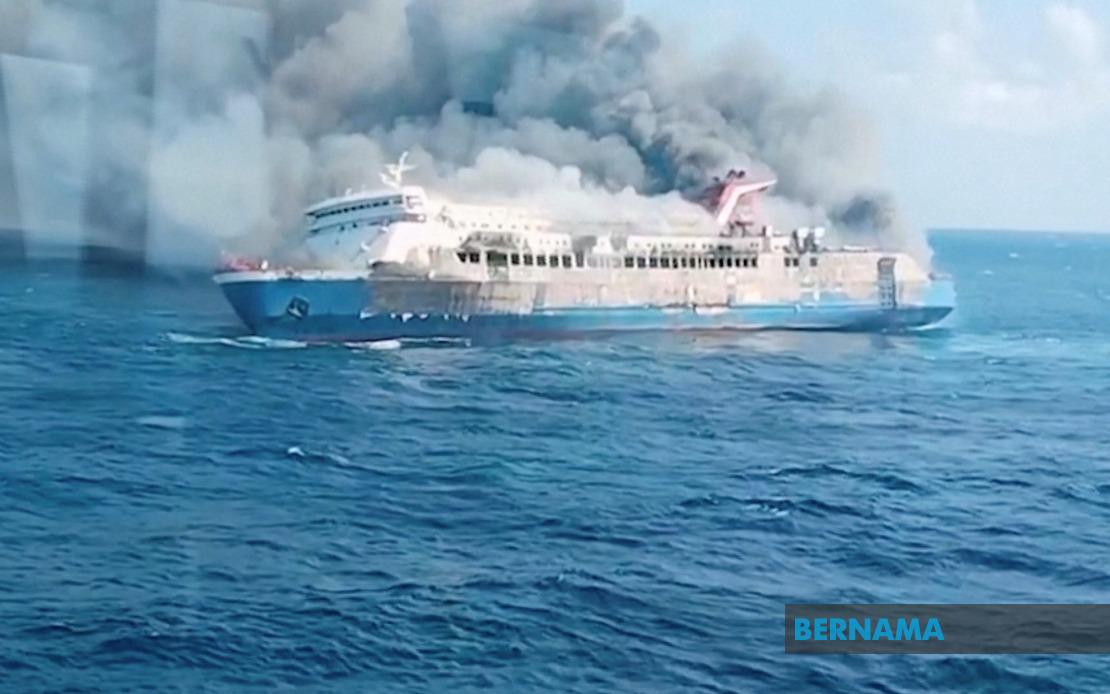
A major maritime disaster unfolding in Indonesian waters has prompted an expanded rescue operation on its second day, as authorities race to locate dozens of people still unaccounted for following the devastating fire aboard the KMP Mutiara Sentosa II ferry. The incident occurred in the waters north of Sumenep, Madura, yesterday morning at approximately 8.24 am local time, with the vessel engulfed in flames that consumed much of the structure before rescue vessels could reach the scene.
The response demonstrates the scale of the emergency confronting Indonesian emergency services. According to Nanang Sigit, chief of the Surabaya Search and Rescue Office, the operation has been substantially reinforced with additional military and civilian maritime assets. The TNI warship KRI Bung Hatta-370 now joins the search alongside the State Ship Grantin P.211, the patrol vessel Manyar 5003, and a helicopter operated by the East Java Police, reflecting the gravity of the situation and the determination to locate survivors who may be stranded in the waters.
The ferry was operating at near full capacity when disaster struck. With 232 passengers and 39 crew members aboard—a total of 271 people—the incident has already claimed multiple lives and left families and authorities scrambling to account for everyone aboard. The rapid spread of fire across the vessel evidently overwhelmed initial containment efforts, and the challenge now facing rescuers is the vast search area and difficult sea conditions typical of Madura's northern waters during this time of year.
Evacuation efforts over the initial hours have yielded a substantial survival count that offers some respite amid the tragedy. According to the SAR office, 229 survivors were successfully rescued and transported in stages to Tanjung Perak Port in Surabaya, where they underwent medical examinations to assess injuries and determine treatment needs. This number suggests that the vast majority of those aboard managed to escape the flames or were recovered from the water by passing vessels and responding rescue teams.
The human cost, however, remains severe. Five fatalities have been confirmed so far, with their remains transferred to Bhayangkara H.S. Samsoeri Mertojoso Hospital in Surabaya for identification and further processing. The gap between survivors evacuated and the original passenger and crew manifest indicates that several dozen individuals remain unaccounted for, driving the urgency of the ongoing search operation. The continuing efforts suggest that rescue teams harbour hope of locating additional survivors in lifeboats or clinging to debris.
For Malaysia and other Southeast Asian nations, this incident underscores persistent safety vulnerabilities within the region's maritime sector. Ferry operations remain vital transportation links connecting populations across archipelagic nations, yet vessel maintenance standards, fire suppression systems, and crew training protocols vary considerably across operators and jurisdictions. The KMP Mutiara Sentosa II fire, while catastrophic, is not an anomaly—similar incidents have occurred throughout Southeast Asia, reflecting broader challenges in enforcing safety regulations across aging fleets operating in competitive markets where cost-cutting can compromise passenger welfare.
The deployment of Indonesia's military assets signals the seriousness with which Jakarta is approaching the response. The TNI warship commitment, alongside civilian rescue vessels, represents a coordinated national effort that extends beyond the immediate rescue operation to include potential salvage and investigation activities. Understanding how the fire originated and spread so rapidly will be crucial for informing safety improvements across Indonesia's maritime transport network and potentially influencing regional standards.
Search and rescue operations in these waters present particular challenges that complicate the hunt for missing persons. The northern coast of Madura is subject to strong currents and relatively shallow depths in places, creating unpredictable conditions for both the vessel in distress and the rescue assets attempting to locate survivors. Weather patterns, visibility, and the dispersal of debris across an expanding search area all factor into the difficulty of locating individuals who may be clinging to wreckage or adrift in the water.
The experience of survivors transported to Surabaya will provide investigators with crucial eyewitness accounts of how the fire began and progressed. Understanding the timeline of evacuation, whether lifeboats were successfully deployed, and whether crew members followed emergency protocols will inform both the immediate investigation and broader industry recommendations. Early reports suggesting that much of the vessel was consumed by flames point toward either a fire that ignited in an engine room or fuel system, or one that spread with unusual rapidity due to combustible cargo or structural vulnerabilities.
The incident carries implications for maritime transport corridors throughout Southeast Asia. Tens of millions of passengers depend annually on ferry services connecting major population centres across the region, and confidence in the safety of these services underpins both tourism and commerce. Regulatory bodies across ASEAN nations will likely monitor Indonesia's investigation and response closely, potentially leading to harmonised safety standards or enhanced inspection protocols. For Malaysian authorities overseeing domestic ferry operations, the tragedy serves as a sobering reminder of the importance of rigorous vessel certification, crew training mandates, and investment in modern safety equipment.

