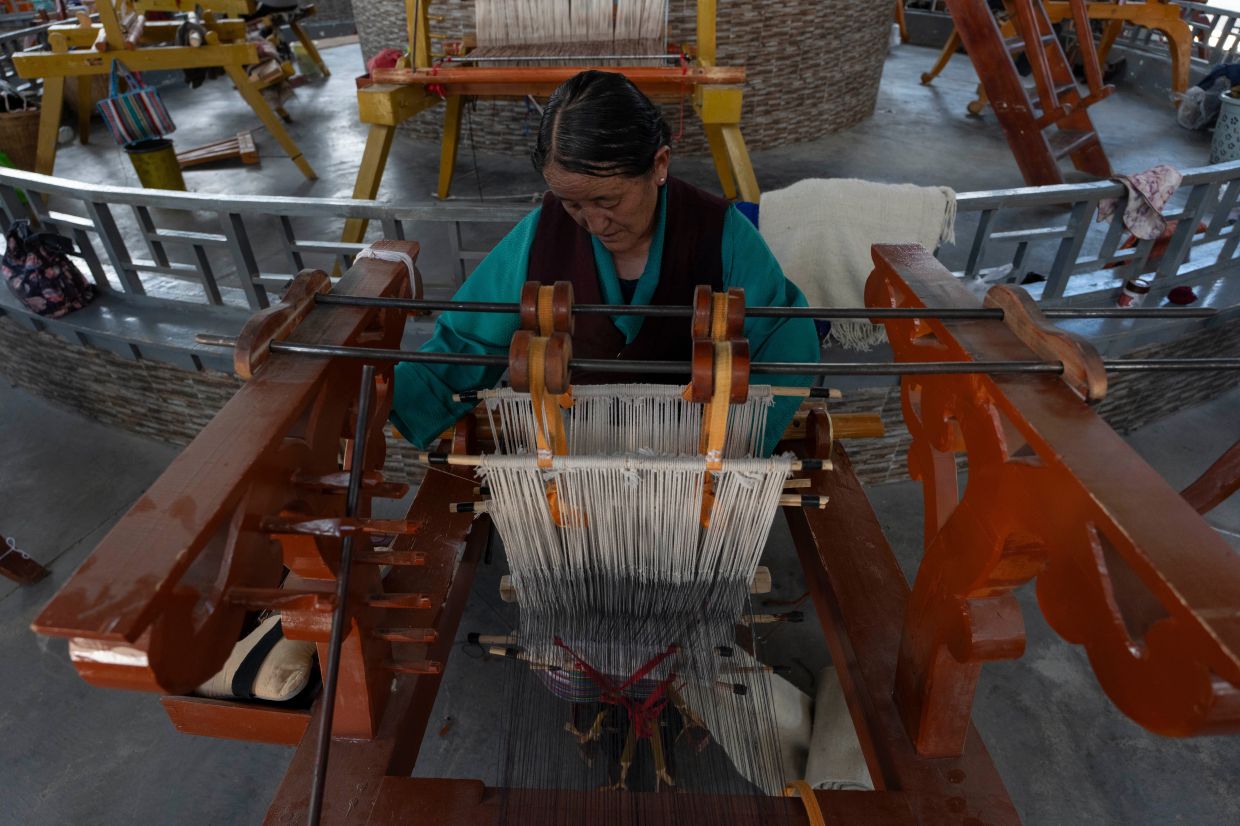
In a workshop nestled at 3,700 metres above sea level in Shannan, a group of artisans are engaged in an ancient craft that has clothed the inhabitants of the Tibetan plateau for hundreds of years. Using traditional wooden looms, they rhythmically pass shuttles through rows of woolly fibres, repeatedly tightening each thread to create Pulu, a distinctive woollen fabric woven into the cultural identity of the region. This scene of careful handiwork plays out daily at the Ethnic Huaji Handwoven Cooperative, where the pursuit is not merely artistic but also economic—a deliberate effort to revive a vanishing skill while generating sustainable livelihoods for rural Tibetan communities.
Pasang, the cooperative's founder, established the enterprise in 2008 with a mission rooted in personal concern. Having learned the weaving craft from his own parents, Pasang recognised that the knowledge was on the verge of extinction, with fewer than ten practitioners remaining when he began his efforts. Today, the cooperative employs more than 100 residents drawn from the local area, a significant achievement in a region where employment opportunities have historically been limited. Notably, the workforce includes individuals with disabilities, reflecting the cooperative's broader commitment to inclusive economic development alongside cultural preservation.
The cooperative's signature product is Zeter, a refined variant of traditional Pulu distinguished by its exceptional softness and delicate texture. Crafted from wool harvested from the neck and back areas of locally raised sheep, Zeter demands greater technical skill during the spinning process than standard Pulu varieties. The superior quality of this finer material was historically prized enough to be presented as a ceremonial tribute to Chinese imperial courts during the Ming dynasty, testament to its cultural and economic value across historical periods.
The historical narrative embedded within the craft itself reveals the interconnected cultural history of the region. According to local tradition, weaving techniques arrived in Tibet through Princess Wencheng, a seventh-century Chinese bride of King Songtsen Gampo. This legendary union forms the symbolic foundation for understanding the craft's origins, and the cooperative honours this narrative by displaying statues of both the king and princess at the centre of its workspace. For Pasang and the broader Tibetan community, the fabric represents more than mere textile production—it embodies a synthesis of cultural influences and shared heritage spanning centuries.
Recognition of the craft's cultural significance extends to China's national level, where Pulu weaving has been formally designated as part of the country's intangible cultural heritage. This official acknowledgement provides both validation and a degree of protection for the tradition, though the real challenge lies in ensuring that younger generations embrace the labour-intensive and economically modest practice when alternative opportunities may appear more lucrative or less demanding. Pasang has made intergenerational transmission a central concern of the cooperative's mission, understanding that without active teaching and engagement of younger Tibetans, the knowledge risks disappearing within a generation or two.
The raw materials for the cooperative's work originate from sheep grazing in the high-altitude pastures surrounding Shannan, a distinctive ecosystem that shapes both the wool's character and the regional economy. The altitude creates particular conditions that influence the quality and texture of the fleece, linking the craft directly to the landscape and pastoral traditions of the plateau. This geographical specificity means that authentic Pulu production cannot be easily relocated or industrialised without compromising the essential qualities that define the material.
The cooperative operates a modest showroom adjacent to the weaving workshop, displaying a range of finished products including scarves, shawls, jackets and bags crafted from both Pulu and Zeter. Currently, the majority of sales occur within Tibet itself, though customers from other parts of China have begun discovering these products. The market remains relatively small and localised compared to mass-produced alternatives, yet this boutique nature preserves the handmade authenticity that distinguishes such work from factory production.
Tsering Yangchen, an 80-year-old woman who has worked at the cooperative for seven years, exemplifies the employment impact in rural Tibetan communities. Having relocated from another county, she struggled to secure work before joining the workshop, where patient instructors taught her the fundamentals of weaving alongside other recruits. Her tenure demonstrates that the cooperative serves not merely as a cultural institution but as a genuine source of economic opportunity for marginalised populations, including elderly citizens who might otherwise face limited income prospects. For Tsering Yangchen, the work carries personal significance beyond wages—Pulu garments are part of her own cultural wardrobe, connecting her daily labour to broader practices of dress and material culture among Tibetan communities.
The cooperative's trajectory reflects broader regional considerations relevant to Southeast Asian observers. Rural development and cultural preservation frequently exist in tension, with communities facing pressure to abandon traditional practices in favour of market-integrated economic activities. The Ethnic Huaji Handwoven Cooperative demonstrates a model where these objectives can be reconciled, where cultural conservation becomes an economic strategy rather than a competing priority. For developing regions across Asia grappling with rural migration and cultural erosion, such cooperative enterprises offer a partial template—though their success ultimately depends on sustained consumer interest, fair pricing structures and community commitment.
Looking forward, the cooperative's viability depends on addressing several interconnected challenges. Maintaining younger participation requires making the craft economically competitive with urban employment, difficult when handwork cannot match industrial production's efficiency. Building market awareness beyond Tibet's borders could expand sales and revenues, yet risks commodifying traditions intended for cultural continuity. Pasang's continued advocacy for the craft and his explicit commitment to training the next generation position the cooperative as a leading voice in this effort, though long-term sustainability remains contingent on broader Tibetan community investment in their own cultural inheritance.

