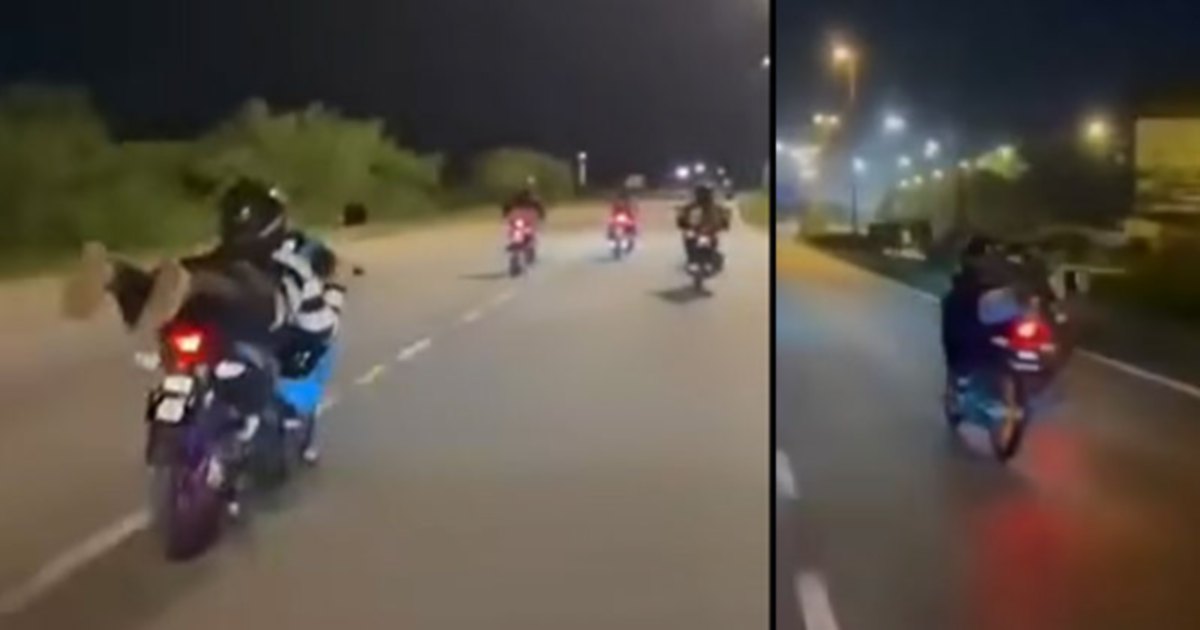
Police in Kuantan have arrested three teenage girls involved in a high-risk motorcycle display that captured online attention after they performed 'Superman' stunts along the Jalan Kuantan Bypass-Gebeng road. The incident, which unfolded last week, triggered swift law enforcement intervention as authorities moved to curb increasingly reckless behaviour on Malaysian highways.
The 'Superman' manoeuvre involves riders lying horizontally across their motorcycles while the vehicle remains in motion, creating a stunt that generates significant social media engagement while posing extreme danger to the participants and other road users. This particular incident demonstrates how easily dangerous activities can spread through viral platforms, particularly among younger demographics who may not fully appreciate the consequences of such actions.
The arrest represents part of a broader enforcement strategy addressing traffic violations and dangerous riding practices that have become more visible in recent years. Malaysia's road safety authorities have expressed growing concern about the rise of stunt riding and motorcycle-related misconduct, particularly involving young people who document their activities for online audiences. The viral nature of such content creates a competitive dynamic where riders feel pressured to attempt increasingly daring and hazardous manoeuvres to gain attention.
The Jalan Kuantan Bypass-Gebeng corridor is a busy commercial and commuter route where such stunts endanger not only the riders but also other vehicles and pedestrians sharing the road. High-speed highways are particularly unsuitable for experimental riding techniques, where unexpected obstacles or traffic patterns could result in catastrophic accidents. The decision to perform these stunts in such a location illustrates a fundamental disregard for public safety principles.
This case highlights the disconnect between online entertainment culture and real-world safety consequences. Young riders, often seeking validation through likes, shares, and views, may underestimate how quickly an action can transition from a recorded moment to a life-altering injury or fatality. The psychological appeal of viral content can override rational risk assessment, particularly among teenagers still developing judgment capabilities regarding consequences.
Law enforcement agencies across Malaysia have intensified efforts to identify and apprehend individuals involved in street stunts and dangerous riding. These operations extend beyond simply arresting participants to include investigating the production and distribution of such content online. Authorities recognise that content creators and those who encourage or amplify these videos bear some responsibility for the resulting behaviour.
The girls' arrest sends a signal about the seriousness with which Malaysian authorities treat traffic violations that endanger public safety. Potential charges could include dangerous driving, public endangerment, and traffic offences under the Road Transport Act. The consequences for young offenders in such cases typically involve fines, licensing suspension, and possible community service, depending on the severity of the violations and court decisions.
The incident also reflects broader patterns observed throughout Southeast Asia, where motorcycle culture intersects with social media influence to create dangerous trends. Countries across the region have reported similar phenomena, with enforcement becoming increasingly important as technology enables rapid spread of risky behaviour. Regional cooperation in addressing these issues has become increasingly relevant as content crosses borders instantly.
Parental and community responsibility represents another dimension of this problem. Guardians and educational institutions face challenges in monitoring and guiding young people's online activities and real-world decision-making. The normalisation of risky behaviour through social media exposure requires proactive conversations about consequences, peer pressure, and the permanence of both injuries and online records.
Public awareness campaigns have become instrumental in countering the allure of stunt riding. Road safety organisations often emphasise how viral moments can result in permanent disability, brain injuries, or death. Changing the narrative around motorcycle stunts—from viewing them as impressive to recognising them as reckless and irresponsible—requires sustained effort from multiple societal stakeholders.
The arrested teenagers now face legal processes that could affect their records, education, and future opportunities. Beyond the immediate legal consequences, their involvement in this incident serves as a cautionary example for other young riders tempted by similar activities. The investigation may also yield information about networks of stunt riders and content creators operating in the region, potentially leading to further enforcement actions.
Moving forward, Malaysian authorities continue developing strategies that combine enforcement with education and prevention. Traffic safety initiatives increasingly target motorcycle riders specifically, recognising that this demographic experiences disproportionately high accident and fatality rates. Addressing the cultural elements that make stunt riding appealing remains crucial to reducing incidents.
The case underscores a fundamental tension in modern society between the connectivity and creativity enabled by digital platforms and the real-world consequences of activities performed for online audiences. As technology continues enabling the rapid spread of both constructive and destructive content, finding balance between expression and responsibility becomes increasingly critical for public safety and youth wellbeing.

