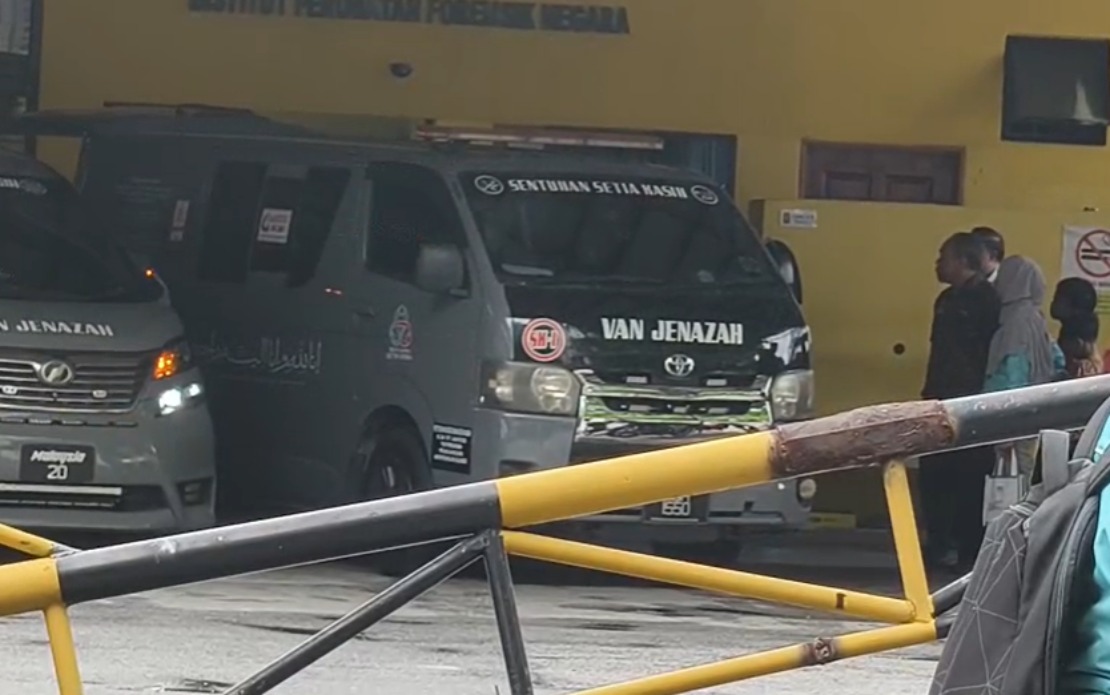
A tragic road accident in central Kuala Lumpur has claimed the lives of three family members from Perak, sparking questions about vehicle safety protocols during enforcement operations. Shaik Mohd Firdaus Shaikh Yahya, aged 53, and his two daughters Siti Nor Sazlin, 25, and Siti Darwisyah Auni, 12, were fatally struck by a Malaysian Immigration Department (JIM) Black Maria lorry on Jalan Sultan Ismail in the early hours of the morning. Their remains were released from Kuala Lumpur Hospital's National Institute of Forensic Medicine around 5.45 pm following post-mortem examinations.
According to reports, the three victims have been transferred to Jamiul Ehsan Mosque on Jalan Pahang for Islamic funeral rites, including ritual bathing and prayers, before their burial at Kampung Air Hitam Labu Muslim Cemetery in Kampar, Perak. The transfer of remains to a religious institution is standard practice in Malaysia, allowing family members to observe traditional funeral arrangements and gather with loved ones during this difficult period.
The collision occurred at approximately 1 am when the unoccupied JIM lorry was travelling to Chow Kit to conduct an enforcement operation targeting undocumented migrants. The vehicle was operating with its emergency beacon lights and siren activated at the time. However, witnesses and initial investigations suggest the lorry proceeded through the Maju Junction intersection despite a red traffic signal, directly colliding with a Proton Saga that was legally traversing the junction on a green light.
The impact was severe enough to cause the heavier JIM vehicle to lose control and skid across the roadway. During this uncontrolled slide, the lorry struck four pedestrians who were in the vicinity and also collided with an Inokom Matrix multi-purpose vehicle. The chain-reaction nature of the accident underscores how a single vehicle's failure to observe traffic signals can have cascading consequences affecting multiple road users and bystanders.
Beyond the three fatalities, another individual sustained serious injuries requiring hospitalisation. The exact identity and condition of this fourth victim have not been widely detailed in initial reports, though the severity of injuries suggests ongoing medical treatment remains necessary. Such incidents highlight the vulnerability of pedestrians and other road users when large vehicles lose control in densely populated urban areas.
The Malaysian police have initiated a formal investigation into the collision under Section 41(1) of the Road Transport Act 1987, which addresses rash or negligent driving causing death. This legal framework allows authorities to examine whether the JIM driver was operating the vehicle in a manner that endangered public safety, and whether adherence to traffic signals and safe driving protocols was compromised during the enforcement operation.
This accident raises important considerations about how enforcement agencies conduct night-time operations in urban centres. While immigration enforcement against undocumented migrants remains a legitimate government priority, the incident demonstrates the importance of balancing operational urgency with fundamental road safety obligations. Drivers of government vehicles operating under emergency conditions must still maintain situational awareness and comply with critical traffic signals, particularly at busy intersections.
The timing of the operation—early morning hours—and the presence of four pedestrians at a major junction at 1 am suggest this occurred in an area with significant nocturnal activity. Jalan Sultan Ismail and the surrounding Bukit Bintang district remain active throughout the night, serving businesses, hospitality venues, and entertainment establishments, meaning pedestrian presence is higher than might be expected at such an hour in other areas.
For Malaysian road safety advocates, this incident reinforces longstanding concerns about enforcement operations conducted with emergency equipment activated. Research across multiple jurisdictions indicates that vehicle operators using sirens and lights sometimes develop a psychological mindset that grants them exemption from standard traffic rules, a phenomenon sometimes termed "emergency privilege creep." Whether this factor contributed to the JIM driver's apparent disregard of the red signal remains central to the investigation.
The loss of three family members in a single incident carries profound implications for their extended family and community in Perak. The deaths span three generations, removing a father and his young adult and child daughters, leaving unanswered questions about whether the enforcement operation's urgency justified the risks created by rapid transit through a major intersection.
As the investigation proceeds, the case will likely prompt broader discussion within government agencies about standard operating procedures for high-speed urban transit during enforcement operations. Transportation safety experts and civil society organisations may advocate for enhanced training protocols, stricter adherence to traffic regulations regardless of operational status, and potentially revised policies governing emergency vehicle operations in congested areas.
The incident also highlights the continuing tension between effective law enforcement and public safety. While the JIM's mission to combat irregular migration is nationally important, the deaths resulting from this operation create a visible and tragic counterpoint to those operational imperatives. Authorities will need to demonstrate through the investigation and subsequent policy reviews that enhanced safety measures can be implemented without compromising enforcement effectiveness.

