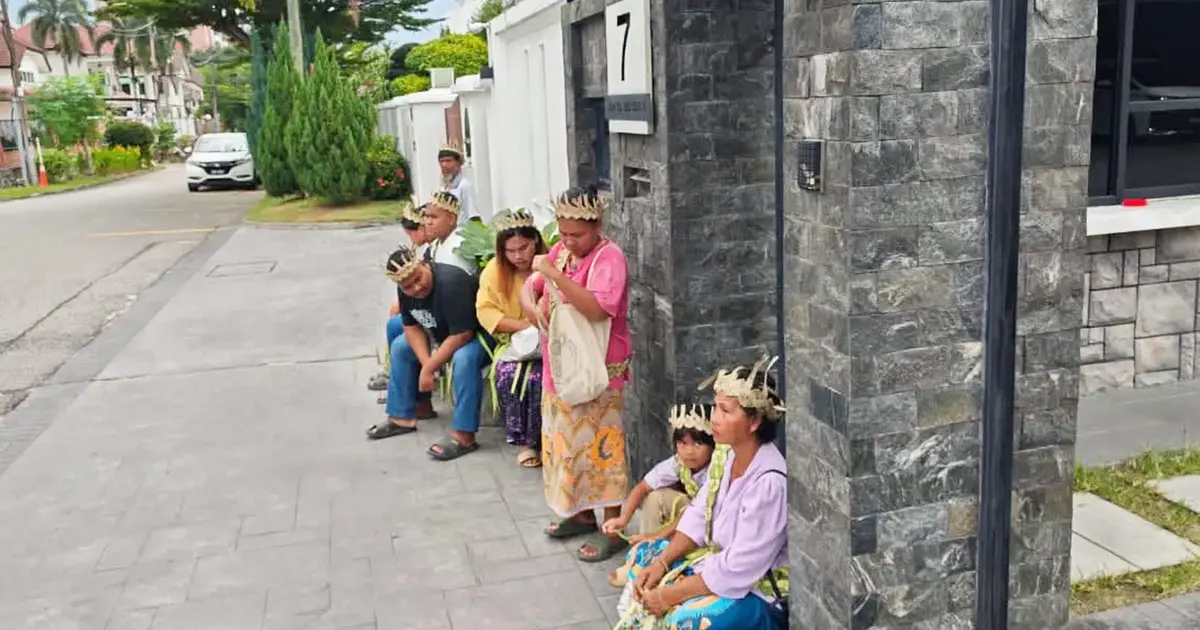
Three Orang Asli individuals detained amid a land dispute have been released, according to Prime Minister Anwar Ibrahim, marking a development in a case that has drawn attention to indigenous land rights and law enforcement procedures in Malaysia. The release comes as the federal government signals its intention to engage directly with state authorities over the circumstances surrounding the detention and the underlying land matter that prompted it.
Anwar's statement reflects the constitutional framework governing land affairs in Malaysia, where authority over property disputes and territorial claims resides primarily with individual state governments rather than the federal administration. This jurisdictional arrangement means that while the Prime Minister can facilitate dialogue and coordinate between federal and state bodies, the substantive handling of land-related grievances falls squarely within the purview of the Pahang state government and its relevant departments. The acknowledgment underscores the need for inter-governmental cooperation when cases involve indigenous communities and potentially sensitive land questions.
The detention of the three individuals had raised concerns among rights advocates and observers tracking the treatment of Orang Asli communities in Malaysia. Indigenous groups have long reported challenges in asserting their customary land claims within a legal system historically oriented toward freehold and leasehold tenure frameworks. The incident, rooted in a disagreement over land boundaries or usage rights, illustrates the friction that can arise when indigenous peoples' traditional territorial understanding collides with formal state land administration processes.
Anwar's commitment to raise the matter with Pahang represents a recognition that the federal government has a role in oversight and coordination, even where direct authority lies with the states. This engagement could involve reviewing how the detention was handled, examining whether law enforcement procedures adhered to established guidelines, and considering whether the Orang Asli claimants' substantive grievances regarding the land dispute received fair processing. Such federal attention, when genuine, can incentivize state governments to ensure their handling of indigenous land matters meets national standards for due process.
The timing of the release and the Prime Minister's public acknowledgment suggest that either federal intervention prompted the detention's resolution, or that the circumstances warranted rapid clarification and de-escalation. Either way, the case demonstrates that land disputes involving indigenous communities remain a live issue in Malaysian governance, particularly in states like Pahang where Orang Asli populations are significant and land development pressures are mounting.
For the broader Orang Asli community, the incident and its partial resolution carry mixed implications. The release itself is a positive outcome, yet it also highlights the vulnerability of indigenous individuals who lack formal documentation of their territorial rights. Many Orang Asli communities rely on oral histories and customary practices rather than registered titles, placing them at a disadvantage when disputes arise. Without systematic recognition of customary land tenure at the state level, such confrontations are likely to recur.
Pahang's response to the federal government's forthcoming engagement will be instructive. Whether the state government treats this as an opportunity to clarify its land administration protocols regarding indigenous claims, or merely as a routine federal communication to be processed bureaucratically, will signal its commitment to addressing structural issues in how Orang Asli land rights are protected and adjudicated. The state's approach could influence similar situations in other jurisdictions where indigenous land questions remain unresolved.
The case also intersects with Malaysia's broader development agenda. Pahang, as a state with significant economic activity in agriculture, mining, and property development, faces constant pressure to allocate land for commercial purposes. When such development interests overlap with indigenous territorial claims, the temptation to resolve disputes in favour of commercial actors can be considerable. Federal oversight, therefore, serves as a counterweight to ensure that state decisions account for indigenous rights and not merely investor convenience.
Anwar's willingness to engage on the matter reflects the federal government's stated commitment to indigenous affairs, though critics argue that substantive policy changes—such as recognising customary land rights legislatively or streamlining dispute resolution mechanisms—remain incomplete. Raising an issue with a state government, while valuable, is a lighter-touch intervention than reforming the underlying frameworks that generate disputes repeatedly.
Looking forward, the resolution of this particular case should prompt reflection on whether Malaysia's land governance structures adequately serve indigenous populations. The current system, inherited from colonial-era legal categories, may require modernisation to acknowledge and protect customary tenure in ways that coexist with state land administration. Regional neighbours have experimented with various approaches, from designating indigenous reserves to incorporating customary law into formal legal pluralism, offering potential models for Malaysian consideration.
For now, the release of the three detained individuals represents a concrete positive outcome, and Anwar's commitment to engage Pahang suggests awareness of the issue's sensitivity at the highest levels of government. Whether that engagement translates into systemic improvements in how Orang Asli land claims are handled, however, will depend on the state government's receptiveness and the federal government's willingness to follow through with concrete recommendations and monitoring.

