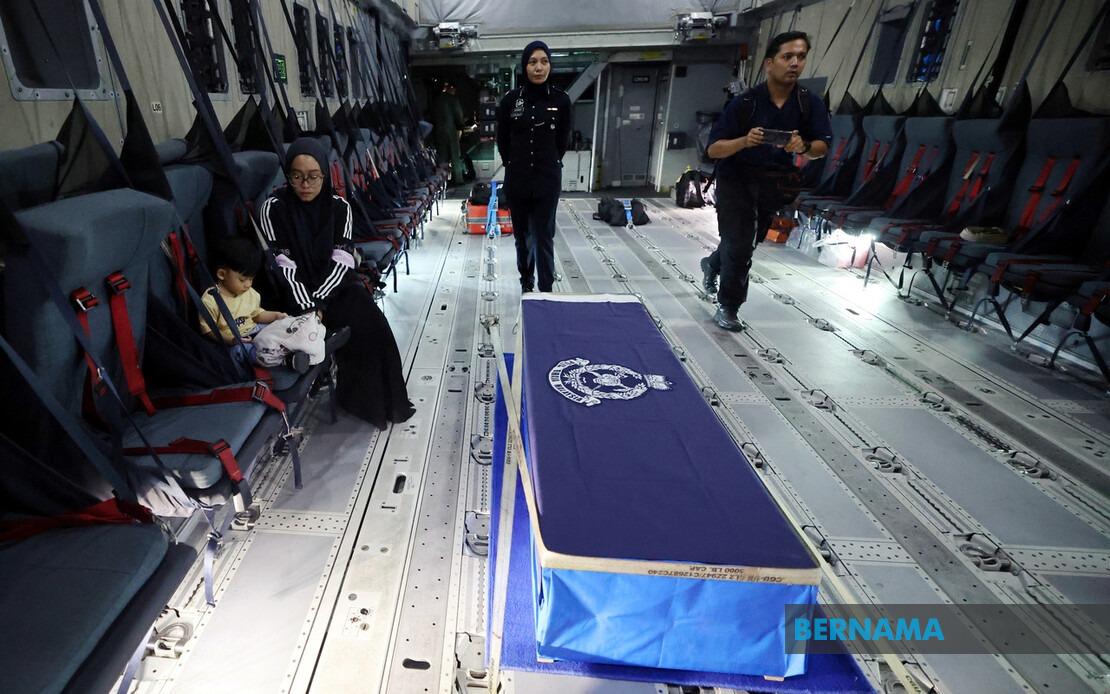
A tragic electrocution incident in Beaufort, Sabah has claimed the lives of three Royal Malaysia Police personnel, with their remains now being transported to their respective hometowns across Malaysia. The three officers—Corporal Mohamad Nur Hafiz Ibrahim and Constable Muhammad Raimi Ismarubee, alongside Corporal Chiu Teck Siong—died in the incident that occurred outside Weston Police Station at 5.50 pm on August 6. Their repatriation operations commenced on the evening of August 7, with military and police aircraft coordinating the transport of the bodies across the country.
The deployment of Royal Malaysian Air Force and Royal Malaysia Police Air Operations Force assets underscores the significance attributed to the repatriation of fallen uniformed personnel. An RMAF aircraft departed Kota Kinabalu International Airport at 7.10 pm carrying the bodies of Corporal Mohamad Nur Hafiz Ibrahim, aged 29 from Kelantan, and Constable Muhammad Raimi Ismarubee, aged 26 from Terengganu. The aircraft was scheduled to make its way to RMAF Air Base in Kuantan before proceeding to RMAF Air Base in Gong Kedak, Terengganu, ensuring that both officers would reach their home states.
Meanwhile, the body of Corporal Chiu Teck Siong, aged 40 and a native of Sarawak, followed a separate logistics pathway. His remains were initially transported to the Royal Malaysia Police Air Operations Force base in Kota Kinabalu before embarking on a police aircraft bound for Sarawak. This differentiated routing reflected the geographical distribution of the victims' origins across East and West Malaysia, requiring coordination between federal and state-level law enforcement and military resources.
Prior to repatriation, all three bodies underwent thorough post-mortem examinations conducted at noon on August 7 at the Forensics Department of Queen Elizabeth Hospital in Kota Kinabalu. The examinations were completed by approximately 2.56 pm, after which the bodies were formally released for transport to their respective hometowns. These medical procedures form a critical component of the investigative protocol following deaths under circumstances requiring clarification, particularly in occupational incidents involving electrical hazards.
The electrocution incident itself raises significant questions about workplace safety protocols within police facilities and the broader framework governing electrical hazards at law enforcement installations. Weston Police Station, the location where the tragedy occurred, would likely become subject to investigations by occupational health and safety authorities alongside police internal affairs divisions. Such incidents, though relatively rare in Malaysia's law enforcement sector, highlight the importance of regular maintenance and inspection procedures for electrical infrastructure in government buildings.
Electrocution-related deaths represent a category of workplace fatality that is largely preventable through proper equipment maintenance, environmental assessment, and adherence to safety standards. The involvement of three officers in a single incident suggests the possibility of a sudden electrical fault or hazard that overwhelmed multiple individuals simultaneously, rather than isolated incidents. This scenario underscores the critical need for redundant safety systems and rapid response protocols in spaces where police personnel conduct their duties.
The loss of three serving officers has implications extending beyond their immediate families to the broader police fraternity in Malaysia. Each victim brought distinct experience and service records to their respective deployments. The concentration of this tragedy in Sabah, a state already facing significant security challenges and resource constraints, may necessitate additional support mechanisms for affected police stations and personnel processing trauma from workplace losses.
From a regional perspective, the repatriation operations demonstrate Malaysia's capacity to mobilize military and law enforcement resources for dignified treatment of fallen personnel. The coordination between RMAF and Royal Malaysia Police Air Operations Force reflects institutional maturity in managing national security responses to internal tragedies. For Malaysian readers, particularly those in the police force or defense sectors, such incidents serve as reminders of occupational hazards that persist despite modernization and infrastructure development.
The families of the deceased officers would now navigate a complex process of grief compounded by the investigative procedures that follow workplace fatalities. Government protocols typically provide support mechanisms including commemorative services, death benefits, and survivor assistance programs. The police force's capacity to honor fallen personnel through ceremonial repatriation carries symbolic importance for institutional morale and public perception of how the state values those serving in uniform.
Looking forward, the investigation into the root causes of this electrocution incident will likely generate recommendations for enhanced electrical safety audits across police facilities nationwide. Regulatory bodies responsible for occupational safety in Malaysia may use this incident as a catalyst for reviewing standards applicable to government buildings, particularly those housing essential services. The tragedy serves as a sobering reminder that despite Malaysia's development status and infrastructure investments, workplace safety hazards remain present and demand vigilance, regular maintenance, and updated safety protocols across all sectors.

