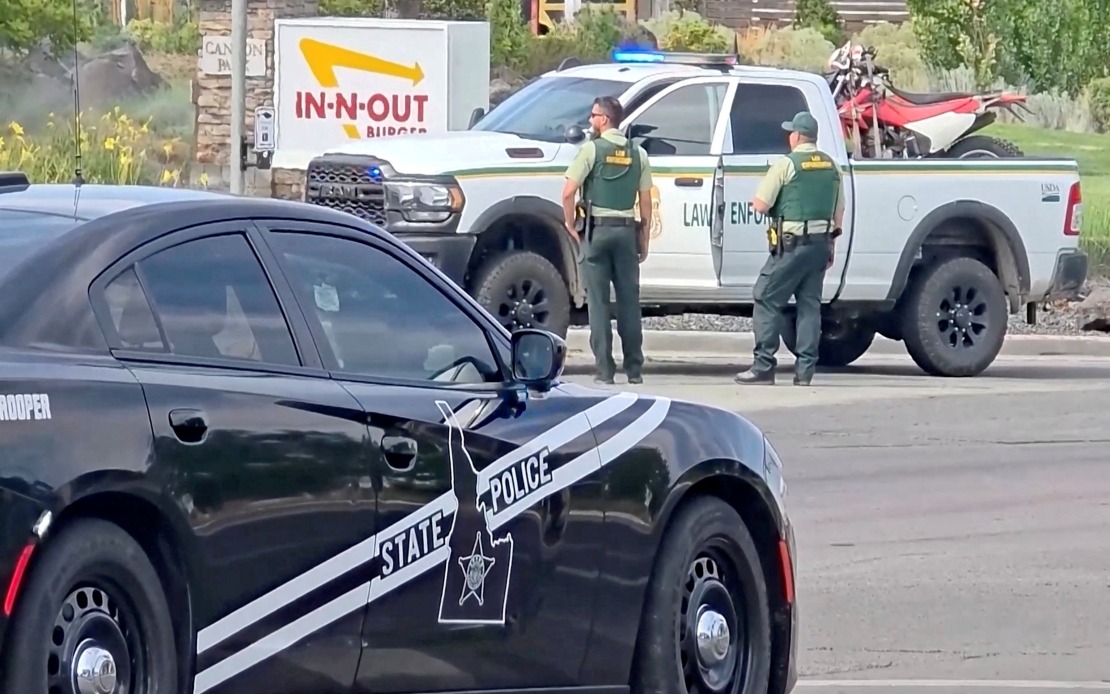
A mass shooting at an In-N-Out Burger franchise in Twin Falls, Idaho claimed three lives and left seven others wounded on Saturday afternoon, marking another violent incident at a commercial establishment in the United States. Emergency responders arrived at the scene located within a busy shopping plaza to find multiple casualties, with several of the injured requiring critical medical intervention. Twin Falls Police Chief Matthew Hicks announced at a press conference that authorities had secured the area and believed no ongoing threat remained to nearby residents and businesses.
The incident unfolded around 2 pm local time at the fast-food restaurant, which sits in a densely populated shopping district. Hundreds of people were present in the vicinity when gunfire erupted, according to Joshua Palmer, the city's public information coordinator. The sudden violence transformed what should have been an ordinary afternoon into a scene of chaos and emergency response, with first responders working quickly to establish a perimeter and assist the wounded.
Authorities located the body of the suspected gunman in an area adjacent to the restaurant, though investigators had not immediately confirmed whether this death was included in the overall casualty count reported to the public. The discovery of the shooter's remains raised questions about how the incident concluded, with police working to piece together the sequence of events that led to the fatalities and injuries. The circumstances surrounding the suspect's death remained under investigation as law enforcement gathered evidence and witness statements.
Identification of victims posed a significant challenge for authorities immediately following the shooting, as police prioritised notifying families before releasing names, ages, or other identifying information to the media. This careful approach, while necessary for respecting victims' families, meant that the community and broader public remained in the dark about who had been harmed. The notification process extended the timeline for full disclosure, a common protocol in mass casualty incidents where authorities must balance public information requests against family privacy and the needs of ongoing investigations.
The motive behind the shooting and the identity of the suspected gunman were still being determined by Twin Falls police and investigators at the time of initial reports. Understanding why such violence occurred would be crucial for law enforcement and community leaders seeking to prevent similar incidents. The absence of immediate clarity on these fundamental questions left residents and businesses in the shopping plaza wrestling with uncertainty about what had transpired and whether warning signs had been missed.
The shooting highlights the ongoing vulnerability of public spaces in the United States, where commercial establishments frequented by shoppers and diners remain susceptible to sudden violence. For Malaysian observers and regional viewers, such incidents underscore the stark differences in gun policy and public safety frameworks between the United States and Southeast Asian nations. While debates about gun control in America continue unabated, incidents like this one at the Idaho restaurant demonstrate the real-world consequences of widespread firearm availability and lax regulatory oversight.
Law enforcement coordination at the scene appeared effective, with Twin Falls Police working alongside other emergency services to manage the crisis, secure the location, and initiate investigations. Chief Hicks' assertion that the threat had ended would have provided some reassurance to the hundreds of people in the shopping area, many of whom likely sheltered in place or evacuated as the situation developed. The rapid police response likely prevented additional casualties, though the damage had already been done before officers arrived.
The timing and location of the shooting—a Saturday afternoon at a popular restaurant in a shopping plaza—made this a particularly visible incident that would resonate with ordinary Americans engaged in routine weekend activities. The normalcy of the setting contrasts sharply with the extraordinary violence that erupted, a pattern that characterises many mass shooting events in the United States. For families planning their own shopping outings or restaurant visits, such incidents raise unsettling questions about personal safety in public environments.
Investigators faced the complex task of reconstructing events, interviewing witnesses, analysing evidence, and determining whether any prior intelligence about the suspect existed. Law enforcement would scrutinise the shooter's background, online presence, recent behaviour, and interactions with others to understand what motivated the violence. This investigative work, while essential for closure and prevention of future incidents, would unfold over weeks or months as authorities built their case file and documented findings.
The In-N-Out Burger chain, known for its presence across the western United States, found itself the location of a tragedy that would inevitably affect both the specific franchise and the broader company's public image. The restaurant would likely become a focal point for media coverage, memorial efforts, and broader discussions about security at commercial establishments. The incident also underscored broader American anxieties about mass shootings and their seeming inevitability in modern American life, a phenomenon that continues to shape public discourse and policy debates across the nation.

