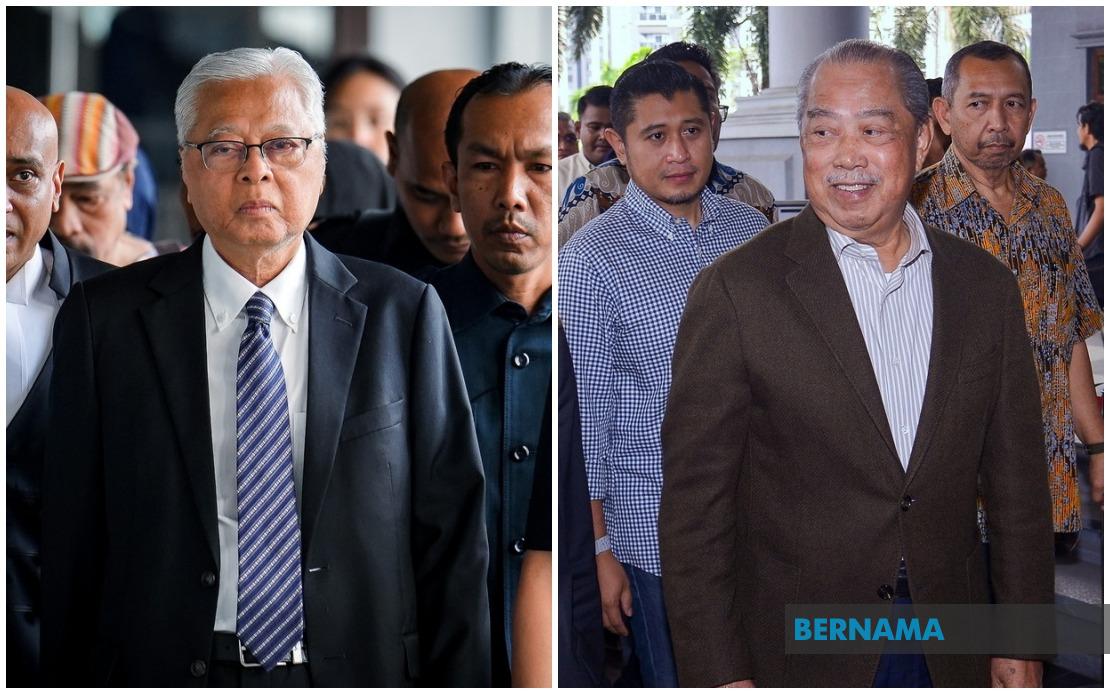
The simultaneous presence of three former prime ministers at the Kuala Lumpur Court Complex on August 27 created an extraordinary confluence of events that journalists described as unprecedented in Malaysian political and legal history. Datuk Seri Najib Tun Razak, Tan Sri Muhyiddin Yassin, and Datuk Seri Ismail Sabri Yaakob each arrived for distinct court proceedings, converging on the nation's busiest judicial venue and transforming what might have been routine legal hearings into a singular moment of national significance.
The rarity of this occurrence was not lost on court observers and media professionals who have spent decades covering Malaysia's legal system. V. Anbalagan, a veteran court correspondent from Free Malaysia Today, characterised the day as historic, reflecting on his extensive career spanning numerous high-profile cases and political developments. His assessment carried particular weight given the breadth of his experience witnessing Malaysian jurisprudence unfold. The simultaneous attendance of three former heads of government at a single court complex represented a break from established patterns, one that journalists acknowledged would likely prove difficult to replicate in future years.
The logistical and security implications of hosting three former prime ministers for separate proceedings simultaneously presented substantial challenges for court administration and law enforcement. Beginning at dawn, the Kuala Lumpur Court Complex transformed into a hub of activity, with camera crews, photographers, and journalists positioning themselves across the grounds by 7 am to capture developments as they unfolded. The convergence demanded meticulous coordination between multiple agencies, including personnel from the Sentul district police headquarters, Palace of Justice police, and dedicated court security teams. This coordination extended to preparations initiated the previous afternoon, demonstrating the magnitude of planning required to manage the situation.
Security passes were stratified into categories ranging from three to six distinct classifications, each tailored to different groups including the general public, members of the press attending open court sessions, and those requiring access to video-linked courtroom facilities. This tiered approach allowed authorities to maintain operational control whilst accommodating the substantial media contingent and ensuring that legitimate court participants could access proceedings without obstruction. Nik Zainab Jusoh, a security officer overseeing the venue, noted that comprehensive briefings conducted the previous day ensured all personnel remained vigilant and prepared for the unprecedented volume of activity anticipated.
Each former premier faced distinct legal matters reflecting different chapters in Malaysia's recent political narrative. Najib's appearance concerned a civil proceeding valued at USD5.64 billion, where 1Malaysia Development Berhad and its subsidiary pursued claims against him and multiple other defendants before Judicial Commissioner Mohamad Redzuan Idrus. This case represents the culmination of investigations into allegations surrounding Malaysia's most significant financial scandal. Muhyiddin, conversely, confronted seven criminal charges relating to alleged abuse of executive power and money laundering connected to the Jana Wibawa programme, with proceedings occurring before Judge Noor Ruwena Md Nurdin. His case touches on governance questions arising from his tenure as prime minister during a contentious constitutional period.
Ismail Sabri's proceedings carried a different character, involving asset declaration failures and the possession of substantial sums in multiple currencies alongside precious metals. Judge Suzana Hussin presided over his case, which culminated in bail being set at RM300,000 with a single surety requirement. Ismail Sabri departed the court complex at 11.43 am following the bail determination, marking the first conclusion of proceedings among the three former leaders. The specificity of these distinct cases—spanning civil liability, criminal corruption charges, and administrative violations—underscores the diverse legal vulnerabilities confronting Malaysia's most recent former prime ministers.
Siti Zanariah Nor Zin, a Bernama television news officer with sixteen years of journalism experience, described the staggered arrivals of the former prime ministers and their legal teams as strategically beneficial for media operations. The spacing of these arrivals permitted news organisations to transmit regular updates to their headquarters, preventing the simultaneous overwhelming of reporting capacity that might have occurred had all three arrived contemporaneously. This operational reality demonstrated how even seemingly chaotic situations could, with proper management, yield structured news coverage. The external environment surrounding the court grounds remained controlled sufficiently to allow journalists systematic observation and documentation of movements throughout the day.
Amirul Aiman Osman, reporting for Utusan Malaysia, highlighted the initial apprehension that emerged when the convergence became apparent. Concerns that journalists might prove unable to comprehensively cover all three separate proceedings proved manageable, though he acknowledged that the morning proved notably hectic and crowded. Having positioned himself at the venue since 7 am, Osman bore witness to the intense security presence that, whilst occasionally creating friction with media operations, successfully prevented any significant incidents or breaches. The controlled environment reflected successful cooperation between security agencies and the media, despite the inherent tensions between access requirements and security protocols.
The unprecedented nature of three former heads of government appearing in the same judicial venue on a single day carries implications extending beyond immediate news value. It reflects the constitutional arc of Malaysian democracy in recent years, wherein former prime ministers have faced legal accountability for alleged misconduct during their tenures. The convergence also demonstrates evolving attitudes within Malaysia's institutions towards holding senior political figures accountable through judicial processes. Unlike earlier periods when such simultaneous legal exposure might have seemed unimaginable, contemporary Malaysia has normalised the prospect of former leaders standing before courts.
For journalists and media observers, the August 27 convergence represented a watershed moment in covering Malaysia's highest-level political accountability. The event crystallised trends that have accelerated since the 2018 electoral transition, demonstrating how Malaysia's judicial system has become increasingly central to national politics. Yet the historic quality of the day also raised reflection on Malaysia's political trajectory and the circumstances that have necessitated such extraordinary judicial attention to former premiers. As V. Anbalagan presciently observed, the likelihood of this particular conjunction of events recurring remains exceptionally low, rendering August 27 a date of singular significance in Malaysian jurisprudential and political memory.
The operational success of managing three simultaneous former prime ministerial court appearances offers instructive lessons for Malaysian institutions preparing for potential future scenarios of comparable complexity. The coordination demonstrated by judicial administrators, security personnel, and law enforcement agencies provided a functional model for managing high-profile political cases whilst maintaining public access and media coverage. This operational proficiency, coupled with the transparent handling of proceedings before distinct judges, reinforced institutional credibility at a moment when public confidence in Malaysia's governance systems remains contested. The day thus constituted not merely a news phenomenon but a subtle validation of institutional capacity.

