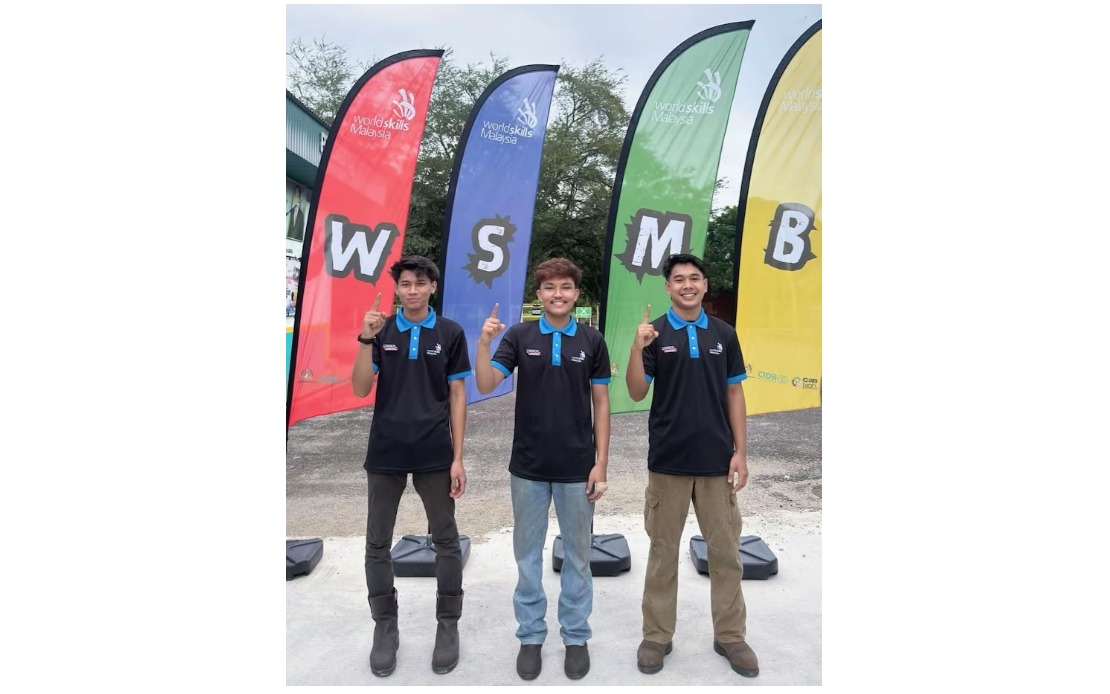
For more than three decades, WorldSkills Malaysia Belia has served as a crucial pipeline for developing construction industry talent, tracing its origins to a vision established during the tenure of Tun Dr Mahathir Mohamad as the fourth Prime Minister. The initiative has undergone significant transformation since its inception in 1990, first operating as the Malaysian Skills Champion Competition before being rebranded as Anugerah Tangan Emas Perdana Menteri from 1991 to 2006, then shifting to MySkills between 2007 and 2013, and ultimately assuming its current identity as WSMB from 2014 onwards. This evolution reflects Malaysia's commitment to structuring vocational excellence around changing industrial demands and international benchmarking practices.
The mechanism through which WSMB operates represents a carefully orchestrated system designed to identify, develop, and showcase Malaysia's most promising construction professionals. Competitors who successfully navigate the rigorous competition process advance into comprehensive development and training programmes that prepare them to represent Malaysia at WorldSkills international competitions. This pathway ensures that only the most capable individuals reach the global stage, amplifying Malaysia's standing within the international skills community and demonstrating the country's capacity to produce world-class craftspeople across multiple construction disciplines.
The Malaysian Construction Academy and CIDB Technologies function as the operational backbone of this talent development ecosystem, providing accredited training environments that adhere to international specifications. These institutions maintain facilities and infrastructure meeting global standards, creating conditions where participants experience authentic industry scenarios rather than theoretical exercises disconnected from real-world demands. This grounding in actual working conditions distinguishes WSMB from conventional vocational programmes, as participants develop skills within environments that closely mirror the complexity and precision required in contemporary construction operations.
Mohd Hafiz Dasahi, chief executive officer of CIDB Technologies Sdn Bhd, articulates a strategic perspective that extends beyond immediate competition outcomes, positioning WSMB as instrumental in cultivating a generation of construction professionals equipped to lead industry transformation. His emphasis on talent investment as foundational to future competitiveness reflects Malaysia's broader economic positioning within Southeast Asia and global markets. The organisation's commitment to aligning training programmes with verifiable industry requirements ensures that participants acquire capabilities directly applicable to employer needs, eliminating the skills-mismatch problem that frequently constrains workforce development initiatives throughout the region.
The assessment criteria employed within welding competitions illustrates the comprehensive nature of WSMB evaluation processes. Zarulhakim Abdul Rahim, head of CIDB Technologies Welding, details how participants face evaluation across measurement accuracy, workmanship quality, procedural compliance, temporal management, analytical problem-solving, and occupational safety adherence. This multi-dimensional assessment framework develops not merely technical proficiency but cultivates professional attributes including self-confidence, disciplined methodology, psychological resilience, and commitment to continuous improvement. Exposure to international technologies, equipment, and methodologies during competition preparation positions graduates to navigate rapidly evolving construction environments where technological integration increasingly defines competitive advantage.
From an industrial perspective, WSMB addresses a persistent challenge across Southeast Asian construction sectors: the availability of genuinely competent, internationally-aware technical workforces. Zarulhakim emphasises how the competition generates talent aligned with contemporary requirements across construction, manufacturing, oil and gas, energy, and maritime industries. Critically, WSMB strengthens institutional collaboration between training providers and industry practitioners, creating feedback mechanisms ensuring training relevance amid technological disruption. This collaborative architecture distinguishes effective skills development from disconnected programme delivery, particularly important as artificial intelligence, advanced robotics, and digital fabrication increasingly influence construction methodologies.
Private sector engagement through organisations like Lincoln Energy Sdn Bhd and Vinxus Mark Sdn Bhd demonstrates how industry stakeholders recognise mutual benefits from talent development investment. Putra Faisal Ashraf Idris articulates this commitment, explaining how welding equipment manufacturers provide machines, consumables, and technical expertise enabling participants to operate with tools and technologies they will encounter professionally. This corporate participation transforms competitions from isolated assessments into authentic rehearsals for workplace environments, allowing young technicians to build experience networks and technical confidence before formal employment. The willingness of commercial entities to invest resources in competitor preparation signals recognition that accessible, skilled workforces represent competitive necessity rather than charitable concern.
Participant narratives reveal the profound developmental impact WSMB generates across personal and professional dimensions. Ahmad Syafie Dasuki, drawing on nearly two years' workshop experience in Terengganu, describes how WSMB enabled skill refinement beyond what practical employment alone provided, exposing him to cutting-edge technologies unavailable through conventional work experience. His progression from informal apprenticeship-like arrangements to structured international-standard competition exemplifies how WSMB bridges gaps between available employment and aspirational professionalism. Muhammad Fazran Md Rashid @ Yusoff similarly emphasises how participation cultivates self-confidence, discipline, and resilience alongside welding competency, suggesting that WSMB's value extends beyond technical skill development into character formation essential for sustained professional advancement.
Mohd Sahmi Irfan Sulaimi's advocacy for broader youth participation illuminates the intergenerational dimension of WSMB's mission. His encouragement to prospective competitors emphasises psychological resilience, excellence orientation, and capacity to transform challenge into learning opportunity—attributes increasingly recognised as fundamental within knowledge economies requiring continuous adaptation. By articulating the competitive exposure, professional networking, and career pathway benefits WSMB provides, Sulaimi addresses practical concerns younger Malaysians consider when evaluating vocational commitment. His perspective underscores how construction skills development, often perceived as narrow technical specialisation, actually provides comprehensive professional foundation encompassing interpersonal capability, organisational acumen, and entrepreneurial potential.
For Malaysian readers and regional observers, WSMB's sustained prominence reflects broader patterns within Southeast Asian economic positioning. Construction remains foundational to infrastructure development driving regional growth, yet persistent skilled labour shortages constrain project execution timelines and quality. Malaysia's systematic investment in vocational excellence through institutions like WSMB demonstrates commitment to addressing supply-side constraints through structured talent development rather than importing foreign workers. This approach protects local employment while building comparative advantage in high-value construction activities requiring sophisticated technical judgment and innovative problem-solving.
The programme's longevity across changing political administrations and multiple institutional rebranding exercises indicates recognition transcending partisan concerns that construction workforce quality directly impacts national competitiveness. As WSMB enters its fourth decade, evolving to address automation, sustainability requirements, and digitalisation within construction, its foundational model—linking competition, international standards exposure, industry collaboration, and career pathway clarity—remains relevant. Young Malaysians contemplating vocational careers encounter opportunities not merely for employment but for participation within quality development ecosystems preparing them for leadership roles within Southeast Asia's construction transformation.

