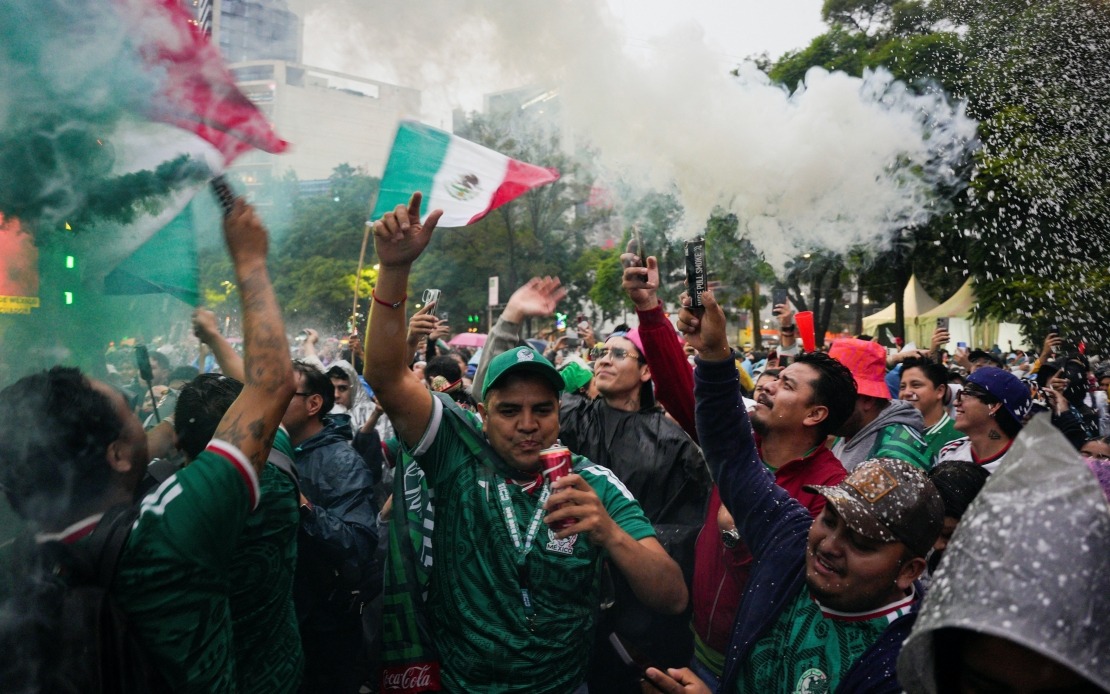
A tragic incident marred Mexico's footballing joy on Tuesday when three people died from asphyxiation in Mexico City during celebrations following the national team's qualification for the World Cup knockout stage. The deaths occurred at separate locations near Paseo de la Reforma in the heart of the capital, casting a sobering shadow over what should have been a moment of national pride after Mexico defeated Ecuador 2-0 at the Estadio Azteca.
The three victims were identified as a 44-year-old man, a 19-year-old woman, and a 48-year-old woman, according to the official statement released by the Mexico City secretary of public health. All three fatalities resulted from asphyxiation, a serious concern that highlights the dangers posed by large, densely packed crowds during spontaneous celebrations in public spaces. The tragedy underscores the risks inherent in sudden mass gatherings, particularly when fans congregate in confined or poorly ventilated areas.
Clara Brugada, Mexico City's head of government, responded swiftly to the incident by acknowledging the emergency response efforts that had been mobilised. In a statement posted on X, she confirmed that emergency teams from across the capital had been deployed to multiple locations near Paseo de la Reforma upon receiving reports of unconscious individuals. Despite all available medical response protocols being activated immediately, efforts to revive the three individuals proved unsuccessful.
The victory itself represented a significant achievement for Mexico in the tournament. The 2-0 scoreline against Ecuador was decisive, and the win ensured Mexico's progression to the knockout rounds where they could potentially face England. The match was played at Estadio Azteca, a venue steeped in Mexican footballing history, and should a match between Mexico and England occur in the Round of 16, it too would be staged at the same iconic ground, pending England's own qualification success against DR Congo on Wednesday.
Brugada extended her sympathies to the families of the deceased, emphasising that city authorities were in direct contact with relatives to offer all necessary support and assistance. The gesture represented an attempt to provide some measure of comfort to grieving families at an extraordinarily difficult time. Her statement reflected the gravity with which city officials viewed the tragedy and their commitment to standing alongside those affected.
In her public remarks, the Mexico City leader made a broader appeal to all citizens, urging that future celebrations be conducted with responsibility, care, and empathy. This message carried particular weight given the circumstances and served as a reminder that exuberant public celebrations, while natural expressions of collective joy, must be tempered with awareness of safety considerations. The tragic outcome demonstrated the need for careful management of crowd dynamics during moments of national enthusiasm.
For Malaysian and Southeast Asian observers, the incident serves as a cautionary tale about crowd safety during major sporting events. The region has experienced its own tragic incidents during sporting celebrations and gatherings, making the Mexico City tragedy particularly relevant. Whether in Malaysia, where football commands significant public passion, or across other Southeast Asian nations, the importance of crowd management protocols cannot be overstated.
The deaths also raise questions about urban planning and public space management during periods of anticipated mass gatherings. Cities hosting major sporting events or expecting spontaneous celebrations must have contingency measures in place to prevent asphyxiation hazards and other crowd-related dangers. This includes clear communication channels between authorities and the public, designated celebration zones with adequate ventilation, and trained emergency personnel positioned strategically throughout populous areas.
Mexico's World Cup campaign, while progressing successfully on the pitch, is now shadowed by this human tragedy. The national team's advancement, achieved through superior play against Ecuador, might ordinarily be the sole focus of media and public discussion. However, the loss of three lives has inevitably complicated the narrative surrounding Mexico's tournament performance, reminding stakeholders that sporting success must never come at such a devastating human cost.
Looking ahead, should Mexico continue their World Cup journey and face England or other opponents, the memories of these three individuals will linger. Their deaths represent a solemn reminder that celebratory moments, however joyful, demand careful consideration of public safety. As Mexico City and the broader football community process this tragedy, the lessons learned should inform how future celebrations are managed, ensuring that sporting triumphs can be enjoyed without such devastating consequences.

