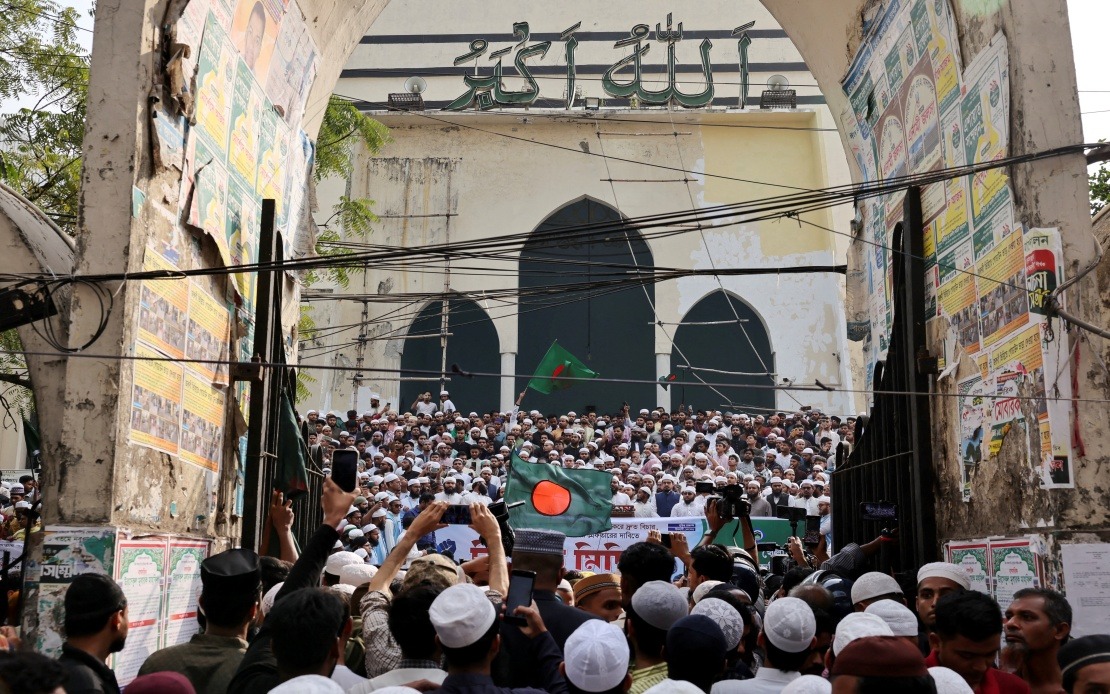
A special international tribunal in Bangladesh has delivered death sentences against three senior police officers, including the former police commissioner of Dhaka, for their involvement in the fatal shooting of demonstrators during last year's mass uprising. The verdict, issued on Sunday by a three-member International Crimes Tribunal headed by Justice Md Golam Mortuza Mozumder, represents an important step towards accountability in a crisis that fundamentally altered Bangladesh's political landscape and forced former Prime Minister Sheikh Hasina into exile.
The three condemned officers—former Dhaka Metropolitan Police (DMP) Commissioner Habibur Rahman, former DMP Additional Deputy Commissioner Md Rashedul Islam, and former Rampura Police Chief Md Mashiur Rahman—were convicted of crimes against humanity stemming from their alleged orders and actions during the July 2024 uprising. All three remain at large, with the sentences handed down in absentia. The tribunal additionally sentenced another officer, Tariqul Islam Bhuiyan, a former sub-inspector at the same police station, to life imprisonment plus an additional 20 years, though he too remains a fugitive.
The specific charges centred on the shooting deaths of civilians caught during the violent crackdown on protesters. One particularly shocking incident, which gained widespread attention on social media, involved the shooting of a young man who had taken refuge by hanging from a building in central Dhaka. Two other civilians were also fatally shot in the capital during the same period. The graphic nature of these killings, amplified through digital platforms, ignited public outrage and catalysed the broader protest movement that would eventually topple Hasina's government.
The July 2024 uprising represents one of the most significant civil disturbances in Bangladesh in recent years. According to United Nations documentation, approximately 1,400 people were killed and thousands more injured during the period of civil unrest, with the overwhelming majority of casualties attributed to police gunfire. These shootings were carried out by security personnel acting under orders from the Awami League party, which dominated Hasina's administration. The sheer scale of the violence shocked regional observers and drew international concern regarding the conduct of security forces.
The tribunal's decision to pursue accountability for police actions reflects the broader transitional justice process underway in Bangladesh following the political upheaval. The judicial system has already targeted higher echelons of the previous regime; in November of last year, the same court delivered a death sentence to Hasina herself in a separate case involving crimes against humanity. These convictions demonstrate a systematic approach to examining the state machinery's role in the violence, rather than attributing responsibility solely to frontline officers.
Hashina's flight from Bangladesh in August 2024 marked a dramatic reversal of fortune for a leader who had dominated the country's politics for most of the past two decades. The uprising transcended typical protest dynamics, transforming into a nationwide movement that united diverse social groups dissatisfied with governance, economic conditions, and perceived democratic decline. The scale of public mobilisation proved sufficient to overcome the security apparatus's initial deployment of force, ultimately compelling both the government and the international community to acknowledge the depth of public discontent.
For Malaysia and other Southeast Asian nations, the Bangladesh tribunal's proceedings carry particular significance as a case study in post-conflict accountability mechanisms. The region faces ongoing questions about how states should address large-scale civilian casualties during periods of civil unrest, the appropriate balance between transitional justice and political stability, and the role international legal standards should play in domestic proceedings. Bangladesh's approach—establishing specialist tribunals and pursuing cases against state security personnel—offers both lessons and cautionary examples for neighbouring democracies grappling with similar questions.
The continued fugitive status of all four convicted officers presents practical challenges to Bangladesh's justice system. Without custody, the sentences serve primarily as formal judgements and potential foundations for future enforcement, should these individuals return to Bangladesh or travel to jurisdictions with extradition agreements. The tribunal's continued operation and issuance of convictions nonetheless establishes a legal and moral record of accountability, which analysts argue holds long-term significance for national reconciliation efforts.
Bangladesh's transitional moment remains fluid, with the current interim government navigating the competing demands of justice, stability, and economic recovery. The police force itself faces questions about institutional reform, given that officers at various ranks participated in or facilitated the violent crackdown. How the new administration restructures law enforcement—particularly with regard to command accountability, training standards, and constraints on the use of lethal force—will substantially influence Bangladesh's trajectory toward more accountable governance.
The international legal dimension of these proceedings, particularly the tribunal's structure and application of crimes against humanity standards, reflects Bangladesh's attempt to situate its accountability process within global legal frameworks rather than treating it as purely domestic punishment. This approach strengthens the legitimacy of verdicts among rights advocates and international observers, though it also invites scrutiny regarding due process standards and the consistency of convictions across different levels of government hierarchy.
Looking forward, the scale and character of the sentences—capital punishment combined with life imprisonment—underscore the severity with which the tribunal regards the officers' conduct. However, enforcement of these verdicts depends on Bangladesh's political commitment to apprehending fugitives, international cooperation on extradition, and the sustainability of transitional justice institutions beyond immediate post-crisis periods. These practical questions will largely determine whether the tribunal's work translates into meaningful accountability or remains largely symbolic.

