The simple act of offering a mandarin orange in a hospital administrative office in northwest England carried unexpected weight for one Malaysian living abroad. When a colleague volunteered to peel the fruit after learning of a missed meal during a gruelling clinic shift, the gesture triggered a profound realisation about the nature of human connection. What unfolded was not merely a moment of workplace kindness, but rather recognition of a cultural truth that transcends geographical boundaries: food serves as perhaps humanity's most fundamental language for expressing care.
Growing up in Malaysia, the author witnessed firsthand how expressions of affection became inseparable from culinary gestures. From early childhood through adulthood, family members demonstrated devotion through deliberate, often laborious acts of food preparation. A paternal grandmother who would slice and season green apples after meals eventually passed this ritual to the author's mother, creating a chain of care spanning generations. Similarly, a father who spent countless hours cracking open crabs and meticulously extracting the flesh ensured his child never needed to learn this skill independently—a seemingly small act that embodied profound parental sacrifice and attentiveness.
The Malaysian household communicated entire emotional narratives through food choices and preparations. When a young reader refused to relinquish storybooks during mealtimes, a grandmother responded not with stern discipline but with patient hand-feeding that persisted into the teenage years. This accommodation emerged from genuine concern about choking hazards and perhaps from the older generation's belief in the spiritual importance of mindful eating. The image of a grandmother enabling her grandchild's literary passion through this nurturing approach speaks to how Malaysian culture weaponises food as a vehicle for supporting each family member's individual happiness and needs.
Memories of specific brands and flavours accumulated across decades, each carrying the weight of parental attention and love. Blue-packet Hup Seng Teddy biscuits became a signature symbol of maternal affection, reliable as clockwork on the author's returns home despite living abroad. The family's recurring debates over crisp preferences—the mother's persistent inability to remember that her child favoured tomato-flavoured Mr Potato over alternatives—reflected a deeper truth about the attention parents invest in understanding their children's preferences, even when memory occasionally fails them.
Festive seasons amplified these food-centred expressions of belonging. During Deepavali celebrations, an aunt's habit of adding extra potatoes to chicken curry demonstrated not just accommodation of the author's dietary preferences but active celebration of individual identity within family traditions. The annual arrival of a homemade chocolate moist cake from the mother's Malay colleague transcended religious and cultural boundaries, transforming food into a symbol of workplace friendship and genuine community bonds. That this colleague brought the cake without obligation, year after year, demonstrated how offering food became an unmotivated act of pure generosity.
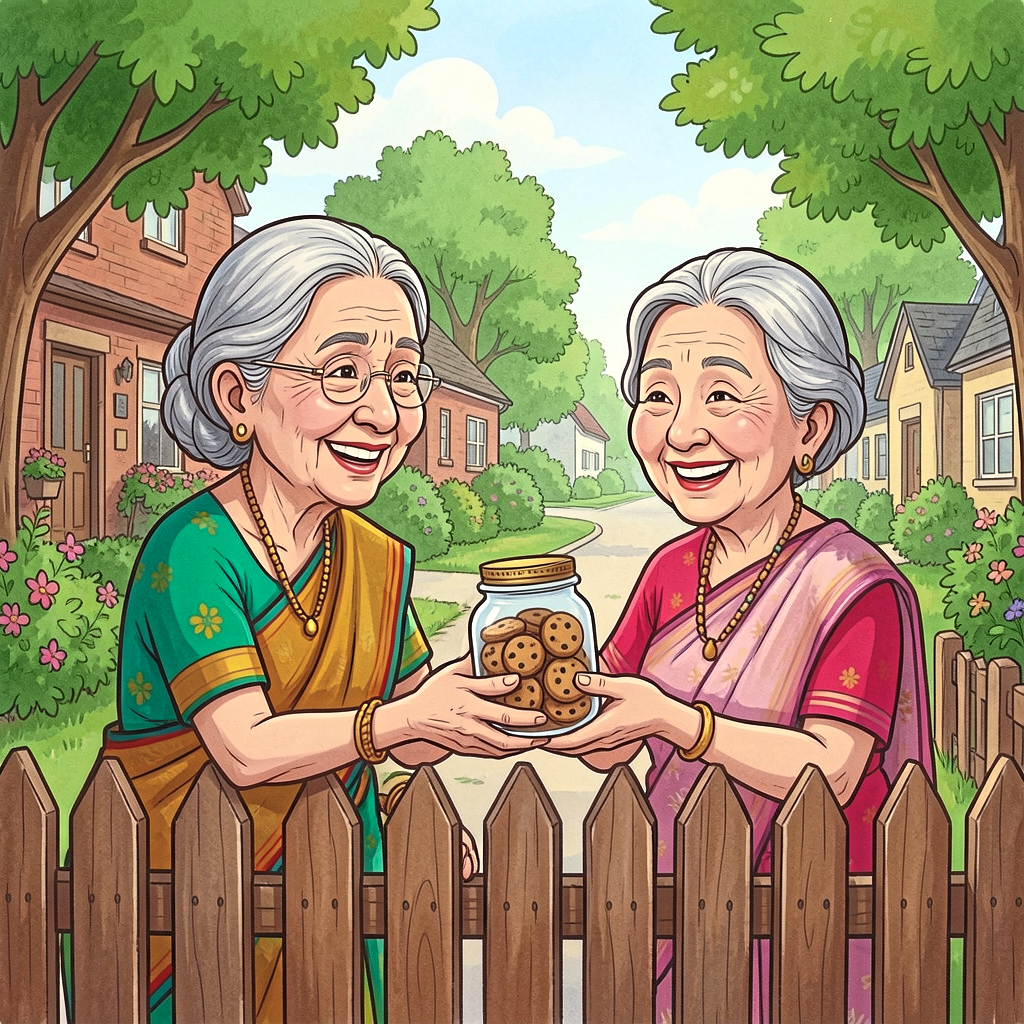
Multicultural Malaysia provided fertile ground for observing how different communities expressed identical impulses through their own culinary vocabularies. The author's mother and aunt maintained the tradition of distributing homemade cookies to Chinese neighbours during Deepavali, while receiving store-bought varieties during Chinese New Year celebrations in return. A retired colleague's annual visits bearing mandarin oranges persisted even after retirement, suggesting that certain rituals transcend employment relationships and become woven into the fabric of community life itself. These exchanges represented not transactional commerce but rather reaffirmation of neighbourly connection across decades.
One neighbour of fifty years became legendary in the author's memory not through grand gestures but through consistent, modest contributions of home-cooked comfort. The sweet upma that appeared frequently over the dividing stone fence remains the benchmark against which all subsequent versions are measured. Afternoon deliveries of onion cucur supplemented the breakfast offerings, creating a rhythm of generosity that shaped the author's understanding of what neighbourly behaviour looked like. The reciprocal practice of returning containers filled with something nice inside demonstrated how Malaysian communities sustained these relationships through mutual obligation and pleasure.
The devastating stroke that eventually forced this long-standing neighbour to relocate and abandon cooking demonstrated the fragility underlying these food-centred relationships. Yet the author's enduring memory crystallised not around the neighbour's current limitations but around the sweet upma that defined their connection across decades. Food, in this context, served as a kind of memory anchor, preserving relationships even after the capacity to prepare and share meals diminishes. The upma transcended its material existence to become shorthand for an entire relationship built on quiet, consistent care.
Sitting in that English office, the author experienced what many expatriates from Malaysia encounter: the strange recognition that practices considered culturally specific reveal themselves to be profoundly universal. The colleague's offer to peel a mandarin orange, while lacking the historical weight of Malaysian family traditions, communicated an identical message through identical means. This moment suggested that rather than food being uniquely Malaysian in its expression of care, perhaps Malaysia simply maintained explicit consciousness of a practice that humanity has engaged in since the earliest food-sharing rituals around primordial fires.
The realisation that food represents one of humanity's oldest and most effective languages for communicating affection reframes cultural identity. Malaysian families did not invent the association between care and feeding; rather, they preserved and celebrated this connection with particular articulateness and intentionality. The grandmother's hand-feeding, the mother's remembered preferences, the neighbour's consistent deliveries, and the aunts' festival distributions all participate in a conversation about human worth and belonging that spans continents and generations. Every culture speaks this language, though with locally-inflected vocabularies and grammatical structures unique to their circumstances.
Understanding food as a universal language of care carries significant implications for how people from different backgrounds navigate cross-cultural relationships. When Malaysian expatriates encounter foreign colleagues offering assistance in small ways—peeling fruit, sharing meals, remembering dietary preferences—recognition of this shared human impulse creates unexpected bridges. The work of maintaining relationships across distance often relies precisely on these food-centred gestures: sending hometown ingredients, preparing traditional dishes for new friends, or participating enthusiastically in colleagues' culinary traditions. These practices constitute far more than mere nostalgia or obligation; they represent active participation in humanity's most ancient conversation about mattering to one another.
The author's reflection ultimately celebrates not cultural exceptionalism but rather the discovery of common ground with distant colleagues and communities. That a person in northwest England would instinctively offer to peel fruit for a tired colleague mirrors the grandmother's hand-feeding and the neighbour's upma deliveries. The specifics change—the fruit, the timing, the relationship context—but the underlying impulse remains constant across human societies and historical periods. Food becomes the medium through which strangers become neighbours, neighbours become extended family, and family members communicate their deepest commitments to one another's wellbeing. In recognising this universal language, Malaysians abroad need not feel that their distinctive food-centred expressions of care are lost or misunderstood, but rather that they are participating in conversations that echo across all human communities.

