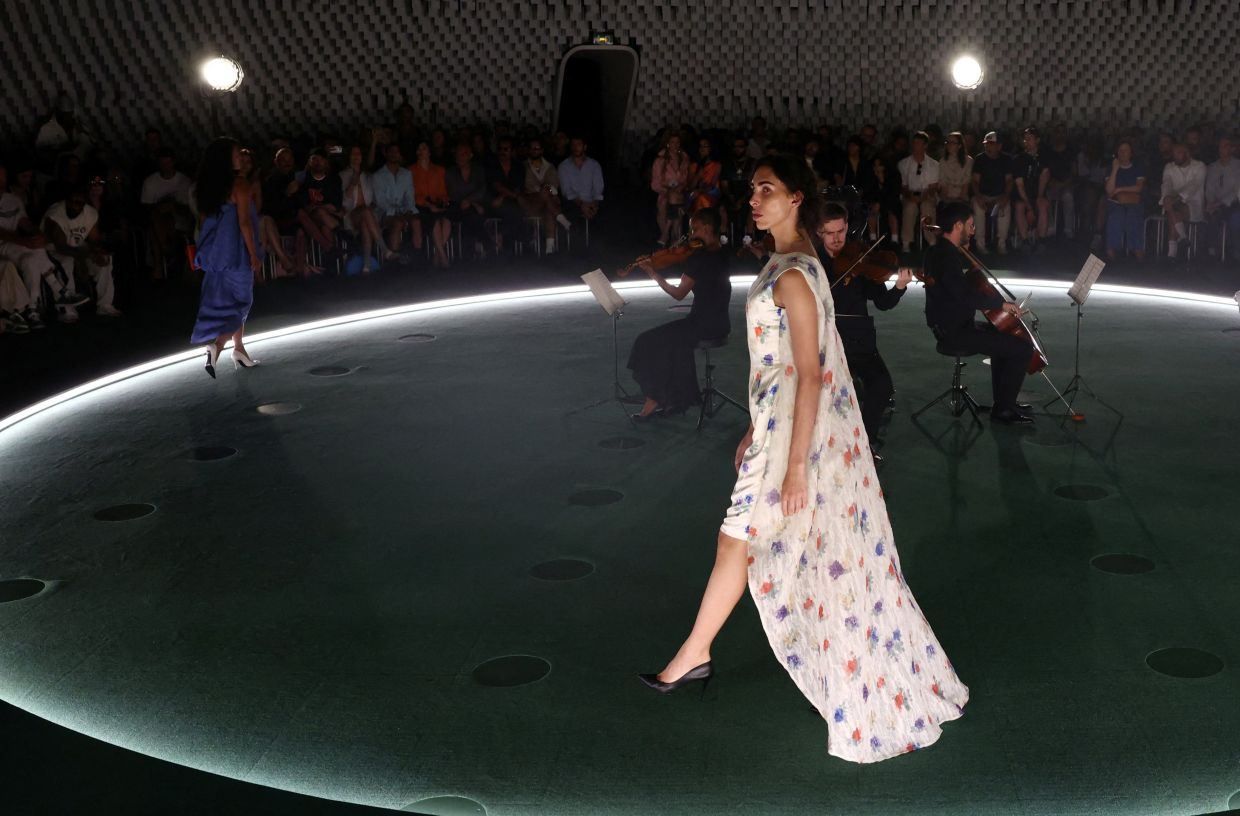
The sleeveless silhouette has become one of fashion's defining trends, reshaping wardrobes and sparking conversations about body confidence, age, and professional norms. What was once a seasonal phenomenon is now a dominant force in contemporary style, with the global sleeveless apparel market projected to nearly double from US$24.36 billion in 2021 to over US$51.39 billion by 2033. For Malaysian and Southeast Asian fashion consumers, this shift carries particular resonance in a region where climate, tradition, and evolving social attitudes toward female bodies intersect in complex ways.
The scale of this transformation is striking. Fashion search engine Tagwalk recorded a 133 percent surge in sleeveless designs across Spring 2026 collections compared to the previous year, signalling that this is far more than a fleeting aesthetic choice. Designer Willy Chavarria observed during Paris Fashion Week that sleeveless pieces have substantially outperformed their sleeved counterparts over the past two seasons, a pattern reflected across mainstream media where female news anchors increasingly appear in sleeveless dresses. The trend has reached a critical mass that makes opting out feel almost countercultural.
Multiple forces propel this shift beyond mere fashion caprice. Climate change plays an obvious role—as summers grow increasingly sweltering across Asia, the practical appeal of minimal fabric becomes undeniable. Rising fitness culture, where visible musculature signals dedication and health, has simultaneously elevated arms as a showcase for physical achievement. Perhaps most significantly, evolving gender norms have gradually relaxed the historical policing of female bodies. These factors combine to create a moment where sleevelessness feels contemporary, empowered, and inevitable.
Yet beneath this apparent liberation lies considerable psychological complexity. Arms occupy a unique category in how women internalise their bodies. Decades of social conditioning have made upper arms a site of particular insecurity—a body part simultaneously vulnerable to ageing's visible markers and historically sexualised or dismissed as unfeminine. The neck, hands, and arms age noticeably when faces no longer reliably register chronological time, revealing what cosmetic interventions cannot easily address: the crepey texture of ageing skin, the sagging around triceps, the redistribution of fat deposits that even fitness cannot entirely eliminate. This vulnerability is not trivial; it reflects genuine anxieties about visibility and acceptability as women age.
The historical baggage surrounding female arms further complicates contemporary style choices. For years, women were explicitly counselled to cover their arms in professional settings, a norm only challenged recently. The scandalised response to Michelle Obama's preference for sleeveless dresses—reactions that carried troubling racial dimensions—crystallised how arms became a battleground for debates about propriety, sexuality, and respectability. The United States House of Representatives did not change its dress code to permit sleeveless attire until 2017, followed two years later by the Senate. Such recent institutional resistance underscores why sleevelessness and female insecurity remain intertwined; these are not merely aesthetic preferences but expressions of long-contested rights to occupying public space on one's own terms.
Designers increasingly recognise this psychological dimension. Antonin Tron of Balmain articulates a philosophy that reframes the conversation entirely: the ageing body possesses its own beauty, and female sexuality need not diminish with age. This perspective represents a genuine departure from fashion's historical obsession with youth, offering permission to reconsider what counts as desirable or displayable. Rather than demanding women simply accept the trend, style experts propose practical strategies that honour individual comfort while experimenting with new possibilities.
One accessible approach involves redirecting visual attention through strategic accessories. A striking necklace or bold bangles create focal points that draw the eye upward and away from arm concerns, effectively reframing the entire look. This technique acknowledges that confidence often follows from strategic styling rather than immediate acceptance. Similarly, exploring transitional silhouettes offers middle ground: cold-shoulder tops, styles with open arms, or cap sleeves provide reduced coverage without committing to full sleevelessness. These options allow gradual exploration rather than demanding abrupt transformation.
Layering offers another sophisticated solution. Sheer or transparent fabrics worn over sleeveless pieces create visual interest and texture while technically maintaining sleeve coverage. This approach transforms sleevelessness into a layered aesthetic statement rather than a confrontational display. Importantly, the construction details matter enormously. A high armhole that provides coverage without binding or gaping transforms the entire proportional equation, preventing the uncomfortable pinching or excessive exposure that makes many sleeveless styles unwearable. Thoughtful tailoring, in other words, can bridge the gap between contemporary fashion and individual comfort.
Ultimately, this debate extends beyond aesthetic preference into questions of bodily autonomy and self-definition. Arms are instruments: they have delivered presentations and emails, lifted children and boxes, typed essays, embraced loved ones, and earned the means for financial independence. They carry the evidence of active, engaged living rather than mere decorative beauty. Reconsidering what arms represent—not as problematic body parts requiring concealment but as functional markers of lived experience and capability—offers a genuinely revolutionary shift in how women might approach their own appearance.
For Malaysian readers navigating these global trends within particular cultural contexts, the sleeveless question involves additional layers. Southeast Asian fashion traditions emphasise modesty differently than Western norms, creating legitimate reasons some women prefer coverage. Yet the projection of global market growth toward sleeveless wear suggests this aesthetic will become increasingly unavoidable. Rather than experiencing this as imposed pressure, the practical styling strategies designers recommend offer genuine agency: women can experiment at their own pace, honour their own comfort levels, and ultimately decide whether sleevelessness serves their personal aesthetic and confidence. The trend itself is neither inherently liberating nor oppressive; what matters is whether women maintain the freedom to choose.
This moment in fashion ultimately reflects broader conversations about power, visibility, and who gets to define appropriate female presentation. The sleeveless trend accelerates partly because women increasingly claim the right to define these boundaries themselves rather than deferring to external judgment. Whether one embraces sleevelessness fully, selectively, or not at all becomes less important than maintaining genuine choice. In that respect, the current fashion landscape—despite its commercial pressure toward minimal sleeves—contains seeds of something genuinely empowering: the recognition that women's bodies, at every age and in every condition, deserve to occupy space according to their own preferences rather than inherited restrictions.

