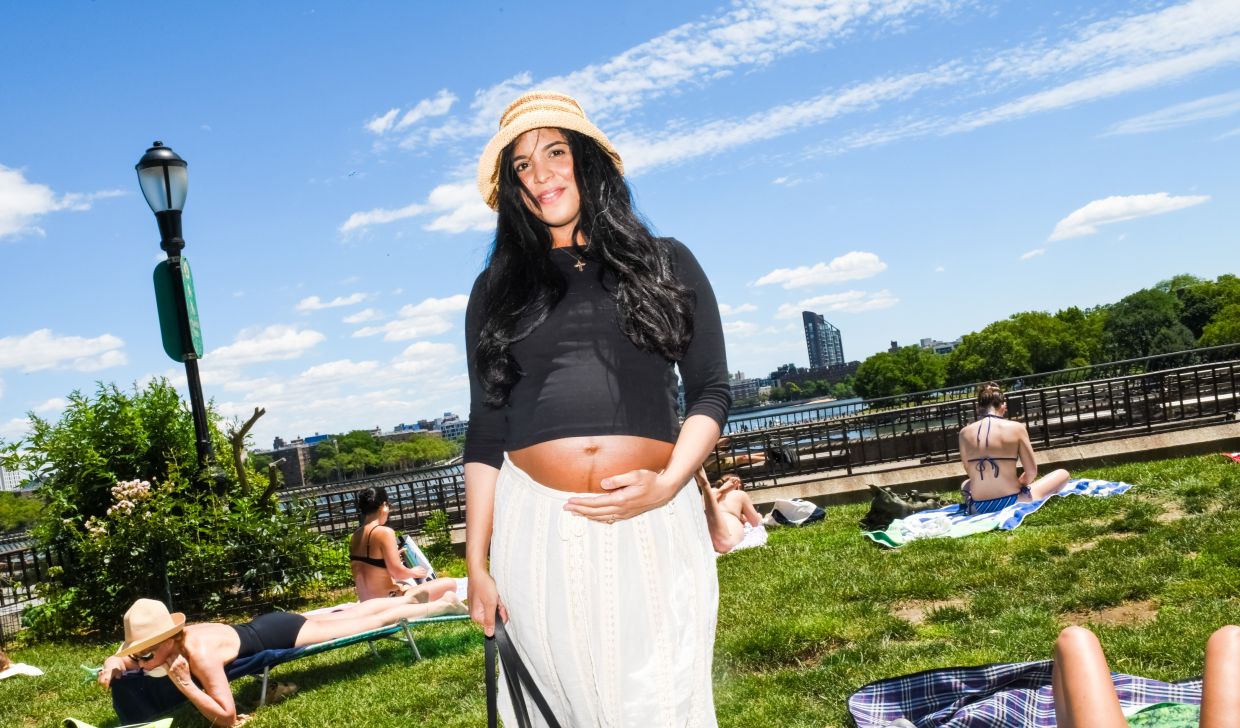
Sarah Brown, a 36-year-old handbag designer and stylist, faced a gentle rebuke from her well-meaning mother when she began posting photographs of her exposed midriff on social media during her pregnancy. With her grey T-shirt hiked up to reveal her rounded belly, a beige blazer layered on top, and her husband's APC jeans slung low across her waist, Brown had deliberately composed a look celebrating her changing silhouette. Her mother's offer to purchase a maternity jumpsuit, while kindly intentioned, reflected an older generation's assumption that pregnancy required concealment beneath purpose-built garments. Yet Brown's approach to styling her body during those nine months represents a seismic shift in how contemporary women regard maternity fashion—one that has steadily gained momentum over the past several years.
The transformation is visible everywhere. Pregnant bellies now protrude defiantly from crop tops and artfully designed cutouts, spill out from bikinis at beaches and parks, and feature prominently in celebrity pregnancy announcements across Instagram and other social platforms. Where previous generations relied upon oversized, tent-like maternity wear to obscure bodily changes, today's expectant mothers are instead embracing a more confrontational approach: displaying, styling, and celebrating their temporarily altered forms. This represents a dramatic departure from the aesthetic norms that dominated the 1990s and earlier, when pregnant women were routinely expected to disappear into shapeless fabrics that prioritised concealment over self-expression.
Laura McAndrews, an associate professor in Kent State University's fashion school who specialises in generational attitudes toward maternity wear, attributes much of this shift to the influence of widespread messaging around body positivity, particularly among Generation Z and younger millennials. Having grown up surrounded by celebrations of diverse body types and empowerment messaging, these cohorts are approaching all life stages—including pregnancy—with fundamentally different assumptions about visibility and acceptance. The constant reinforcement that women should embrace rather than apologise for their bodies has translated into a willingness to showcase pregnancy as a natural, beautiful, and worthy of celebration rather than concealment. This generational reframing stands in sharp contrast to earlier decades when pregnant bodies were routinely treated as something to be managed, hidden, and minimised in public spaces.
Celebrity influence has played an outsized role in normalising and aestheticising visible pregnancy. Demi Moore's iconic pregnant nude on the cover of Vanity Fair blazed an early trail for mainstream acceptance of the pregnant form as art and spectacle. For millennials and Gen Z audiences, however, the watershed moments came through more contemporary figures and platforms. Beyoncé's 2017 baby shower photographs—featuring her bare belly at seven months pregnant—set the internet ablaze and signalled that celebrated artists could claim their pregnant bodies as subjects worthy of celebration. This precedent accelerated significantly when Rihanna announced her first pregnancy in 2022, appearing in public in a half-buttoned bright pink Chanel puffer jacket with her bare bump fully exposed. The imagery became instantly iconic, establishing a new template for how fashionable, successful women could present pregnancy to the world.
Rihanna's approach has reverberated throughout celebrity culture and beyond. Anne Hathaway followed suit by announcing her pregnancy in a crisp white crop top and matching skirt, allowing her silhouette to remain visible. These high-profile endorsements have cascading effects throughout fashion consciousness and consumer behaviour. Michelle Zauner, the singer and author, explicitly credits Rihanna's example when she performed at the Governors Ball music festival in New York in June, wearing an unbuttoned cardigan that revealed a lacy black bra and her bare pregnant belly. For Zauner, the choice was both a conscious homage to celebrity precedent and a personal rejection of maternity clothing that struck her as oversized, shapeless, and fundamentally at odds with her aesthetic sensibilities. The decision to perform visibly pregnant on stage, refusing to apologise for or conceal bodily changes, transforms pregnancy into a statement of power rather than a condition demanding accommodation.
Historically, pregnancy was shrouded in stigma and social awkwardness. Isabel Davis, author of a study on historical attitudes toward pregnant bodies, notes that pregnancy was traditionally perceived as inherently improper because it constituted visible evidence of sexual activity. This profound discomfort with the pregnant form drove centuries of fashion conventions designed to obscure, minimise, and neutralise the visual reality of pregnancy. Even relatively recently, pregnancy remained a subject laden with shame and professional anxiety. Ariane Goldman, chief creative officer of Hatch, the maternity clothing company she founded in 2011, recalls initiating her business during an era when discussing pregnancy openly was taboo and many women actively concealed their conditions from employers for fear of workplace discrimination or termination.
The transformation over the past decade has been remarkable in its speed and completeness. Goldman observes that a profound cultural shift has occurred, moving away from stigma toward celebration and recognition of the power inherent in carrying and birthing a child. This reframing has profound implications for how women experience and present their bodies during pregnancy. Rather than internalising shame or anxiety about visible bodily changes, contemporary mothers are encouraged to claim and own their transformed silhouettes as evidence of strength and capability. This mindset extends beyond mere aesthetics into questions of autonomy, bodily agency, and the right to move through public space without apologising for one's physical form.
Yet this cultural transformation raises intriguing questions about the future of the maternity wear industry itself. If women increasingly feel empowered to style themselves through their partner's wardrobes, vintage pieces, and standard contemporary fashion rather than purchasing clothes specifically engineered for the pregnant body, what remains of the market segment that emerged specifically to serve pregnant customers? Goldman acknowledges this tension is frequently discussed within her company and the broader industry. However, she argues that even the most fashion-forward pregnant women eventually confront practical challenges that generic clothing cannot adequately address. The human body during pregnancy has distinct physiological needs—shifting centre of gravity, growing midsection, changing breast tissue, hormonal fluctuations affecting skin and comfort—that necessitate functional solutions beyond mere styling choices.
Brown's own experience bears out Goldman's observation about functional necessity. Despite her commitment to styling her pregnancy through carefully curated combinations of pieces, she ultimately relied upon a limited wardrobe of genuinely maternity-specific items to reach the end of her pregnancy: several pairs of Los Angeles Apparel elastic waist pants and two Paloma Wool tops that unbuttoned at the sides. These pieces provided the practical flexibility that standard clothing simply could not offer, even for someone with significant fashion expertise and access to resources. The convergence of bold styling and functional necessity suggests that the future of maternity wear may increasingly emphasise discrete, well-designed pieces that provide genuine utility rather than attempting to disguise pregnancy through voluminous silhouettes.
For Malaysian and Southeast Asian readers, this cultural shift carries particular significance. In many societies throughout the region, traditional attitudes toward pregnancy remain more conservative, with expectations that pregnant women should remain relatively inconspicuous in public spaces. The emerging global norm of celebrating visible pregnancy through fashion may gradually influence local attitudes, particularly among younger women exposed to international media and celebrity culture. This trend also intersects with broader conversations about women's autonomy, bodily agency, and the right to participate fully in professional and social life without modifying one's appearance to accommodate others' comfort. As maternity wear evolves to become less about concealment and more about celebration, it reflects deeper transformations in how societies value and celebrate women's reproductive bodies and maternal experience.

