The Metropolitan Museum of Art convened an unusual gathering in May when museum leadership met behind closed doors with prominent Jewish figures to discuss a potentially divisive exhibition. Among those attending were influential voices from New York's Jewish community, brought together specifically to address concerns surrounding a planned retrospective dedicated to John Galliano, one of contemporary fashion's most celebrated yet controversial figures. The meetings represented part of a broader effort to gauge community sentiment and secure support for an exhibition that risks becoming a flashpoint in an already tense climate surrounding antisemitism.
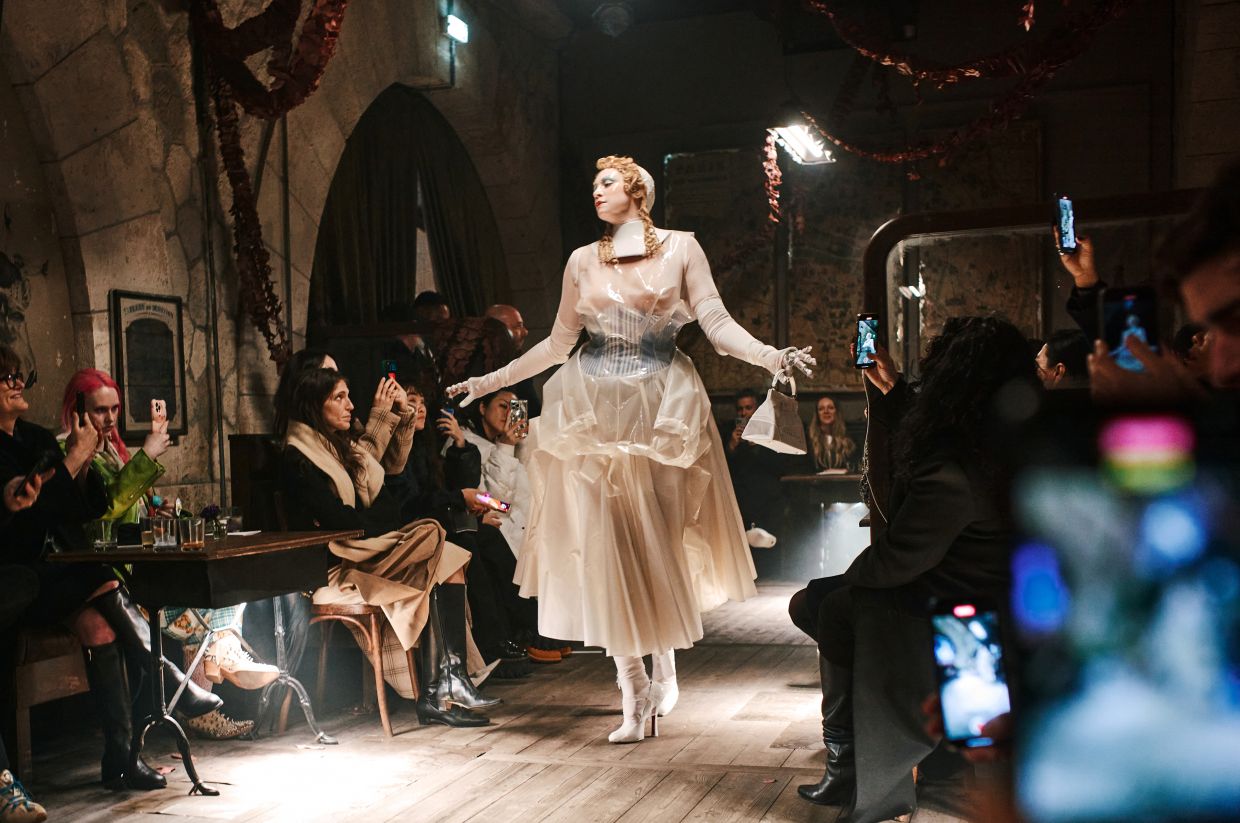
Galliano's status in the fashion world remains undeniably prominent. His tenure as creative director of Christian Dior from 1996 to 2011 fundamentally reshaped the storied French house, transforming it from an exclusive heritage brand into a global luxury phenomenon. His mastery of the bias-cut technique and his ability to construct immersive, theatrical fashion worlds earned him recognition as one of the most significant designers of his generation. Yet this professional achievement became overshadowed in 2011 when video footage emerged showing him making antisemitic remarks in a Paris establishment, comments so offensive they reverberated internationally and resulted in his immediate termination from Dior.
The fallout from that incident shaped the trajectory of Galliano's subsequent decades. A Paris court convicted him of hate crime charges, a ruling that forced him into a period of intensive rehabilitation. He undertook education about Judaism, antisemitism, and the Holocaust, working with rabbinical advisors and representatives of the Anti-Defamation League in New York. By 2014, he had rehabilitated his professional reputation sufficiently to return to fashion as creative director of Maison Margiela, a position he has held successfully ever since. Celebrities including Zendaya, Tyla, and Amal Clooney have championed his designs on red carpets, and his vintage pieces command premium prices at auction.
The proposed Metropolitan Museum retrospective would represent an extraordinarily rare honour. Should it proceed, Galliano would become only the third living designer ever granted a solo exhibition at the institution, following Yves Saint Laurent and Rei Kawakubo. The prestige attached to such recognition remains unmatched in the fashion industry, cementing a designer's place in cultural history. Yet the timing and the subject matter have created genuine complications. The exhibition would launch the 2025 Met Gala, perhaps the world's most scrutinized red carpet event, ensuring unprecedented global attention. This visibility amplifies both the opportunity and the risk of the museum's decision.
The context surrounding this exhibition matters significantly. Antisemitism has demonstrably increased across North America and Europe in recent years, a reality particularly acute in New York City. Recent violent hate crimes targeting Jewish residents have intensified community concerns and heightened sensitivity around cultural institutions' choices. When the museum's leadership considered moving forward with a Galliano show under these circumstances, they recognized the necessity of engaging directly with Jewish community representatives who might otherwise view the retrospective as insensitive or tone-deaf to contemporary concerns about rising prejudice.
Museum director Andrew Bolton explained that while he had entertained the idea of a Galliano exhibition since 2010, he only committed seriously to it in 2024. At that juncture, both he and the museum's board concluded that the decision required careful deliberation, though Bolton denied that previous hesitation stemmed from concerns about Galliano's past misconduct. According to Bolton, the current climate of heightened antisemitism actually makes the exhibition more relevant and potentially more instructive, provided it confronts the designer's history directly rather than sidestepping it. This perspective suggests viewing the retrospective not as a celebration that requires apology, but as an opportunity to engage meaningfully with difficult history.
Rabbi Rick Jacobs, president of the Union For Reform Judaism in North America, attended the May meeting and reported that Galliano presented himself with evident sincerity. Jacobs emphasized that the designer spoke directly and avoided the deflection of rehearsed talking points, instead engaging substantively with questions about his past. Jonathan Greenblatt, CEO of the Anti-Defamation League, publicly stated that Galliano's efforts to repair the damage caused by his remarks and to educate himself deserve acknowledgment. Several participants referenced the Jewish principle of teshuvah—repentance and redemption—suggesting that meaningful second chances remain possible within ethical frameworks, provided they involve genuine accountability and transformation.
However, community leaders also expressed concerns about how the museum could responsibly celebrate Galliano's undeniable artistic contributions while confronting the reality of his misconduct. Rabbi Joshua Davidson of Temple Emanu-El, located just blocks from the Metropolitan Museum, articulated this tension clearly. He suggested that the exhibition could become genuinely powerful if framed as an educational opportunity to illuminate the ongoing dangers of antisemitism and demonstrate pathways for combating prejudice. This approach would transform the retrospective from a simple career retrospective into a more complex cultural conversation.
Bolton has committed to designing an "orientation gallery" as the exhibition's entrance point, explicitly dedicated to what he terms "the rupture" in Galliano's career—the moment when his artistic trajectory intersected catastrophically with his personal failings. This structural choice signals the museum's intention to deny visitors the comfort of approaching Galliano's work in isolation from its creator's actions and their consequences. Bolton indicated that the presentation remains under development, but he emphasized the importance of using Galliano's own words rather than sanitizing the record with euphemistic language. Additionally, the museum is considering creating an online forum to extend conversation beyond the physical exhibition space, democratizing discussion and allowing broader community engagement.
The decision to incorporate Jewish community input into the exhibition's design reflects evolving thinking within major cultural institutions about accountability and representation. Rather than dismissing community concerns as constraints on artistic freedom, the Metropolitan Museum has positioned consultation as fundamental to responsible curation. Bolton explicitly stated that his role was not to present Galliano's interpretation of events, but to construct the most accurate historical record possible. This commitment to truth-telling over convenience distinguishes the planned approach from exhibitions that might minimize or rationalize an artist's misconduct.
For Malaysian and Southeast Asian observers, this controversy illuminates broader questions about how institutions navigate the rehabilitation of problematic public figures, particularly in industries like fashion that operate globally. Malaysia, with its own complex history regarding religious and ethnic sensitivities, may find the Metropolitan Museum's careful approach instructive. The exhibition demonstrates that recognizing artistic achievement need not require moral amnesia, and that institutions can maintain both integrity and compassion through deliberate, transparent processes that acknowledge harm while permitting redemption.
The fashion industry itself appears to have largely moved beyond discomfort with Galliano's presence. His designs dominate prestigious fashion events, his archive commands auction prices, and major designers publicly celebrate his influence. Yet the public cultural conversation surrounding his retrospective suggests that broader society has not entirely resolved the tension between artistic merit and personal culpability. How the Metropolitan Museum ultimately navigates this exhibition—whether it achieves genuine dialogue or merely performs accountability—will carry implications far beyond fashion, shaping how major institutions approach similarly complicated legacies in an era of heightened awareness about antisemitism, hate speech, and the possibilities of meaningful atonement.

