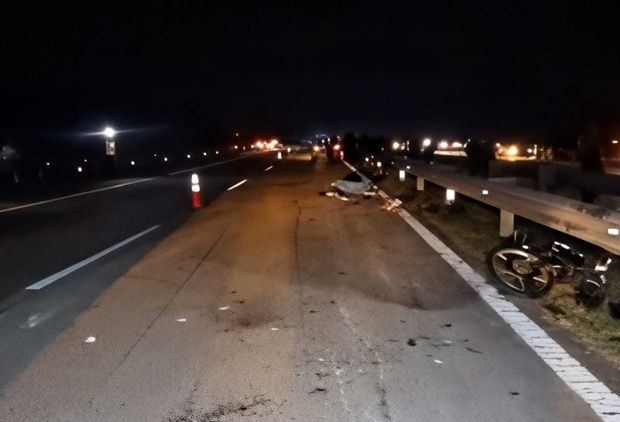
A pre-dawn collision on the East Coast Expressway last Saturday transformed a quiet morning into a scene of devastating loss. The impact scattered motorcycle debris across the roadway and claimed the lives of three individuals at the scene, with a fourth succumbing to injuries in hospital. Thirteen others bore the physical marks of the accident, injuries ranging from minor to severe. As the incident rippled across social media platforms and news outlets, public discourse quickly pivoted toward assigning blame and debating the recklessness that may have contributed to the tragedy. Yet beneath the rush to judgement lay a narrative far less visible in the digital noise surrounding the crash.
Four fathers were lost that morning, and with them went the primary source of income and stability for eight young children, ranging in age from one to thirteen years old. Their mothers now shoulder the weight of single parenthood, a burden thrust upon them through circumstances entirely beyond their control. The immediate practicalities of survival—buying milk for infants, paying rent, covering kindergarten fees, purchasing clothing as children grow, and ensuring adequate nutrition on tables that will strain under the reduced household income—suddenly dominate the landscape of daily life. These material concerns, unglamorous though they may be, form the bedrock upon which childhood development and family stability depend.
Looking further ahead, the financial pressures will only intensify. As these eight children move through adolescence and toward adulthood, the cost of education will escalate significantly. The men who once laboured to provide for their families are gone permanently, leaving a gap that stretches across decades rather than months. This is where the true function of social security—often misunderstood or dismissed in public discourse—becomes impossible to ignore. Malaysia's social protection architecture exists precisely for moments when tragedy fractures family structures and threatens to plunge vulnerable households into poverty.
Social security is frequently misconceived as a temporary rescue measure or a form of charity extended to those deemed most deserving. In reality, it operates on a more profound principle of collective responsibility. The foundational logic centres on solidarity: those blessed with health support the sick; those spared by catastrophe extend their stability to those who have suffered; those still capable of earning assist those whose capacity to work has been compromised or eliminated. This philosophy acknowledges that no individual stands entirely outside the reach of tragedy. A well-designed social safety net represents society's commitment that when disaster threatens to collapse the roof over one family's head, the children seeking shelter within that home will not be abandoned to fend for themselves or spiral into destitution.
For three of the four families affected by last Saturday's crash, this commitment materialises as monthly Survivors' Pensions calculated according to each deceased worker's contribution history. The family of Che Mohd Suffian Che Gani qualifies for RM2,207.63 monthly, while the family of Muhammad Hafiz Al Hakim Mazlan receives RM1,258.33, and the family of Mohd Aizat Husni qualifies for RM708.33. These amounts, deconstructed into individual shares, direct RM1,325 monthly to the widow of Che Mohd Suffian Che Gani, RM755 to the widow of Muhammad Hafiz Al Hakim Mazlan, and RM425 to the widow of Mohd Aizat Husni. Over a typical thirty-year period, these widow's pensions accumulate to RM477,000, RM271,800, and RM153,000 respectively—meaningful sums that transform the financial trajectory of bereaved families.
Beyond the widow's pensions, the framework allocates an additional RM1,670 monthly for the eight children collectively. Distributed over fifteen years until the youngest reaches adulthood and the oldest transitions to independence, this allocation totals RM300,600. Combined with the widow's pensions, PERKESO's long-term commitment to these three families exceeds RM1.2 million. The magnitude of this figure becomes particularly striking when compared against the contribution deductions that seemed modest during the working lives of these men. Small portions withheld from paycheques now return as a continuous protective stream, underscoring that social security represents an enduring obligation rather than a one-time payment or temporary intervention.
The crash also highlighted the transformative potential of Lindung 24 Jam, a scheme that fundamentally altered the coverage landscape for injured workers and their families. Among the thirteen individuals injured in the collision, five have been determined eligible for benefits under this expanded framework. Prior to the scheme's implementation on June 1, these same five victims would likely have been unable to access PERKESO benefits, their applications legally barred by the previous regulatory boundaries. The timing demonstrates how policy evolution can provide protection to individuals whose circumstances would otherwise fall through existing cracks in the social safety net.
The significance of Lindung 24 Jam extends beyond this single incident. The scheme represents recognition that accidents and misfortune operate on schedules unrelated to standard working hours or formalised employment categories. Injuries sustained outside conventional work contexts can be equally devastating for families and equally capable of disrupting economic stability. By broadening the scope of coverage, Malaysia's social security framework now acknowledges that protection must meet people where accidents actually occur, not merely where administrative categories traditionally permit it.
Public discourse surrounding traffic accidents naturally gravitates toward questions of responsibility, reckless behaviour, and appropriate legal consequences. These conversations serve an important function in promoting road safety awareness and holding dangerous drivers accountable. However, focusing exclusively on culpability risks obscuring the economic realities facing surviving family members. The question of who bears legal responsibility for an accident represents a separate and important inquiry, but it does not diminish the necessity of providing comprehensive support to innocent children whose circumstances changed irrevocably in a single moment.
The limited attention accorded to PERKESO's role and the Lindung 24 Jam scheme reflects a broader deficit in social security literacy across Malaysia. Many citizens remain unaware of the mechanisms designed to protect them during life's most vulnerable moments, or they underestimate the value proposition embedded within contribution systems that sometimes feel like invisible deductions from monthly wages. This knowledge gap means that countless workers proceed through their careers without fully appreciating the shield their contributions are building for their families, should catastrophe strike.
For Malaysian policymakers and advocates, the East Coast Expressway tragedy serves as a pointed reminder that robust social security systems deserve sustained investment and continuous refinement. The eight children now growing up without their fathers represent a complex human reality that statistics and accident reports fail to capture. Their wellbeing, educational prospects, and future independence depend substantially on whether the social structures designed to support them function effectively and comprehensively. Dismissing social security as peripheral or unimportant risks overlooking its role as foundational infrastructure for family stability and economic resilience.
The families affected by last Saturday's collision will rebuild their lives within a framework that acknowledges their loss and commits resources to their continuing support. That framework exists because previous generations recognised that tragedy strikes indiscriminately, that survival often requires collective assistance, and that children deserve protection regardless of the circumstances that left them vulnerable. These principles warrant neither dismissal nor belittlement, but rather sustained recognition and periodic reassessment to ensure that Malaysia's social contract genuinely serves those it promises to protect.

