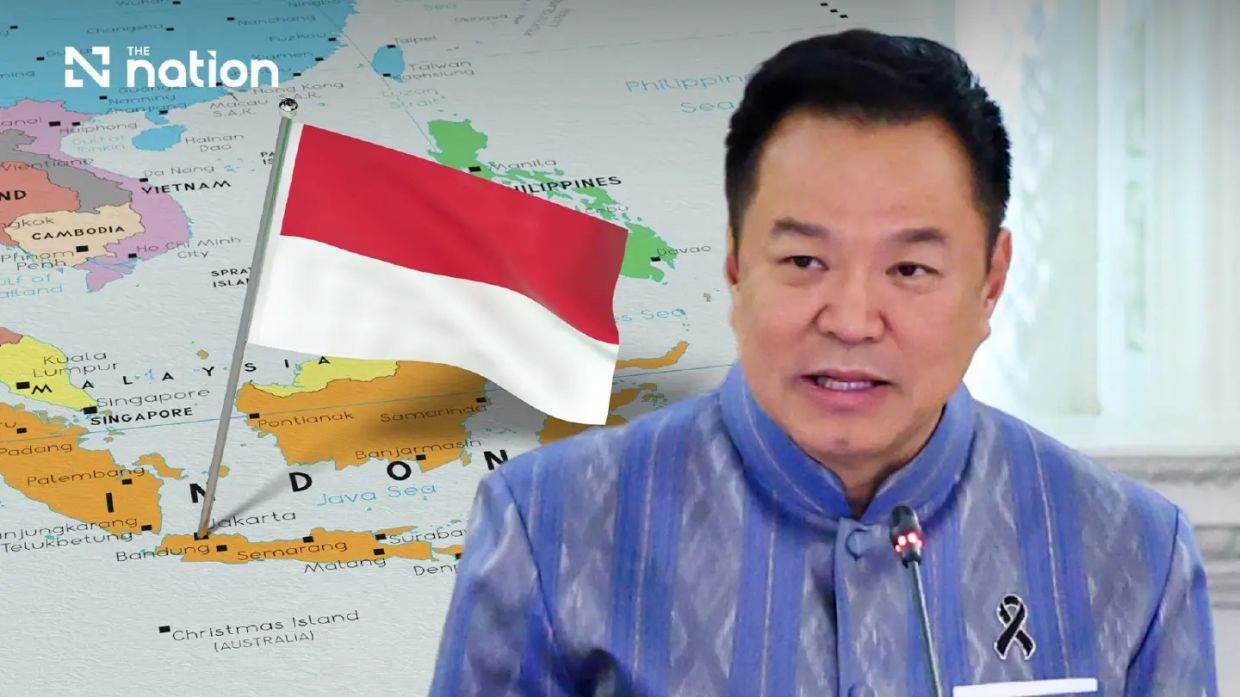
Thai Prime Minister and Interior Minister Anutin Charnvirakul is set to make a landmark official visit to Indonesia in early August—the first such journey by a Thai premier in a decade and a half. The two-day mission on August 3–4 signals a significant warming in Bangkok's approach to regional diplomacy and reflects the Thai government's determination to place Southeast Asian engagement at the centre of its foreign-policy framework. The visit carries symbolic weight within the Asean bloc, as both Thailand and Indonesia rank among the organisation's founding members and continue to exercise considerable influence over regional affairs.
During his time in Jakarta, Anutin will conduct detailed discussions with Indonesian President Prabowo Subianto aimed at revitalising the longstanding but sometimes dormant Thailand–Indonesia strategic partnership. A comprehensive agenda spans economic cooperation, security matters, food and energy security, educational exchange, and business development. Government Spokesperson Rachada Dhnadirek emphasised that the government intends to move beyond ceremonial engagement, seeking instead to translate goodwill into concrete collaborative projects that generate tangible benefits for both nations' citizens and enterprises.
The timing and focus of this visit reveal Thailand's strategic recalibration towards its largest regional neighbour. Indonesia, home to roughly 280 million people and functioning as Asean's largest and most populous economy, represents an enormous market opportunity for Thai exporters and investors. Bangkok evidently recognises that without strong bilateral ties to Jakarta, any attempt to shape the regional agenda or assume leadership responsibilities within Asean would carry limited credibility. The government's messaging emphasises that Indonesia's sheer economic weight and demographic scale make it indispensable to Thai prosperity and regional influence.
Rachada outlined an ambitious vision for how closer cooperation could reshape Thailand's economic landscape. Deepening market access for Thai agricultural products, manufactured goods, and services across the Indonesian archipelago would unlock opportunities for both large multinational corporations and smaller businesses seeking expansion beyond Thailand's borders. Supply-chain integration between the two countries could reduce costs, improve efficiency, and create resilient production networks insulated from external disruptions. Investment flows moving in both directions would diversify Thailand's capital sources and simultaneously provide Indonesian businesses with gateways into markets throughout mainland Southeast Asia and beyond.
The government's emphasis on translating foreign policy into economic gains reflects a broader philosophical shift within the Thai administration. Rachada explicitly framed the visit as subordinating diplomatic protocol to practical outcomes: widening agricultural exports, attracting international tourism revenue, generating employment opportunities, and facilitating technology and knowledge transfer. This instrumental approach—treating international relations as a vehicle for improving living standards rather than as an end unto itself—suggests policymakers view Asean engagement as integral to addressing domestic economic pressures and competitive challenges from regional rivals.
Anutin's address to the Asean Secretariat forms a crucial component of the trip. This platform allows Thailand to articulate its vision for regional development ahead of assuming the chairmanship in 2028. Thailand's presentation will emphasise aspirations for a united bloc capable of advancing economic resilience, fostering people-centred development, and pursuing balanced growth that benefits all member states. The speech effectively serves as Thailand's opening gambit in the competition to define Asean's agenda over the coming years, signalling Bangkok's intent to steer the organisation toward issues where Thailand possesses comparative advantage or genuine commitment.
The broader geopolitical context renders this visit particularly significant. Global economic competition has intensified, transnational challenges—from organised crime to environmental degradation—transcend borders, and geopolitical tensions in the region have escalated. Within this environment, Asean's cohesion and capacity to present a unified voice will determine whether Southeast Asia can protect its interests and prosper. A robust Thailand–Indonesia partnership is foundational; without it, the bloc loses coherence. Anutin and Prabowo's discussions on regional security, economic cooperation, and sustainable development should produce joint positions that strengthen Asean's bargaining power internationally.
The itinerary itself reflects the visit's dual focus on governmental and commercial engagement. Beyond formal state-level meetings and signing ceremonies, Anutin will participate in a business forum organised jointly by Indonesia's Chamber of Commerce and Industry and the Thai Chamber of Commerce. This forum directly connects private-sector actors from both nations, moving beyond rhetoric to create the institutional mechanisms through which trade and investment relationships actually develop. Meetings with Indonesian business leaders and officials provide opportunities to remove regulatory obstacles, clarify investment procedures, and build personal networks that facilitate future commercial transactions.
Thailand's approach also acknowledges the competitive pressures the nation faces within Asean and globally. Vietnam and other neighbouring economies continue to attract foreign investment and expand their manufacturing sectors. Without active engagement in deepening relationships with key regional partners, Thailand risks marginalisation. The visit therefore represents not merely a gesture of friendship but a calculated effort to secure Thailand's position within the region's evolving economic architecture. Success requires translating high-level political support into institutional arrangements, regulatory reforms, and business initiatives that actually facilitate trade and investment flows.
For Malaysian observers and business communities, this Thai–Indonesian rapprochement carries implications worth monitoring. A stronger partnership between Southeast Asia's second and fourth-largest economies could shift competitive dynamics within the region. Malaysian firms may face either heightened competition for market share in Indonesia or, conversely, opportunities to participate in larger regional supply chains incorporating Thai and Indonesian production. Malaysia's own relationships with both countries and positioning within Asean could be affected by how Thailand and Indonesia recalibrate their strategic cooperation.
The government's framing of this visit as central to advancing Thailand's broader foreign-policy objectives underscores a philosophical point: diplomacy succeeds when it produces measurable improvements in citizens' lives. By anchoring bilateral engagement in trade, investment, tourism, and employment, Bangkok signals that geopolitical positioning ultimately matters because it creates economic opportunities. This pragmatic orientation should produce concrete outcomes—new trade agreements, investment pledges, and cooperative mechanisms—rather than ceremonial communiqués. The coming months will reveal whether Anutin's trip catalyses genuine momentum in the Thailand–Indonesia relationship or represents merely symbolic engagement.

