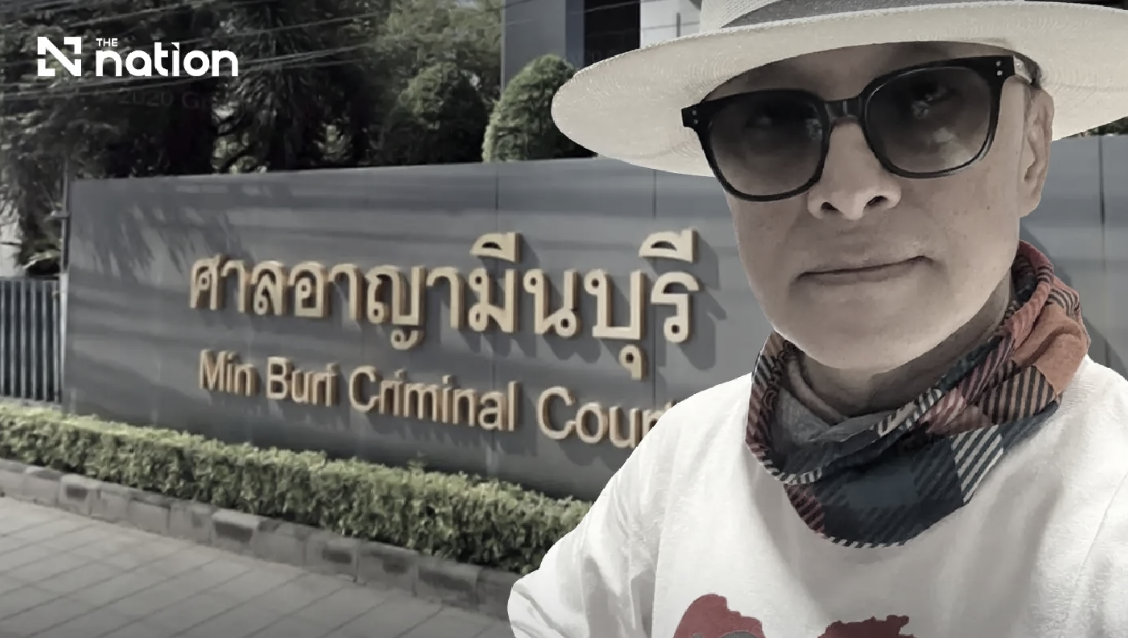
A Bangkok criminal court has handed down a two-year prison sentence to Manasawin Nantasen, the prominent Thai entertainer known professionally as Tik Shiro, following his conviction for operating a vehicle under the influence of alcohol and causing the deaths of two individuals. The judgment, delivered on Wednesday June 24, marks a rare instance of significant legal accountability for a high-profile Thai celebrity, occurring in a nation where members of the entertainment industry and wealthy elite have frequently escaped serious consequences for similar offences.
Manasawin rose to international prominence during the late 1980s and throughout the 1990s, becoming a household name across Thailand through his distinctive stage persona and performance style. His signature aesthetic—featuring a fedora hat, black leather jackets, and accomplished dance choreography—drew direct stylistic comparisons to the global pop phenomenon Michael Jackson, a connection that became his defining public image. The entertainer achieved substantial commercial success during this era, establishing himself as one of Thailand's most recognizable performers and cementing his status as a cultural figure whose career spanned multiple decades.
The incident that led to his conviction occurred in October 2024, when the 64-year-old singer was operating his personal vehicle while traversing one of Bangkok's bridges. His car collided with a stationary motorcycle that had been parked on the bridge, resulting in immediate catastrophic consequences. The impact killed a 28-year-old woman who was seated on the motorcycle, while her younger brother, aged 21, was knocked from the bridge structure. The collision's severity meant that although the brother survived the initial impact, he sustained injuries so critical that he subsequently succumbed to them while undergoing treatment at a hospital facility.
Following the crash, a widely circulated video captured Manasawin kneeling at the scene in an apparent display of emotional distress and remorse. This footage spread rapidly across Thai social media platforms and news outlets, generating substantial public discourse at a moment when many Thai citizens have become increasingly vocal about perceived disparities in how the legal system treats individuals based on wealth and social standing. The case resonated beyond entertainment circles, becoming emblematic of broader concerns regarding accountability for those in positions of privilege.
The court's decision to impose a two-year prison sentence was notably influenced by several mitigating factors that the judicial body recognized during sentencing. The defendant's decision to cooperate with authorities and provide statements deemed beneficial to the investigation weighed favorably during proceedings. Additionally, Manasawin demonstrated what the court characterized as genuine remorse by attending funeral services for the deceased victims and making financial compensation payments to their families, actions that signalled acknowledgment of responsibility beyond the minimum legal requirements.
The revocation of Manasawin's driving privileges was ordered as a supplementary penalty, representing a permanent consequence that extends beyond his prison term. This aspect of the sentencing underscores the severity with which the court approached the matter, particularly given that the offense involved fatal consequences resulting directly from the defendant's impaired driving decision.
The timing of this verdict emerged alongside another significant celebrity case in the Thai justice system. Rock musician Sek Loso was simultaneously released from prison on the same Wednesday after completing a sentence of slightly more than one year for drug-related convictions and illegal possession of firearms. The concurrent processing of these two high-profile cases—one resulting in imprisonment and one in release—has drawn attention to patterns in how Thai courts handle celebrity defendants.
Thailand's documented history contains multiple instances where prominent individuals and their family members have allegedly committed serious crimes without facing proportional legal consequences. The 2012 case of Vorayuth Yoovidhya, heir to the Red Bull fortune, remains particularly notable. He was accused of driving his Ferrari into a Bangkok police officer in an upscale residential neighbourhood, with the officer dying from injuries sustained in the collision. Despite a formal investigation being conducted into the matter, prosecutors never proceeded to formal charges against Yoovidhya, a outcome that provoked widespread public frustration regarding perceived selective justice.
Another emblematic case involves the son of former Pheu Thai party politician Chalerm Yubamrung, who was accused of fatally shooting an individual during a dispute at a crowded Bangkok nightclub establishment in 2001. Despite the serious nature of the allegation and the presence of multiple potential witnesses in a public venue, the defendant was ultimately acquitted when prosecutors determined that available evidence was insufficient to support a conviction beyond reasonable doubt.
These historical precedents provide crucial context for understanding why the Manasawin conviction has generated significant commentary within Thailand. Many ordinary Thai citizens have developed pronounced skepticism regarding whether their nation's judicial mechanisms function equitably across different socioeconomic strata. The Tik Shiro case therefore assumes symbolic importance beyond the individual facts of the October 2024 incident, representing a potential—though far from guaranteed—shift toward more consistent accountability.
Southeast Asian legal observers have noted that Thailand's approach to celebrity accountability contrasts sharply with jurisdictions in the region where similar high-profile convictions have occurred with greater consistency. The Manasawin sentence, while representing a meaningful moment, exists within a broader Thai context where access to superior legal representation and social influence continue to shape outcomes in ways that many perceive as fundamentally unjust.
The case also carries implications for how Thailand's entertainment industry and broader society respond to celebrity misconduct. As the country continues developing its democratic institutions and civil society mechanisms for accountability, high-profile legal proceedings serve as barometers of whether systemic change is genuinely occurring or whether traditional patterns of preferential treatment persist beneath newly reformed procedural frameworks.