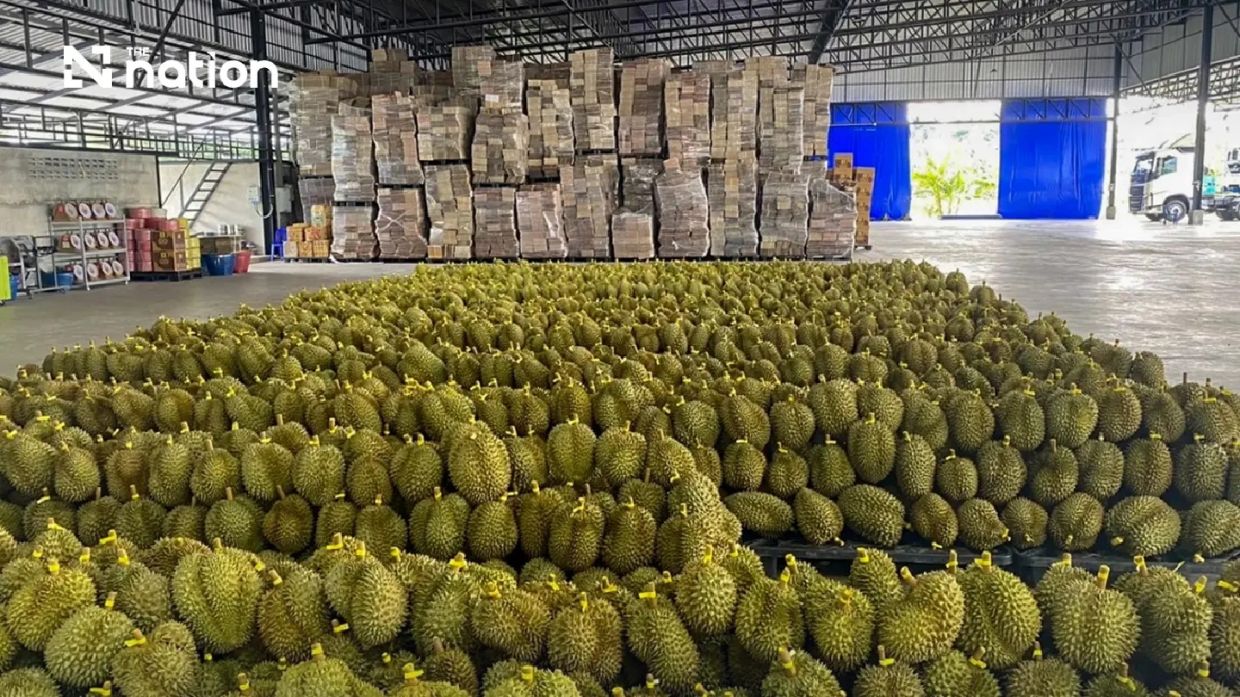
Thailand's agricultural sector has reached an unprecedented achievement in its most valuable fruit export category, with fresh durian shipments to China exceeding THB100 billion during the opening six months of 2026. The figure represents a watershed moment for the industry, marking the first time the value of first-half exports has crossed this significant threshold. Over the same period, Thai exporters shipped more than 870,000 tonnes of fruit across 53,665 containers to the Chinese market, reinforcing the nation's position as a dominant regional supplier of premium tropical produce.
The remarkable growth stems directly from a comprehensive overhaul of Thailand's durian export infrastructure initiated by Minister of Agriculture and Cooperatives Suriya Jungrungreangkit. During his inaugural 90 days in office, the minister prioritised establishing a unified quality management framework spanning the entire supply chain, moving away from reactive problem-solving toward proactive systematic governance. This fundamental shift has yielded tangible results in market confidence and operational efficiency, creating conditions for sustained expansion in agricultural trade.
Central to this transformation is the strict implementation of the so-called "Four Nos" protocol, which prohibits immature durian, eliminates worm contamination, prevents fraudulent origin claims, and bars the presence of Basic Yellow 2 (BY2), a synthetic food colouring that Chinese regulators have flagged as a recurring compliance issue. These measures address the precise sanitary and phytosanitary challenges that previously undermined buyer confidence and threatened market access. By establishing clear, enforceable standards at every production stage, Thai authorities have rebuilt trust among Chinese trading partners while simultaneously accelerating the pace of shipment clearances and port processing.
The ministry's strategy extends beyond the Four Nos through implementation of a sophisticated four-layer PLUS screening mechanism designed to intercept plant pests before shipment. Integrated with this framework are science-based risk management protocols, comprehensive traceability systems tracking produce from farm to export point, and digital linkage to electronic phytosanitary certification systems. These technologies and procedures collectively reduce the administrative burden on exporters and producers while enhancing regulatory oversight and transparency, creating a competitive advantage for compliant Thai operators in global markets.
Rapibhat Chandarasrivongs, Director-General of the Department of Agriculture, characterises this evolution as a transition toward "Smart Regulation," wherein government agencies leverage technology, scientific methodology, and strategic risk assessment to supervise exports across the entire sector. The approach connects data from production sources, processing facilities, and testing laboratories directly to the issuance of electronic phytosanitary documentation. Rather than imposing burdensome inspections at final export stages, this system enables authorities to identify and resolve potential issues at earlier junctures, substantially reducing operational friction for farmers and exporters while strengthening partner nations' confidence in the reliability of Thai supply chains.
The success reflected in the first-half figures carries significant implications for Thailand's full-year export strategy. Officials have established a target of THB150 billion in durian export value for 2026, positioning the industry for approximately 50 per cent growth over the first-half baseline. Achieving this objective would represent not merely a commercial triumph but validation of the structural reforms implemented across Thailand's agricultural governance apparatus. For Malaysian policymakers and Southeast Asian competitors, the Thai experience demonstrates how deliberate investment in quality systems and regulatory modernisation can translate into tangible market gains even within an intensely competitive regional landscape.
The coordination mechanism underlying these achievements deserves particular attention, as it illustrates sophisticated inter-agency collaboration. The Department of Agriculture serves as the primary driver, whilst the National Bureau of Agricultural Commodity and Food Standards, the Department of Agricultural Extension, the Customs Department, provincial authorities, testing laboratories, private operators, and Chinese regulatory agencies maintain ongoing communication. This ecosystem-based approach ensures that quality standards, production practices, and export protocols remain harmonised across all levels of the value chain, reducing friction and enabling rapid response to evolving market requirements or emerging contamination threats.
For Thailand's farming communities, the implications extend well beyond commodity pricing. Minister Suriya emphasises that robust export systems translate into stable farm incomes, enhanced competitiveness for processing and logistics operators, and sustainable positioning within global agricultural markets. By elevating quality standards and enforcement mechanisms, the reforms create durable foundations for long-term sector prosperity rather than seeking temporary gains through volume-focused strategies. This philosophy aligns with global trends toward sustainable agricultural development and consumer-driven demand for traceable, safely-produced food.
The durian export success carries wider significance as a replicable model for Thailand's broader agricultural sector. Minister Suriya explicitly frames the durian achievements as a prototype for upgrading management systems across other export-oriented agricultural categories, ranging from tropical fruits to processed foods. As regional competitors including Malaysia, Vietnam, and Indonesia increasingly compete in similar agricultural export categories, Thailand's systematic approach to quality assurance and regulatory modernisation establishes a new competitive benchmark. Nations within Southeast Asia that fail to adopt comparable institutional and technological reforms may find themselves progressively disadvantaged in accessing premium global markets, particularly within price-sensitive developing economies where product reliability and regulatory compliance carry decisive weight.
Looking forward, the Thai government's success in establishing digital traceability and electronic phytosanitary systems positions the nation advantageously amid global trends toward stricter food safety requirements and supply chain transparency. As consumer preferences in major importing nations increasingly reflect concerns regarding food security, pesticide residues, and environmental sustainability, countries that have invested in comprehensive monitoring and certification infrastructure will capture disproportionate market share. Thailand's durian sector exemplifies how government-led institutional reform, coupled with technological adoption, creates resilience against future trade disputes or market disruptions while offering farmers and exporters competitive moats that transcend simple price competition.
The achievement also reflects Thailand's strategic recognition of China's outsized importance within the Southeast Asian agricultural trade ecosystem. With China representing the destination for the overwhelming majority of Thailand's premium fruit exports, developing Chinese regulatory relationships and ensuring consistent compliance with evolving import standards has emerged as a cornerstone of national agricultural policy. The systematic quality improvements and digital infrastructure investments serve simultaneously to deepen bilateral trade ties and position Thailand as a preferred supplier relative to competing regional exporters seeking access to Chinese consumer markets. For Malaysian stakeholders observing these developments, the Thai model offers both lessons and cautionary evidence regarding the necessity of institutional adaptation to remain competitive within sophisticated, quality-conscious export markets.

