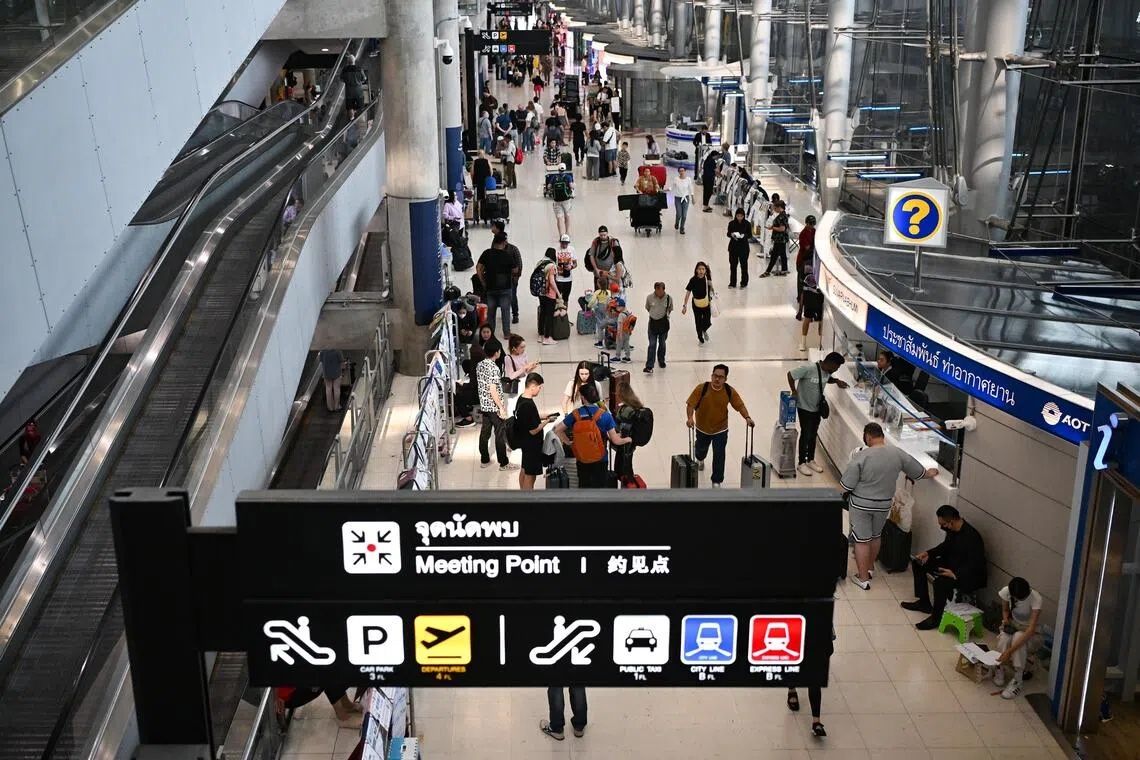
Thailand is moving to significantly accelerate passenger processing at its busiest international gateway, with plans to extend automated border control technology to visitors from 31 new nationalities before the end of August. The Bangkok government has signalled its commitment to reducing immigration bottlenecks at Suvarnabhumi Airport, where congestion has become increasingly problematic as the kingdom capitalises on its position as Southeast Asia's premier tourist destination. Deputy Government Spokesperson Lalida Persvivatana confirmed that the Immigration Bureau has approved the measure in principle, with formal documentation expected to be completed shortly.
The timing of this expansion reflects the mounting pressure on Thailand's airport infrastructure. Suvarnabhumi processes approximately 190,000 passengers daily during peak tourism seasons, with roughly 70,000 international arrivals creating strain on conventional immigration channels. Lalida revealed that during the critical afternoon window between 1pm and 5pm, the immigration area receives between 5,000 and 6,000 passengers hourly—a volume that current manual processing struggles to accommodate efficiently. These figures underscore why airport authorities have increasingly turned to technology-driven solutions to maintain service standards while managing rapid growth.
The expansion carries significant implications beyond simple queue reduction. Once fully implemented, the automated gates are expected to accommodate approximately 6.5 million additional passengers annually, alongside roughly 900,000 holders of specific long-term visas. According to projections, this would allow approximately 53 per cent of arriving international passengers to bypass traditional immigration desks entirely, fundamentally reshaping the arrival experience at Thailand's primary international hub. For Malaysian travellers and other Southeast Asian nationals, the expansion may prove particularly beneficial, depending on whether their respective nationalities are included in the phased rollout.
The rollout will follow a careful, staged approach rather than immediate implementation. Lalida explained that the Immigration Bureau is implementing the expansion according to the readiness of equipment installations, security protocols, and biometric data preparation systems. First-time visitors will still be required to complete biometric registration before using the automated gates, a safeguard that ensures security protocols remain intact despite the technological advancement. This measured implementation strategy suggests Thai authorities are prioritising both efficiency and thoroughness, avoiding the pitfalls that can emerge when new systems are rushed to deployment.
The government's broader vision extends beyond mere passenger throughput. During a high-level site visit to the airport, Deputy Prime Minister and Commerce Minister Suphajee Suthumpun, alongside Tourism and Sports Minister Surasak Phancharoenworakul and Deputy Transport Ministers including Siriphong Angkasakulkiat, discussed comprehensive improvements to the passenger journey. These discussions encompassed not only immigration procedures but also expansion of waiting areas, transit facilities, and longer-term infrastructure development designed to sustain Thailand's competitive advantage as tourism volumes continue climbing.
Lalida's public remarks emphasised that the government's objectives transcend simple efficiency metrics. She stated that the underlying goal encompasses creating a seamless experience from the moment tourists disembark, ensuring procedures are convenient, expeditious, and maintain stringent security standards. This holistic approach reflects understanding that airport experiences significantly influence visitor perception of a destination. With Thailand competing aggressively for international tourism market share against neighbouring countries including Malaysia and Vietnam, first impressions at immigration gates carry outsized strategic importance.
The context for this expansion is Thailand's remarkable tourism performance this year. Between January 1 and July 18, the kingdom attracted approximately 17.36 million foreign tourists, demonstrating sustained demand despite regional competition. This figure illustrates why infrastructure investment has become imperative—the current trajectory suggests annual arrivals could exceed 30 million, placing unprecedented strain on facilities designed for lower volumes. Suvarnabhumi's automation programme represents a pragmatic response to this growth without massive capital expenditure on physical expansion.
For Malaysia and other Southeast Asian nations, Thailand's investment in automated processing carries indirect implications. As a major regional hub, Suvarnabhumi's efficiency affects not only bilateral travel flows but also transcontinental transit patterns. Malaysian business travellers, expatriates, and tourists frequently pass through Bangkok en route to other destinations. Streamlined processing here translates into improved regional connectivity that benefits all countries participating in Southeast Asian travel networks. Additionally, Malaysian airports may face competitive pressure to enhance their own processing capabilities to remain attractive to international carriers and passengers.
The security architecture underlying these automated systems deserves particular attention. By requiring first-time visitors to undergo biometric registration, Thailand maintains identity verification while accelerating repeat visitors' processing. This approach balances operational efficiency with border security obligations, avoiding the false choice between speed and safety. The biometric data collected also contributes to border management intelligence, helping authorities identify entry patterns and potential security concerns while maintaining legitimate traveller flows.
The government's emphasis on infrastructure development alongside technological deployment suggests recognition that automation alone cannot solve capacity challenges indefinitely. As Thailand targets 40 million annual tourists by 2026, further physical expansion of terminal facilities, baggage handling, and ground transportation will become necessary. The current automation programme buys time for more comprehensive infrastructure planning while demonstrating commitment to tourism competitiveness. For Malaysian policymakers watching Thailand's approach, the lesson is clear: managing rapid tourism growth requires simultaneous investment in both technology and physical infrastructure.
The expansion also reflects broader regional trends in travel technology adoption. Many developed countries, including Australia and Canada, have successfully implemented automated passport gates for years. Thailand's phased approach to bringing comparable technology to Suvarnabhumi demonstrates how developing-market airports can implement sophisticated systems while managing budget constraints and maintaining operational security. Success here could catalyse similar investments across Southeast Asia, gradually transforming the region's border processing standards.
Looking ahead, the government's explicit timeline—completion by end of August—provides a concrete benchmark for measuring implementation success. If achieved, this would position Thailand ahead of several regional competitors in border technology adoption. The expansion also sets expectations for ongoing improvements, suggesting that Thai authorities view automation as an iterative process rather than a one-time solution. As Malaysia and other ASEAN nations develop their own tourism strategies, Thailand's infrastructure investments serve as both inspiration and competitive indicator.

