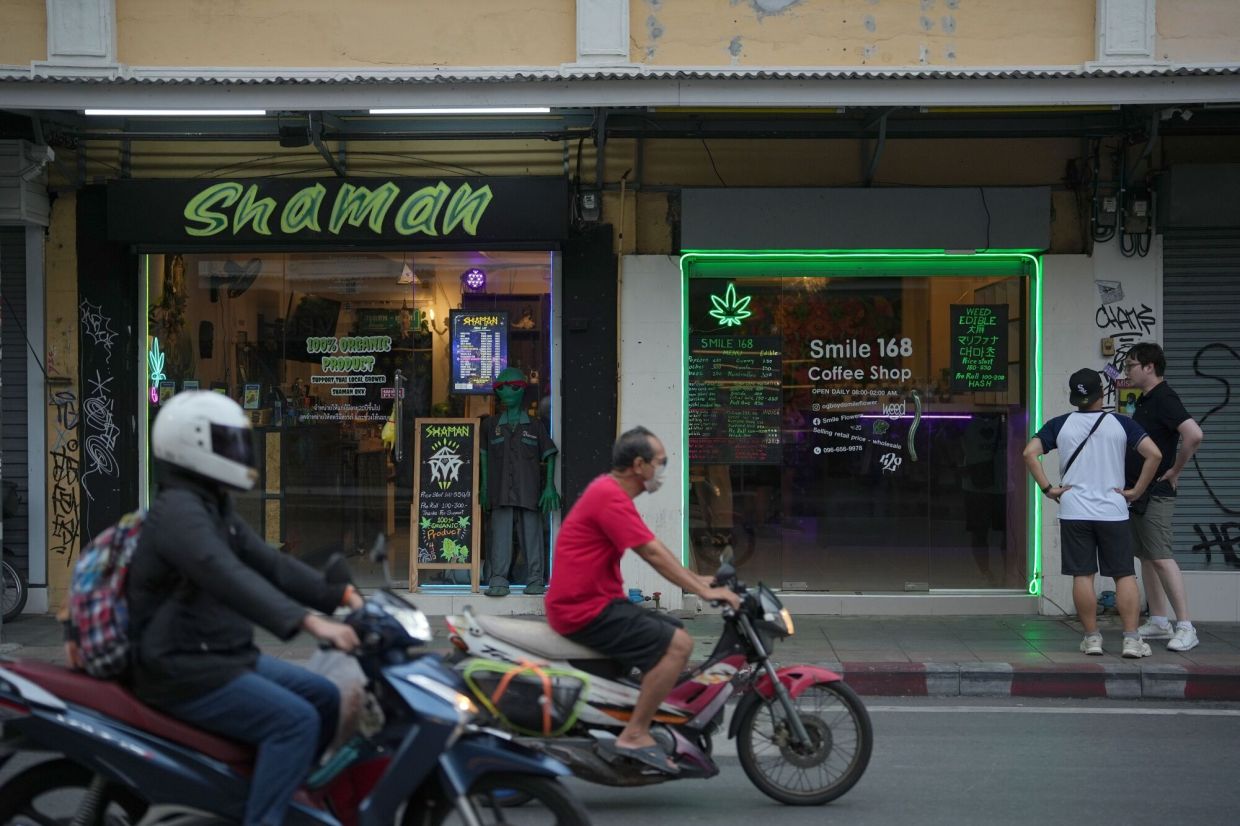
Thailand's Public Health Minister Pattana Promphat has accelerated efforts to regulate the country's cannabis market through comprehensive new legislation that would restrict use strictly to medical applications. The proposed Cannabis and Hemp Control Act, which recently completed public consultation, represents a significant shift in how the government intends to manage cannabis following its removal from the narcotics list. The legislation will establish cultivation-stage oversight for the first time, addressing a critical gap in existing regulatory frameworks that have historically focused on sales, transfers and extraction without governing the production process itself.
The government's move reflects mounting concerns about the uncontrolled expansion of cannabis outlets and the misuse of licensing provisions since the initial deregulation. According to Public Health Ministry data, approximately 18,000 outlets have operated since 2023, though roughly one-third of these licences have already expired. The ministry estimates that around 6,000 outlets nationwide are now operating either with expired permits or without proper authorisation, creating a parallel market that the government views as incompatible with its stated medical-only policy. This proliferation has created enforcement headaches not only domestically but internationally, as cannabis transported across borders remains classified as a narcotic in most destination countries.
The Bhumjaithai Party, which championed cannabis deregulation, has now publicly committed to a medical-only framework through its policy stance on the matter. This represents a notable recalibration from the more permissive environment that emerged following initial legalisation. Minister Pattana emphasised that both the ruling party and government are aligned on restricting cannabis access, signalling potential cross-party support for the new legislation when it reaches Parliament. The shift reflects recognition among policymakers that the previous regulatory structure has proven inadequate for preventing recreational use and controlling illicit cross-border trafficking.
A cornerstone of the enforcement strategy involves leveraging technology to identify legitimate operators. The Department of Thai Traditional and Alternative Medicine has created a public-facing online registry with GPS coordinates for all properly registered outlets, including licence expiration dates. This system allows authorities and the public to immediately identify unlicensed operations, facilitating swift enforcement action. The ministry has simultaneously expanded the number of authorised inspection officers by mobilising police and local administrative organisations, creating what officials describe as "tens of thousands" of enforcement personnel capable of conducting raids and arrests at non-compliant venues.
The new licensing structure will require previously authorised cannabis retailers to fundamentally transform their operations. Under amended ministerial regulations, all registered outlets must transition to functioning as medical facilities with licensed doctors stationed on-site to supervise cannabis dispensing. This requirement effectively transforms retailers into quasi-clinical establishments, dramatically raising operational costs and complexity for existing business operators. The move aims to prevent the supply of large quantities to individual consumers, addressing what authorities identify as a pattern through which people repeatedly purchase cannabis ostensibly for medical use but actually for recreational consumption.
Control measures also extend to combating the use of fraudulent documentation in the cannabis supply chain. Previously, some operators obtained cannabis through fake licences, creating opportunities for diversion to illicit markets and cross-border trafficking. The ministry has responded by transitioning to electronic-only licensing, eliminating physical permits that could be forged or misused. Although officials acknowledge that sophisticated smuggling operations involving large volumes may occasionally circumvent detection, the electronic system provides an additional layer of security and traceability throughout the supply chain from cultivation to dispensing.
International considerations have shaped the government's regulatory approach significantly. Because cannabis remains a controlled narcotic in most countries, any quantity leaving Thailand technically violates the laws of destination nations, creating diplomatic and enforcement complications. The Department of Thai Traditional and Alternative Medicine has established ongoing coordination with Thailand's Customs Department and Airports of Thailand to monitor outbound shipments. However, public health officials have candidly acknowledged that controlling large-volume smuggling operations remains challenging, suggesting that enforcement successes will likely focus on smaller-scale trafficking rather than comprehensive interdiction.
The penalty framework within the proposed Cannabis and Hemp Control Act includes provisions for relatively severe sanctions against violators, reflecting the government's intent to create meaningful deterrents against both large-scale illicit operations and small-scale retail circumvention of regulations. These penalties are expected to apply across the entire cultivation-to-dispensing supply chain, addressing vulnerabilities that currently exist under the patchwork of existing laws and ministerial regulations. The increased legal jeopardy for non-compliance is intended to push marginal operators either into formal compliance or out of the market entirely.
For Southeast Asian observers, Thailand's regulatory recalibration offers instructive lessons about the challenges inherent in cannabis liberalisation. The Thai experience demonstrates how rapid expansion of the legal market, combined with initially permissive licensing practices, can quickly generate a substantial grey market that undermines policy objectives. As other regional governments evaluate cannabis reform options, Thailand's enforcement struggles with unlicensed outlets and the government's subsequent pivot toward stricter medical-only controls provide cautionary context about the difficulties of implementing effective regulatory oversight in a newly liberalised market.
The timeline for parliamentary consideration of the Cannabis and Hemp Control Act remains uncertain, as the bill did not reach deliberation during the most recent legislative session. This delay provides time for stakeholders to lobby on the legislation while also extending the window during which existing unlicensed outlets can continue operations. The ministry's interim strategy of intensified enforcement against shops with expired or missing permits, combined with GPS-based tracking of authorised retailers, represents an attempt to impose order on the market before comprehensive legislation takes effect. Whether this interim approach will successfully reduce the estimated 6,000 non-compliant outlets to acceptable levels before the new law passes will test the government's enforcement capacity and political commitment to its medical-only policy framework.

