Thailand is moving to overhaul key sections of its immigration legislation to streamline the removal of foreign nationals convicted of crimes, as the government intensifies its campaign against transnational criminal syndicates operating within its borders. The initiative reflects mounting frustration among Thai officials that existing legal frameworks have created bottlenecks preventing swift deportations, with many foreign detainees languishing in state facilities while their cases wind through appeals, court hearings and diplomatic negotiations with embassies.
The urgency of the reform stems partly from a well-intentioned policy that backfired. The 60-day visa exemption introduced in July 2024 under the Srettha Thavisin administration allowed citizens from 93 countries and territories to enter Thailand without advance visa applications. However, Thai embassies lost the ability to conduct pre-arrival screening on criminal histories or financial backgrounds, creating what authorities now regard as a significant security vulnerability. The scheme also enabled some visitors to exploit border-run practices, repeatedly exiting and re-entering to reset their legal stay periods rather than returning home as intended.
Investigations revealed that these gaps enabled various criminal activities to flourish. Foreign nationals have illegally established themselves in Thailand, competing with local workers in hospitality sectors such as restaurants, resorts and entertainment establishments. Some acquired property through nominee arrangements, while others organised elaborate call-centre fraud operations, money laundering schemes and grey-market capital networks. Problem areas have been documented across major tourist destinations including Pai in Mae Hong Son, Pattaya in Chonburi, Koh Phangan in Surat Thani and Bangkok itself, highlighting how widespread the issue had become.
The Anutin government responded by cancelling the problematic visa exemption on May 19, 2026, reverting to country-by-country arrangements with most visitors now limited to 30-day stays. Officials argued that the scheme had failed to deliver promised economic benefits in terms of tourist numbers or spending levels, while simultaneously exposing the nation to heightened security risks. The shift represents a deliberate pivot toward what authorities term quality tourism over volume, with security taking precedence over visitor statistics.
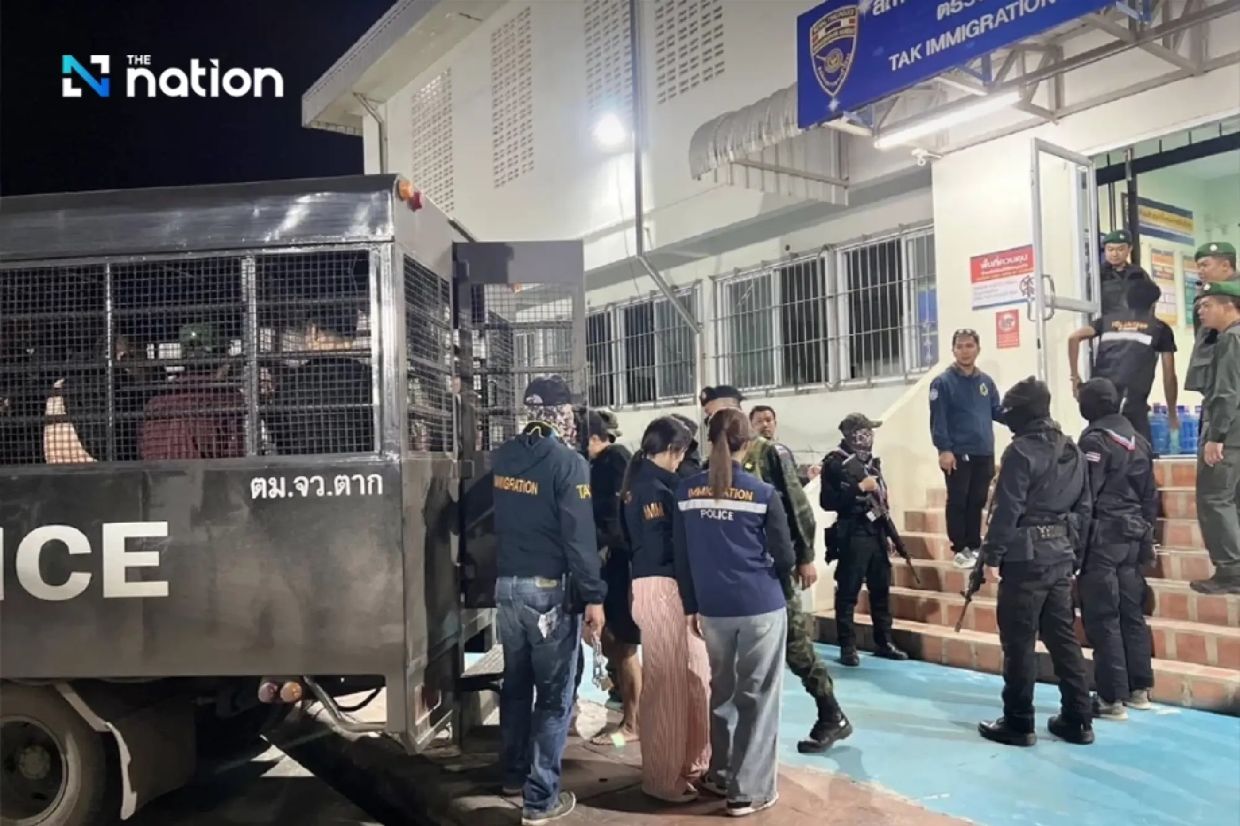
Parallel enforcement operations have intensified across multiple agencies. Joint taskforces involving military personnel, police and administrative officials have conducted sustained inspections targeting foreign nationals residing illegally in Thailand. These operations have resulted in numerous arrests of foreign offenders now facing legal proceedings and deportation. However, the government discovered that the removal machinery itself has become a barrier to security objectives—many detainees remain trapped in limbo rather than being returned to their home countries.
The bottlenecks stem from several procedural and practical obstacles. Some detainees cannot afford repatriation costs and must wait for Thai authorities to coordinate with embassies for financial assistance. More significantly, the Immigration Act of 1979 provides foreign nationals with substantial legal protections that, while respecting human rights principles, have inadvertently slowed removals. Within 48 hours of receiving a deportation order, detainees may lodge appeals with supporting evidence. Deportation is typically suspended pending appeal resolution, except in exceptional circumstances. Additionally, detainees can petition the Immigration Commission to postpone removal or extend temporary stay on humanitarian or legal grounds, creating further delays.
Prime Minister Anutin Charnvirakul has now tasked Deputy Prime Minister Pakorn Nilprapunt, responsible for legal affairs, with leading a comprehensive review of immigration statutes and regulations. This effort involves coordination with the Royal Thai Police, Immigration Bureau and Interior Ministry. The government is particularly focused on Sections 54 and 55 of the Immigration Act of 1979, which govern foreign national removal procedures. The objective is to craft amendments that accelerate deportations while remaining legally sound and respecting international human rights commitments.
Thailand's international obligations complicate the reform effort. As a United Nations Human Rights Council member and signatory to eight major international human rights treaties covering civil and political rights, economic and social rights, children's and women's rights, racial discrimination prevention, torture prohibition, disability protection and enforced disappearance prevention, the kingdom cannot simply expedite removals without considering these frameworks. Police spokesman Pol Lt Gen Trairong Phiwpan explained that the deportation process itself involves multiple legal layers depending on whether Thailand maintains extradition treaties with the detainee's home country, each adding procedural stages.
For countries with extradition treaties, the attorney-general must review cases before forwarding to courts for extradition orders. For nations without such agreements, the Foreign Ministry submits requests to the attorney-general, who then petitions courts for extradition orders. Throughout this process, detainees retain the right to petition courts, oppose removal or request temporary release on human rights grounds. These protections, while essential for safeguarding fundamental freedoms, inevitably extend timelines. Trairong acknowledged that when detainees do not invoke human rights procedures, repatriation proceeds more rapidly, but when challenges and counterclaims are filed, court consideration becomes mandatory, inevitably lengthening processes.
The reform challenge thus lies in achieving efficiency without sacrificing due process. Thai officials recognise that no single timeframe applies universally, as different cases involve varying legal complexities—from simple visa overstays to serious transnational organised crime participation. Trairong suggested that beneficial reforms should focus on eliminating unnecessary procedural steps, reducing delays and shortening timeframes while preserving authorities' and courts' capacity to assess each case's gravity appropriately. This balanced approach attempts to address security concerns while maintaining Thailand's international human rights standing.
For Malaysia and other Southeast Asian nations, Thailand's experience carries important implications. The region hosts significant populations of foreign workers, tourists and residents, and criminal networks increasingly exploit cross-border movement and legal ambiguities. Thailand's struggle to balance security imperatives with human rights obligations reflects challenges that other ASEAN members also face when crafting immigration reforms. The success or failure of Thailand's revised deportation framework could influence how neighbouring countries approach similar legislation, potentially setting precedents for regional cooperation on transnational crime suppression.
Official statements indicate that Anutin remains committed to making Thailand welcoming for legitimate foreign visitors, investors and business operators. However, he emphasised that those who violate laws or damage the kingdom must face swift and decisive legal consequences followed by rapid removal. This messaging signals that while Thailand values international engagement, it will no longer tolerate security vulnerabilities stemming from lenient immigration policies. The government's determination to reform deportation procedures reflects this hardening stance.
Augusto Pakorn's ongoing consultations with the Interior Ministry, Royal Thai Police and other agencies will shape the final legislative proposals. These discussions aim to comprehensively assess impacts across multiple dimensions and identify the most effective reform pathways. The timeframe for presenting recommendations and proposed amendments remains unclear, but the priority designation suggests changes could materialise within months. For observers in Malaysia and throughout Southeast Asia, monitoring Thailand's legislative progress offers valuable insight into how regional governments are adapting immigration controls to contemporary security realities.