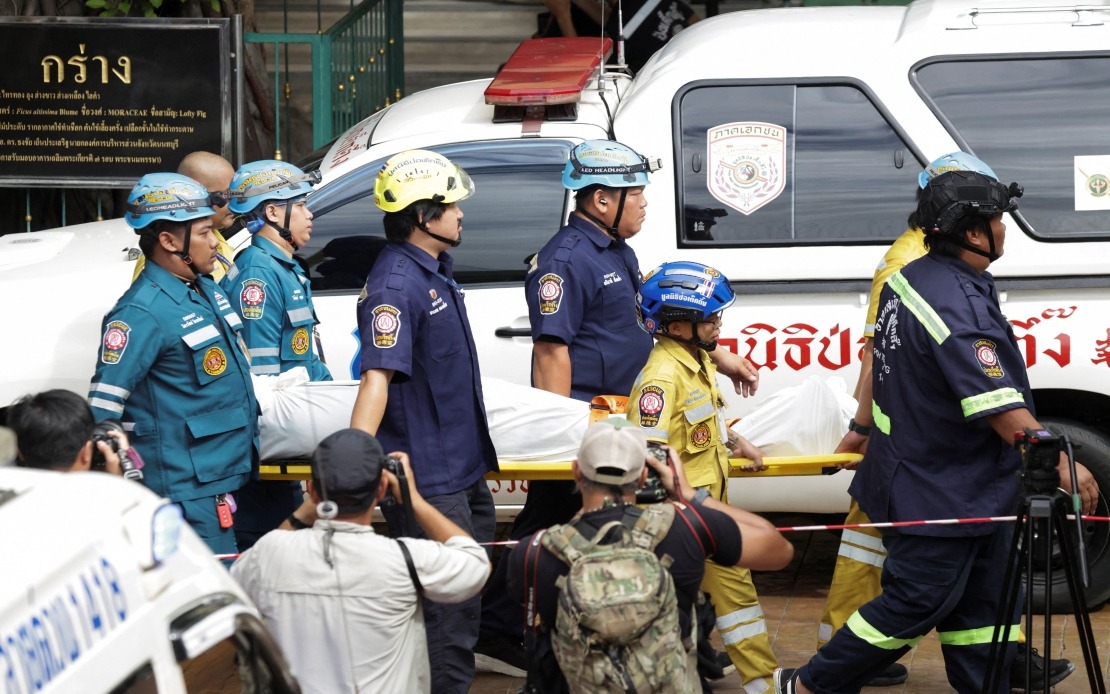
A deadly school shooting in Nonthaburi province, Thailand, has revealed a deeply troubling sequence of violence, with authorities now establishing that the suspected gunman likely murdered his grandparents at their home before carrying out the assault on Debsirin Nonthaburi School. The incident underscores the growing threat of firearm violence in Southeast Asian educational institutions and raises serious questions about family dynamics and access to weapons in the region.
According to Lieutenant General Trairong Piwpan, the Royal Thai Police Deputy Inspector-General and spokesperson, the attack on Friday morning saw the student fire approximately 26 rounds before reaching the school, suggesting a deliberate trajectory of violence that may have begun in a domestic setting. This preliminary finding emerged as investigators pieced together the timeline of events that culminated in one of Thailand's deadliest recent school shootings. The officer's statement to reporters on the scene indicated that police had moved swiftly to establish the broader context of the violence, looking beyond the school shooting itself to uncover whether additional victims had fallen to the same gunman.
When officers conducted a search of the suspect's residence in Bang Bua Thong district, they discovered the bodies of his grandfather and grandmother inside the home. Both had sustained fatal gunshot wounds to the head, injuries consistent with those inflicted during a close-range shooting. Investigators determined that the suspect likely carried out these murders before proceeding to the school, though the exact sequence of events and the precise timing remained under formal investigation as of Friday. The revelation transformed what appeared to be a single tragic incident into a broader familial tragedy with multiple victims across different locations.
The firearm recovered during the investigation proved to be a 9mm handgun, alongside 34 additional rounds of ammunition found outside the magazine. This discovery raised critical concerns about how a student had obtained access to such a weapon and maintained sufficient ammunition to conduct multiple shootings. Thai authorities have not yet disclosed details about the source of the weapon or whether any adults in the household bore responsibility for its accessibility. In the Malaysian and broader Southeast Asian context, where gun ownership remains heavily regulated, such incidents highlight the continuing vulnerabilities even in countries with ostensibly strict firearms legislation.
The assault on Debsirin Nonthaburi School itself proved devastating in its scale and immediate impact. Commencing around 10am, the shooting spree claimed six lives: three educators and three students. An additional 15 people sustained injuries ranging from minor to severe, overwhelming the school's medical facilities and local hospitals. The student gunman was discovered dead at the school premises, though authorities have not clarified whether he died from self-inflicted wounds or was shot by responding officers. This outcome effectively ended the immediate threat but left investigators and the community grappling with the underlying causes of such a horrific act.
Lieutenant General Trairong acknowledged that establishing the motive represented a central investigative challenge going forward. School shootings in Thailand remain relatively uncommon by global standards, yet their impact resonates across the region, particularly among parents and educators in Malaysia, Singapore, and other nearby nations where school safety remains a paramount concern. The absence of clear information about what prompted the suspect to target his school and his own family suggests that investigators may be confronting a complex psychological profile involving multiple stressors, personal grievances, or untreated mental health conditions.
The sequence of violence—first targeting family members at home, then extending to a school environment—presents a pattern that differs markedly from typical mass shooting incidents. This progression suggests premeditation extending beyond the school attack itself, indicating that the violence emerged from personal circumstances rather than sudden, impulsive rage. Psychological experts and criminologists will likely scrutinise the suspect's background, relationships with teachers and peers, and any prior warning signs that might have alerted authorities to escalating dangers. Such analysis carries implications for how schools across Southeast Asia monitor and respond to concerning behavioural changes among their student populations.
For Malaysian readers, the incident serves as a sobering reminder that firearm violence and school safety represent ongoing regional concerns despite differences in legal frameworks and enforcement approaches. Thailand's experience with armed youth accessing weapons raises questions applicable to all neighbouring nations about how effectively existing restrictions prevent determined individuals from obtaining firearms. Community-based prevention initiatives, mental health support systems, and early intervention programmes may prove increasingly crucial as the region confronts violence perpetrated by younger individuals.
The death toll and injury count establish this as among Thailand's most severe school shooting incidents in recent memory, comparable to or exceeding previous such tragedies in the kingdom. The involvement of both family members and schoolchildren as victims extends the human cost across multiple social circles, affecting extended families, school communities, and the broader public consciousness about safety in institutions traditionally regarded as secure environments. As investigations proceeded on Friday, police worked to reconstruct the entire sequence of events while collecting physical evidence, conducting interviews with survivors and witnesses, and examining the suspect's personal effects and digital records for clues about motivation.

