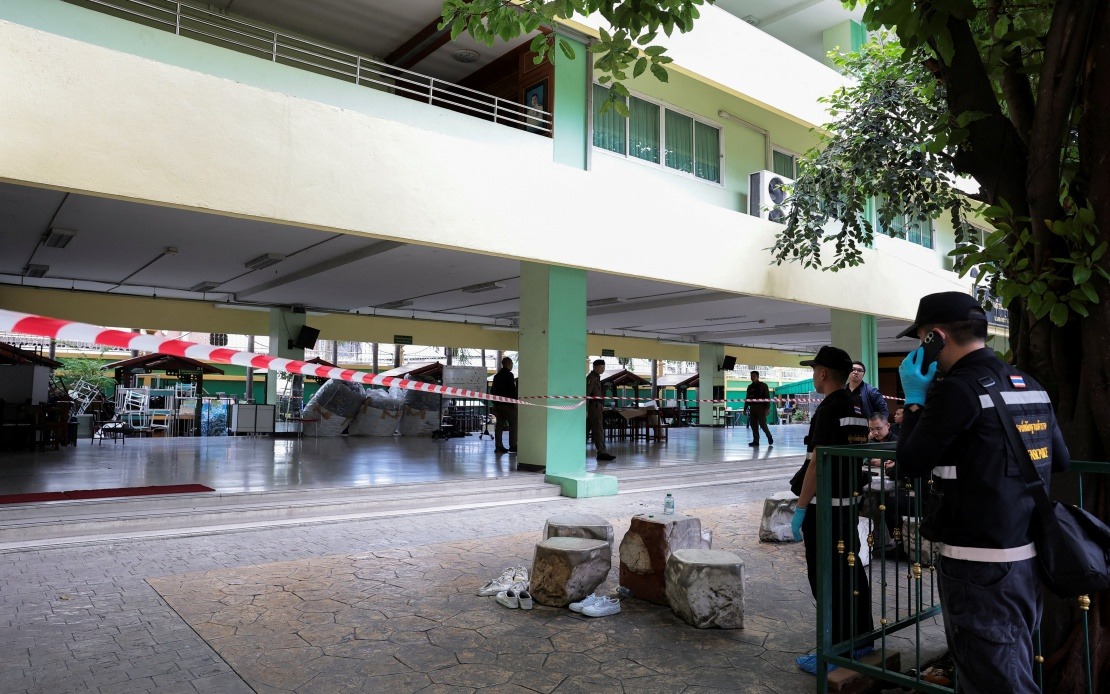
A devastating school shooting in Nonthaburi province, northwest of Bangkok, claimed seven lives and left at least fifteen people hospitalized on Friday morning, marking another tragedy in Thailand's growing pattern of gun violence. The incident unfolded at Debsirin Nonthaburi School in Bang Kruai district around 10 am when a student opened fire on campus. Among those killed were three educators and three fellow students, alongside the shooter, according to Lieutenant General Trairong Piwpan, the Royal Thai Police deputy inspector-general and spokesman. The casualty toll underscores the indiscriminate nature of the attack and the vulnerability of educational institutions to armed violence.
Investigators responding to the scene uncovered a 9mm handgun with 34 rounds of ammunition remaining outside its magazine. The weapon, authorities determined, belonged to the suspect's grandfather, raising fresh questions about firearm storage practices and family oversight of gun ownership in Thailand. The recovery of ammunition reserves suggests the incident could have resulted in far greater loss of life had the shooting continued unchecked. The family connection to the weapon points to inadequate safeguarding measures that allowed a school-aged individual unauthorized access to a lethal firearm.
Among the fifteen wounded transported to nearby medical facilities, two sustained injuries classified as serious, placing additional strain on hospital resources and emergency medical personnel. Swift evacuation protocols permitted teachers and students to escape toward Chanrat Wittaya School, a neighboring institution that served as a temporary refuge. Authorities subsequently coordinated the reunification of minors with parents and guardians, a complex logistical operation that unfolded amid shock and distress. The immediate institutional response likely prevented secondary incidents and helped contain the psychological fallout during the critical hours following the attack.
Prime Minister Anutin Charnvirakul, who holds the interior ministry portfolio, rushed to characterize the shooting as evidence validating his government's restrictive stance on civilian firearm licensing. He expressed profound sadness and conveyed formal condolences to bereaved families whilst simultaneously leveraging the tragedy to justify stricter gun regulations. The premier's assertion that Thailand does not renew permits for firearm ownership and possession draws a direct causal line between the incident and his administration's regulatory philosophy. This framing positions the government as a guardian against gun violence, though critics might question whether existing prohibitions adequately address the supply of illegal or improperly secured weapons within communities.
The Nonthaburi school shooting represents the second major incident of its kind within a six-month window, intensifying concern among parents, educators, and policymakers about campus safety protocols. In February, an eighteen-year-old man discharged weapons at a school in Hat Yai, Songkhla province, fatally striking the school director and wounding multiple others before apprehension. The recurrence of mass shooting events within such a compressed timeframe signals systemic vulnerabilities in Thailand's approach to mental health screening, threat assessment, and access restriction for potentially dangerous individuals. Each incident erodes public confidence in institutional safeguarding mechanisms.
The national police chief mobilized Psychology personnel from Police General Hospital to provide immediate mental health intervention for trauma-affected survivors, witnesses, and first responders. This deployment reflects growing recognition that mass casualty events generate psychological injuries requiring specialized professional attention. Staff, students, and families facing acute grief, shock, and post-traumatic stress require sustained counseling and psychological support extending well beyond the immediate aftermath. The magnitude of the crisis demands resources that typically remain inadequately funded in many institutional settings.
For Malaysia and other Southeast Asian nations, the Thai shootings offer cautionary lessons regarding the intersection of firearm prevalence, youth mental health crises, and school security infrastructure. Whilst Malaysia maintains relatively strict gun licensing compared to some neighboring jurisdictions, vigilance regarding illegal weapon networks and community early-warning systems remains essential. The incidents underscore that economic development and urbanization do not automatically insulate societies from mass violence; rather, they can amplify pressures on vulnerable young people without corresponding improvements in mental healthcare capacity and social support structures.
Thailand's experience suggests that blanket prohibition statements by government officials, whilst politically expedient, may obscure deeper institutional failures in threat identification, therapeutic intervention, and community-level mental health awareness. The perpetrator's access to a family firearm points to environmental risk factors—family dysfunction, personal crisis, or untreated psychological disturbance—that background checks and permitting systems struggle to address. Regional governments contemplating public health responses to gun violence should prioritize investment in school-based psychological services, teacher training in student mental health literacy, and accessible mental health care pathways for adolescents experiencing suicidal or homicidal ideation.
The immediate policy response from Thailand's interior ministry will likely intensify scrutiny of firearm owners and their storage obligations, potentially introducing new penalties for negligent family members whose weapons are accessed by minors or unauthorized individuals. Such measures may prove symbolically important whilst remaining insufficient to prevent determined individuals from obtaining illegal firearms. The shooting also raises questions about the adequacy of school security measures, the presence of trained personnel capable of rapid threat response, and the design of campus environments to facilitate both emergency lockdown and safe evacuation.
Community and institutional resilience in the aftermath of this tragedy will depend substantially on transparent investigation findings, honest assessment of systemic failures, and sustained commitment to preventive approaches addressing root causes. Religious and civil society organizations will play important roles in supporting bereaved families and helping traumatized communities process collective grief. Thai educators and parents will rightfully demand comprehensive answers about how such violence was neither anticipated nor prevented, and what concrete structural reforms will reduce the likelihood of recurrence.

