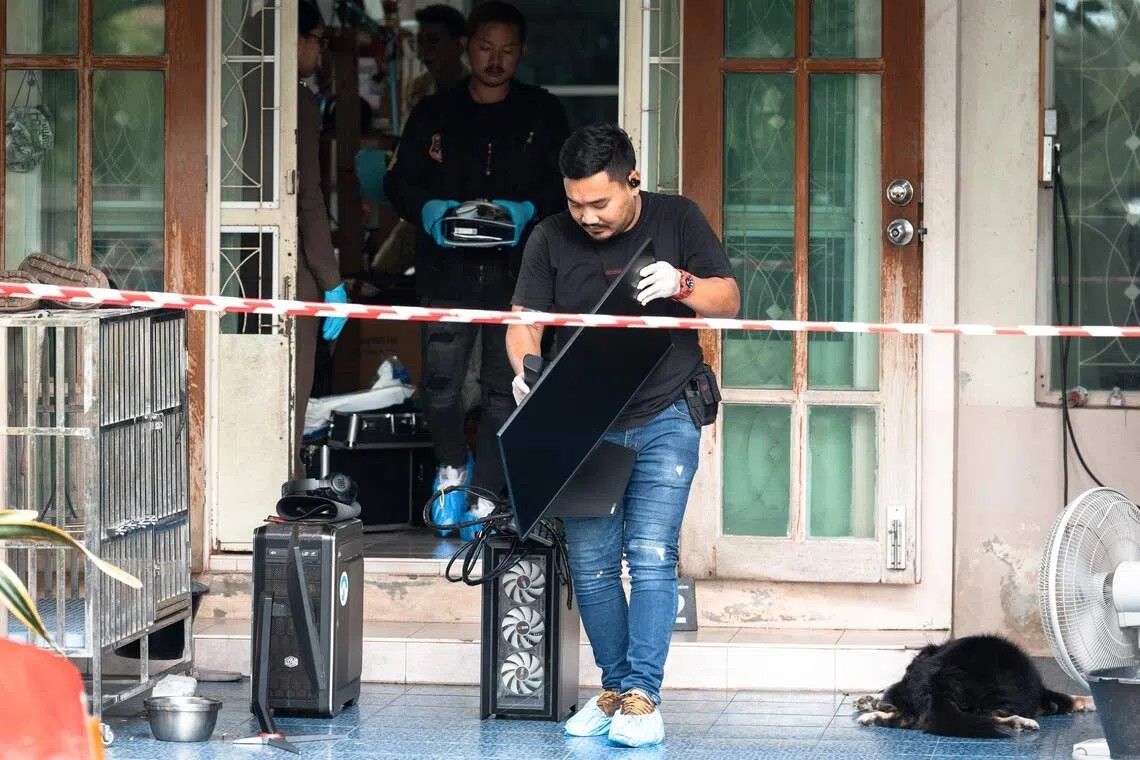
Thai authorities investigating the August 7 shooting at Debsirin Nonthaburi School are scrutinising the digital footprint of the 14-year-old accused gunman in their effort to understand what motivated the attack. Investigators have identified that the teenager conducted searches relating to school shootings in the United States, with evidence indicating these queries occurred around late July, just days before the incident at the school. Police are also examining his computer usage patterns, which revealed extended engagement with video games featuring violent content, though authorities have cautiously avoided linking these factors directly to the shooting at this early stage of their enquiry.
The investigation has expanded beyond the school shooting itself to include the deaths of two family members. Police believe the same teenager fatally shot his grandparents at their residence in Bang Khu Rat subdistrict, Bang Bua Thong district, before making his way to the school where the shooting subsequently occurred. The discovery of the grandparents' bodies came after law enforcement officers and forensic specialists entered the property following initial reports. Wattana Yichin, commissioner of Provincial Police Region 1, personally oversaw an inspection of the house as part of the broader investigation into the sequence of events that led to the attacks.
According to police records, the front entrance to the grandparents' home was secured from the outside, suggesting the teenager departed the premises after the killings and proceeded to Debsirin Nonthaburi School. The precise timeline of events remains a crucial focus for investigators seeking to understand the progression from the domestic incident to the broader shooting at the educational institution. Law enforcement officials are methodically reconstructing the movements and actions of the suspect throughout the morning of the attack to establish whether any other factors or circumstances may have contributed to the violence.
The examination of the teenager's computer and search history forms a central component of the investigative strategy. Preliminary analysis has documented his engagement with video games containing violent themes, alongside documented searches about school shootings in the United States dating back approximately to July 30. These digital activities represent tangible evidence that investigators are using to construct a profile of the suspect's mental state and potential motivations during the weeks preceding the incident. However, police have been deliberate in their statements, clarifying that they have not yet determined whether these online activities actually triggered or motivated the attacks.
Inquiries are also examining potential difficulties the teenager may have experienced within the school environment itself. Investigators recognise that peer relationships, academic pressures, or social dynamics at the educational institution could represent significant contributing factors to the violence. This avenue of investigation reflects international experience with similar incidents, where school-based grievances have historically played a role in motivating young perpetrators. The police are casting a wide net in their analysis, understanding that multiple factors may have coalesced to produce this tragic outcome.
Family members have provided investigators with crucial background information that paints a picture of an isolated and withdrawn youth. The teenager's uncle disclosed to authorities that the boy had resided with his grandparents throughout his childhood and had developed a pattern of remaining largely confined to the home, where he spent considerable time absorbed in computer gaming. The relative indicated no awareness of significant disputes within the family unit or obvious manifestations of emotional distress prior to the attacks. This characterisation of normalcy makes the sudden eruption of violence particularly difficult to explain through conventional risk assessment frameworks.
Additional family commentary from Thananyaporn, aged 60 and the younger sister of the deceased grandfather, provided further context regarding the household dynamics and the teenager's lifestyle. She explained that the boy's parents had separated, leaving the grandparents as his primary caregivers and emotional anchors. According to her account, the grandfather would escort the teenager to school each morning and collect him each afternoon, creating a structured daily routine centred on the school and home. The teenager did not participate in the broader social activities typical of adolescents, instead maintaining a relatively solitary existence focused on indoor gaming and domestic life.
Thananyaporn emphatically rejected the notion that family discord had played any role in precipitating the tragedy, emphasising that the three household members maintained close emotional bonds. She characterised the grandfather as a former bank manager with a gentle demeanour and the grandmother as an educator, both committed to the welfare of their grandson. The teenager himself was portrayed as a quiet and mannerly individual, making the violence entirely unexpected in the eyes of relatives who had witnessed his everyday behaviour. This disconnect between the outward presentation of a reserved, compliant youth and the sudden manifestation of lethal violence presents a significant psychological puzzle for investigators.
The firearm used in the shooting was legally registered to the deceased grandfather, according to police documentation. This detail raises questions about weapons security and storage within the household, though investigators have not yet publicly disclosed specifics regarding how the teenager accessed the firearm or whether any safeguards were bypassed. The legal status of the weapon may eventually form part of broader discussions about gun ownership practices and child safety protocols within Thailand.
Police authorities have maintained that their investigation remains in progress, with officers continuing to focus on reconstructing the precise sequence of events while attempting to identify contributing factors. The deliberate pace of the inquiry reflects the complexity of understanding motivations in juvenile perpetrators, particularly when traditional indicators of risk such as family conflict or obvious distress appear absent. The investigation represents a significant challenge for Thai law enforcement, as authorities grapple with the confluence of digital influences, social isolation, and family tragedy that culminated in the August 7 shooting.

