Thailand is readying a strategic move in its upcoming trade negotiations with the Trump administration: a warning that steep American tariffs could compel Bangkok to reconsider its participation in key military exercises and defence initiatives that have anchored the US security presence across mainland Southeast Asia for decades. According to officials involved in the discussions, the Thai government plans to incorporate this position into a counterproposal when trade negotiations resume later this month, though the language will remain sufficiently broad to avoid appearing as a direct ultimatum. The underlying message is clear—economic pain inflicted by higher tariffs could translate into reduced military cooperation, a rare invocation of the security relationship in what are otherwise trade-focused discussions.
Thailand's negotiating position reflects the genuine economic strain already evident from recent trade data. The kingdom recorded a substantial US$51.4 billion trade surplus with America last year, making it vulnerable to the 12.5 per cent tariff the Trump administration imposed on most exports under Section 301 of US trade law. This action, premised on addressing what Washington characterises as unfair trading practices, has placed Bangkok among dozens of nations scrambling to secure better terms and protect export-dependent industries that form the backbone of Thailand's economic growth.
In response, Thai officials have adopted a two-pronged approach. On one hand, Bangkok has tabled substantive economic concessions designed to address American concerns. The government has offered to eliminate tariffs on certain goods and align its import standards with US requirements for beef, lamb, and alcoholic beverages—sectors where American producers seek greater market access. Additionally, Thailand has committed to accelerating domestic legislation banning imports manufactured using forced labour, a compliance measure directly targeting Washington's stated concerns about global supply chain ethics. These moves signal Bangkok's willingness to make genuine structural adjustments rather than engage in purely rhetorical negotiation.
Yet alongside these economic overtures sits the implicit military dimension that marks a strategic shift in how Thailand frames its value to Washington. As one of only two formal US treaty allies in Southeast Asia alongside the Philippines, Thailand occupies a unique position in America's regional architecture. The Thai-US alliance, formalized through multiple defence agreements and sustained through regular military-to-military engagement, has provided Washington with essential strategic infrastructure—bases, training facilities, and forward logistics—that enable sustained American military presence across the region. This alliance has proven particularly significant as China expands its influence throughout Southeast Asia, making Thailand's geopolitical orientation a matter of substantive importance to American regional strategy.
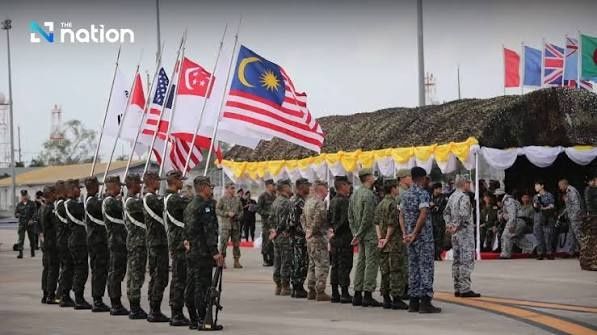
Cobra Gold exemplifies this alliance's practical significance. Hosted jointly by Thailand and the United States, the exercise stands as the largest annual multinational military drill conducted on mainland Asia, drawing approximately 8,000 personnel from around 30 participating nations in complex manoeuvres involving air, naval, and land forces. For the United States, the exercise serves multiple functions: it demonstrates sustained commitment to the region, provides opportunities to enhance interoperability with allied forces, and reinforces America's military presence without requiring large permanent bases. For Thailand, participation confers security assurances and access to advanced military training. Any suggestion that this cornerstone exercise might be disrupted carries symbolic weight far exceeding its immediate military value.
Thai Defence Ministry spokesman Surasant Kongsiri has adopted a cautious public stance, refusing to confirm or deny the military leverage proposal while suggesting that negotiations would more likely centre on deepening cooperation rather than imposing conditions. This rhetorical positioning allows Bangkok to maintain diplomatic flexibility—neither explicitly confirming a threat that could antagonise Washington nor entirely disavowing its negotiating position to domestic audiences concerned about economic welfare. The ambiguity serves Thai interests by sustaining pressure on American negotiators without forcing Thailand into a confrontational posture it may ultimately wish to avoid.
Thai Commerce Minister Suphajee Suthumpun has meanwhile articulated a broader argument for preferential treatment, contending that Thailand deserves more favourable trade terms owing to its decades-long strategic partnership with the United States, its participation in the Treaty of Amity, and its substantial investment commitments in the American economy. This positioning reframes the trade discussion from a purely transactional exchange into a matter touching on alliance credibility and mutual benefit. The Thai government has also publicly identified these negotiations as a comprehensive whole-of-government effort, with the foreign and defence ministries alongside business associations all contributing to strategy. This institutional mobilisation signals that Bangkok views the outcome as consequential across multiple policy dimensions.
The Thai proposal to maintain tariff rates at no higher than 19 per cent represents a specific numerical target derived from earlier framework discussions, suggesting that Bangkok retains some optimism about achieving a negotiated settlement within a bounded range. This positioning differs markedly from nations seeking to escape tariffs entirely, instead suggesting that Thailand accepts some tariff burden whilst arguing for one calibrated to prevent genuine economic damage.
History provides relevant context for understanding why Thailand would invoke its military alliance at a moment of trade friction. The two countries' defence relationship has weathered political turbulence before, notably after Thailand's 2014 military coup, when Washington suspended several military engagements and scaled back Cobra Gold exercises. The gradual rebuilding of defence ties following that episode demonstrated both the durability of the underlying alliance and its sensitivity to political circumstances. Pentagon leadership has recently reaffirmed this alliance's strength—Undersecretary of Defense Elbridge Colby publicly praised the relationship during a Bangkok visit last week, emphasising what he characterised as the renewed strength of Thai-US defence ties.
For Malaysian observers, Thailand's approach offers instructive lessons about leveraging multiple relationship dimensions during trade disputes. As Malaysia itself manages complex trade relationships with the United States whilst maintaining its own security considerations, Thailand's willingness to explicitly connect economic negotiations with defence cooperation illustrates how Southeast Asian nations might articulate broader national interests rather than accepting trade outcomes determined purely by economic factors. The regional context—with China advancing its influence through Belt and Road investments and military modernisation—underscores why countries like Thailand possess genuine negotiating leverage grounded in strategic geography and security partnerships that remain valuable to Washington despite economic frictions.

