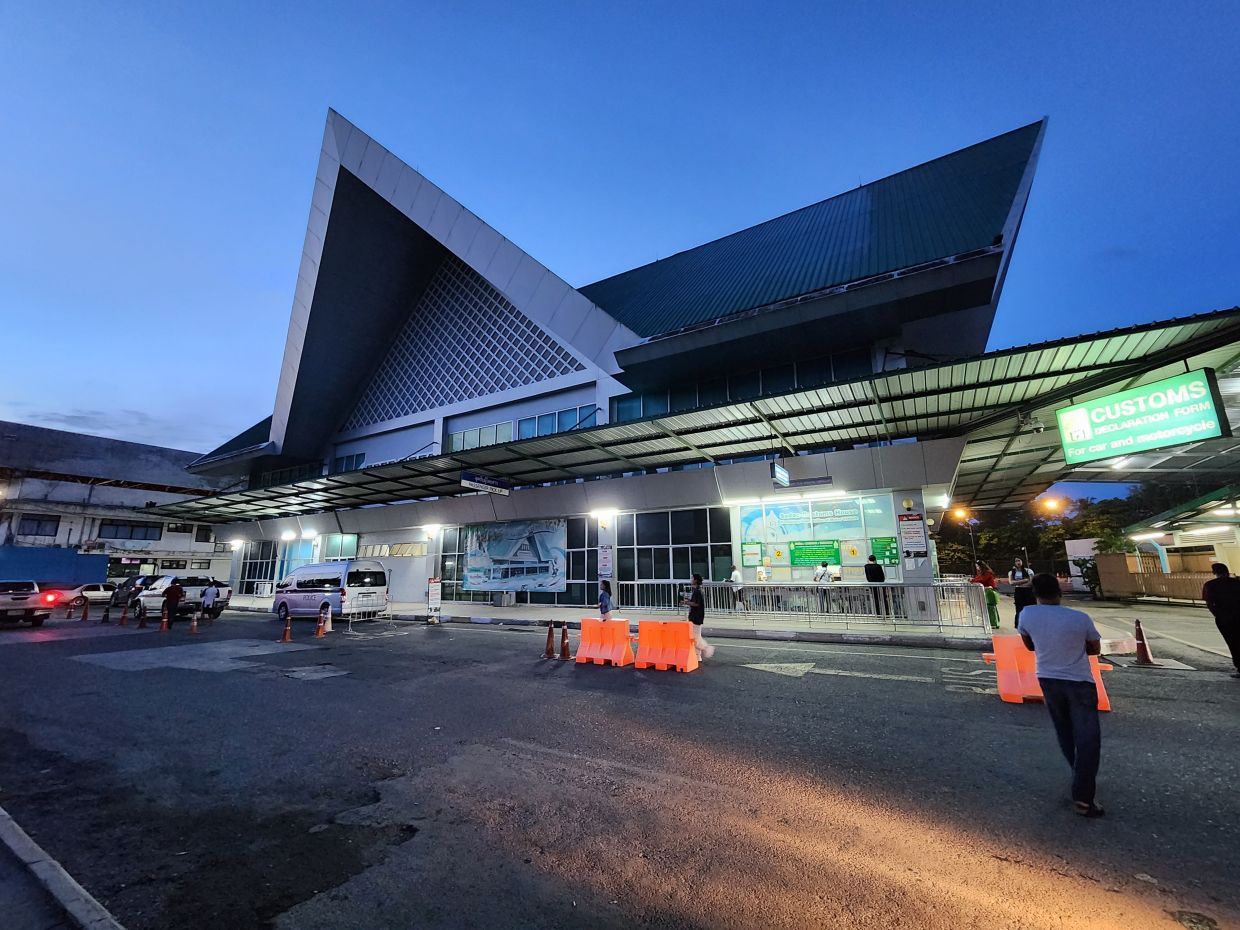
Thailand has taken a major step towards deepening economic integration with Malaysia by approving a new permanent border checkpoint that will commence operations on July 11. The Thai cabinet's decision to establish this facility at Sadao represents a strategic shift in how the two nations manage cross-border commerce and people movement, replacing an existing crossing further south along the shared frontier. The relocation to a position between boundary markers 23/9 and 23/10—moving northward from the previous markers 22-23—signals a deliberate effort to streamline customs procedures and reduce congestion that has historically impeded smooth trade flows in this crucial logistics corridor.
The new checkpoint will maintain extended operational hours from 05:00 to 23:00 daily, providing substantially longer access windows than many traditional Southeast Asian border facilities. This extended schedule reflects the Thai government's recognition that modern trade patterns increasingly demand flexibility beyond standard business hours, particularly for perishable goods, agricultural products, and time-sensitive manufacturing shipments that form the backbone of bilateral commerce. For Malaysian traders and logistics operators, the extended timeframe effectively reduces waiting periods and creates more predictable scheduling windows for cross-border movements.
Thailand's government spokesperson Ratchada Thanadirek outlined a comprehensive approach to ensuring the checkpoint's smooth functioning, emphasizing that merely opening a crossing represents only half the solution. Thai authorities have instructed multiple agencies to accelerate construction of connecting roads and eliminate existing traffic bottlenecks on the Thai side of the frontier. This coordinated infrastructure push acknowledges that efficient borders require seamless integration with hinterland transportation networks; a modern checkpoint proves ineffective if vehicles face congestion kilometres away. The Songkhla province, which administers the southern Thai region, will oversee these complementary improvements to ensure synchronized development.
Shuttle services have been arranged to facilitate passenger movement, though details regarding their scope and operational model remain limited. Such facilities typically address the practical challenges faced by individual travellers and cross-border workers who may lack private vehicles, creating accessibility that pure commercial truck corridors cannot provide. For Malaysian citizens engaged in regional commerce, education, and healthcare services across the border, these passenger facilitation measures could significantly improve mobility.
Beyond physical infrastructure, Ratchada emphasized the government's commitment to information dissemination campaigns targeting the private sector, business communities, and residents living along the border corridor. These educational initiatives will clarify traffic routing options, demystify customs procedures, explain immigration channels, and outline government facilitation measures designed specifically for trade and tourism operators. Such groundwork proves essential in border regions where informal networks and incomplete information often lead traders to maintain established patterns even when superior alternatives exist. Coordinated publicity efforts accelerate adoption of new crossing facilities and realize their intended benefits more quickly.
The timing of this development carries particular significance given Thai Prime Minister Anutin Charnvirakul's scheduled official visit to Malaysia on July 9-10, occurring just days before the checkpoint's inauguration. The Malaysian Prime Minister Anwar Ibrahim extended this invitation, reflecting both leaders' commitment to strengthening bilateral relations. The proximity of these events suggests careful sequencing, with the border facility's opening serving as a tangible demonstration of Thailand's commitment to the partnership immediately following high-level political discussions.
The Thai cabinet simultaneously approved a draft joint statement to guide the upcoming visit, establishing cooperation priorities that extend well beyond simple trade expansion. The framework encompasses border development initiatives, enhanced regional connectivity projects, collaborative security efforts targeting transnational crime networks, and economic partnerships focused specifically on food and energy security. For Malaysia, this multilayered approach proves significant because it positions bilateral engagement within broader Southeast Asian stability and prosperity frameworks rather than treating the relationship as a narrow commercial transaction.
The emphasis on security cooperation against transnational crime reflects serious regional challenges that both nations experience acutely. The Thailand-Malaysia border region has historically struggled with smuggling networks, human trafficking operations, and drug trafficking organizations that exploit porous frontier conditions and weak coordination mechanisms. By explicitly incorporating security cooperation into the broader partnership framework, both governments signal recognition that sustainable prosperity requires fundamental stability and rule of law functioning.
Food and energy security receive specific mention in the cooperation framework, highlighting vulnerabilities that both nations confront amid global supply chain disruptions and climate uncertainties. Thailand's agricultural exports and Malaysia's palm oil production create natural complementarities, while both nations face energy security challenges in a region increasingly focused on energy transitions. Coordinated approaches to these sectors could improve resilience for both economies and create competitive advantages within broader ASEAN frameworks.
From a Malaysian perspective, this border development carries implications extending beyond bilateral ties into the wider regional architecture. Enhanced connectivity with Thailand facilitates Malaysian access to Indochinese markets and reduces logistics costs for northern regional trade. The checkpoint modernization supports the economic integration priorities that Malaysia has pursued through various ASEAN and regional mechanisms, transforming abstract connectivity goals into concrete infrastructure improvements.
The new Sadao checkpoint represents practical implementation of the borderless ASEAN vision that policymakers have articulated for decades. Rather than waiting for comprehensive region-wide harmonization that remains elusive, Thailand and Malaysia are demonstrating that bilateral progress on operational efficiency, infrastructure investment, and procedural clarity can deliver tangible benefits to traders, investors, and citizens. Success at this crossing could serve as a template for similar improvements elsewhere along ASEAN's maritime and land frontiers, gradually building the friction-reduced regional environment that economic integration requires.
For Malaysian businesses operating within Thailand or seeking to expand regional supply chains, the checkpoint opening combined with Thai commitment to connecting infrastructure represents a material competitive advantage. Reduced border crossing times translate directly into lower logistics costs, faster inventory turnover, and improved ability to serve time-sensitive regional markets. These operational efficiencies may prove decisive for Malaysian firms competing against suppliers from nations with more streamlined border processes.
The development also reflects broader recognition within both governments that infrastructure-driven integration delivers benefits that transcend typical trade statistics. Tourist movements, educational exchanges, business travel, and social connectivity all accelerate when border friction decreases, creating the people-to-people relationships that underpin sustainable political cooperation and mutual understanding.

